God as a Theory Isn’t Faith
God-as-First-Cause costs nothing—but real faith isn’t an explanation you admire; it’s a surrender that reshapes pride, appetite, courage, and duty. —Joseph C. Kunz, Jr.
Why a “Creator” You Can Discuss Is Not the Same as a God You Obey
By Joseph C. Kunz, Jr.
Synopsis
Modern intellectual religion often stops at the safest version of God: a distant “First Cause” that explains why anything exists, but never interrupts a man’s life. In this essay, Joseph C. Kunz, Jr. argues that “God as a theory” is attractive precisely because it costs nothing. It allows a person to sound serious, stay autonomous, and keep moral authority firmly in his own hands. But faith, as believers understand it, is not a metaphysics puzzle.
It is allegiance. It demands humility, repentance, obedience, and the slow formation of character where life is actually lived—at home, under temptation, in suffering, and in responsibility. Kunz draws a sharp line between a God who explains and a God who commands, and he offers a clean test: if your “belief” never changes what you tolerate, what you worship, and what you refuse, then it isn’t faith. It’s decoration.
A God you only ‘consider’ is a God you still control. Faith begins when control ends. —JCK
I. Introduction: The Smart Way to Miss the Point
There is a type of modern religion talk that sounds intelligent and accomplishes almost nothing.
It treats God like a topic. Like a concept. Like a theory you can explore the way you explore a podcast series.
It’s the kind of talk that says, “I’m open to a Creator,” the way a man says, “I’m open to trying sushi.”
And I’m not against questions. I’m not afraid of thinking. I’m not impressed by anti-intellectual posturing.
But I am tired of the most important reality being handled like an elective.
Because life doesn’t test your metaphysics.
Life tests your character.
Life tests whether you can endure suffering without turning bitter.
Whether you can resist corruption when compromise is easy.
Whether you can lead your family with courage instead of ego.
Whether you can say “no” to appetite when nobody is watching.
Whether you can tell the truth when lying would protect your image.
That’s why I’m blunt about this:
A God you can discuss forever without obeying is not God as believers understand Him. It’s an idea. A trophy. A decoration for the educated mind.
And a decorated mind can still be a weak man.
II. The Safe God of the Seminar Room: Why “First Cause” Is So Popular
“God as First Cause” is safe.
It’s clean. It’s abstract. It doesn’t require worship. It doesn’t require confession. It doesn’t require repentance. It doesn’t require you to change anything.
You can accept a Creator and remain unchanged. You can affirm a Designer and still live like your desires are your god.
That’s why this version of God is so appealing to the intellectual class.
You get to sound serious.
You get to keep autonomy.
You get to maintain the posture of evaluator.
You can say, “It seems plausible,” and still stay in charge.
A First Cause is the kind of God you can admire.
But faith isn’t admiration.
Faith isn’t “I find this interesting.”
Faith isn’t “I’m exploring.”
Faith isn’t “I’m open-minded.”
Faith is allegiance.
And allegiance always costs something.
III. The Difference Between Explanation and Authority: A Creator Who Never Commands Is Not a God Who Saves
Here’s the line that matters.
An explanation doesn’t rule you.
An authority does.
A Creator, treated only as a metaphysical explanation, becomes a distant concept. A conclusion. A tidy answer to the question, “Why is there something rather than nothing?”
Fine. Interesting.
But a conclusion will not change your soul.
A conclusion won’t teach you restraint at midnight when temptation shows up.
A conclusion won’t hold you steady when your ego gets wounded.
A conclusion won’t tell you to forgive when bitterness feels justified.
A conclusion won’t stop you from using people when you’re stressed and tired.
A conclusion won’t keep your vows when your feelings shift.
Why?
Because conclusions do not command.
Real faith is not merely believing someone made the world.
Real faith is living as if God is the kind of reality you must answer to.
That’s what modern “God talk” so often avoids.
The modern mind wants a God who explains—but does not interrupt.
A God who comforts—but does not command.
A God who exists—but does not judge.
But a God who never judges is not a holy God.
And a God who never commands is not Lord.
He’s a mascot.
IV. The Costless God: Why “Belief” That Changes Nothing Is a Form of Self-Worship
Here’s the truth nobody wants to say in polite intellectual circles:
A lot of modern “belief” is just a way to feel deep without surrendering anything.
It’s spiritual decoration.
A way to say, “I’m not one of those crude materialists,” while still living like appetite is king.
That’s why this type of belief is so common among sophisticated people. It offers the pleasure of meaning without the pain of repentance.
It gives you a halo without a cross.
But faith is not a self-improvement accessory.
Faith is a turning.
It is not merely adding God to your worldview as one more interesting possibility. It is allowing God to judge your worldview.
This is why the “theory God” is so dangerous.
Because it makes a man feel he has done something noble—when he has done nothing costly.
It lets him claim “spirituality” while remaining unchanged.
And the best test of whether you’re dealing with faith or theory is simple:
Has it made you humbler?
Has it made you more honest?
Has it made you more restrained?
Has it made you more courageous?
Has it made you less selfish?
Has it made you more faithful to duty?
If not, you have not discovered God.
You have discovered an idea that flatters you.
V. Why Intellectuals Prefer “Useful Religion”: A Tool You Can Use Is Still Under Your Authority
In our previous essays, I’ve talked about the elite bargain: religion is being welcomed back as “useful.”
And yes—religion is useful.
It helps stabilize families. It creates communities. It trains moral seriousness. It restrains vice. It teaches duty.
But here is the subtle insult in the way some modern elites praise religion:
They want the benefits without bowing to the authority.
They want religion as social technology, not sacred truth.
They don’t say, God is holy.
They say, Religion reduces anxiety.
They don’t say, I was wrong to mock faith.
They say, We need religion again.
They don’t say, I am accountable.
They say, Society is unraveling.
And if you listen closely, you can hear the posture beneath it:
I remain the judge. Religion is now on my approved list.
That’s not faith. That’s management.
Because if religion is merely useful, it remains optional.
And if it remains optional, it has no authority.
And if it has no authority, it cannot form the soul.
It can only decorate the mind.
VI. Faith Is Training, Not Theory: The Places God Becomes Real
Here is what separates real faith from God-as-theory:
Real faith shows up in the places where you don’t get applause.
It shows up in the home.
In the marriage.
In the secret temptations.
In the decisions nobody sees.
In the way you handle suffering.
In whether you forgive.
In whether you keep your word.
In whether you sacrifice.
In whether you tell the truth when it costs you.
This is why faith is not mainly a cosmology answer.
It’s training for the soul.
It builds the kind of man who can endure without becoming ugly.
Who can resist corruption when shortcuts are available.
Who can lead his family with steadiness, not mood.
Who can say “no” to himself so he can say “yes” to duty.
The managerial mind wants to “nudge” behavior.
Faith demands conversion.
The educated mind wants to “consider” God.
Faith requires surrender.
Because God is not a topic.
God is either real—or He is not.
And if He is real, then the question is not whether He is plausible.
The question is whether you will obey.
VII. The Respect Test for “God Talk”: Are You Taking Faith Seriously—or Only Using It?
There is a simple test for whether someone is taking faith seriously.
Can he represent it honestly?
Not as superstition.
Not as coping.
Not as tribal identity.
Not as social glue.
But as believers mean it:
Faith is a relationship with God.
Faith is obedience to moral authority.
Faith is repentance when you’ve been wrong.
Faith is humility that stops performing.
Faith is reverence that admits you are not the center.
A serious mind can disagree with faith and still describe it accurately.
But if a person reduces faith to a psychological crutch—if he cannot acknowledge the courage, restraint, and sacrifice it has formed in millions of ordinary men and women—then he is not analyzing.
He is sneering.
And sneering is not intelligence. It’s pride with better branding.
VIII. Welcome the Seeker—But Don’t Pretend the Doorway Is the Destination: Charity Without Naïveté
Now let me say this clearly so cynicism doesn’t win.
People can change. Even late. Even after decades of mockery. Even after years of smugness.
Grace knocks on doors we think should be closed.
So, I’m not here to humiliate late seekers. I’m not here to score points off a man who is waking up.
But I also refuse to pretend that every polished “openness to God” is faith.
Sometimes it’s genuine.
Sometimes it’s strategic.
Sometimes it’s fear.
Sometimes it’s boredom.
Sometimes it’s a search for meaning without surrender.
The difference is posture.
Does the man stand over God as the evaluator?
Or does he finally kneel and admit: “I am not the judge.”
Because faith is not an idea you add.
Faith is a surrender that changes you.
IX. Conclusion: The God Who Costs Nothing Is Not the God Who Saves
A God-as-theory is attractive because it costs nothing.
You can keep your pride.
You can keep your autonomy.
You can keep your appetites.
You can keep your self-rule.
You can keep being the judge.
You just get to add a little “spiritual depth” to your identity.
But real faith is not depth. It’s death—to pride, to self-worship, to the illusion of control.
God is not a conclusion.
God is a throne.
And the ultimate test is not whether you can discuss Him intelligently.
The test is whether your belief has produced obedience, humility, courage, restraint, and love in the life you actually live.
Because the point of faith isn’t answering cosmology questions.
It’s building a man who can endure suffering, resist corruption, and lead his family with courage.
A theory can impress your mind. Only faith can break your pride and rebuild your soul. —JCK
The Series: Faith That Holds Up
We’re living in an age where contempt is mistaken for intelligence and “God talk” is treated like an academic hobby. This series calls that bluff. These essays aren’t about sounding smart—they’re about truth that forms a soul: humility instead of ego, obedience instead of self-rule, courage instead of comfort addiction. If you’re tired of the sneer and ready for faith that actually holds up, start here.
1. Disbelief Isn’t the Offense — Contempt Is
Doubt can be honest, but the sneer is a moral posture that corrodes truth, decency, and the virtues that hold society together.
2. When Intellectuals “Discover God” — What’s Missing?
Many elite “returns” stop at a safe, useful Creator, but real faith requires humility, reverence, repentance, and surrender.
3. Religion as a Tool: The New Elite Bargain
The new respectability of religion often comes with a bargain: “give us the benefits, but don’t demand obedience.”
4. Nudged by God — or Managed by the Machine?
“Nudging” is the polite language of control, but faith isn’t behavior management—it’s moral allegiance to truth that forms the soul.
5. God as a Theory Isn’t Faith
A costless “First Cause” may impress the mind, but faith begins when God stops being an idea and becomes an authority you obey.
6. Faith Isn’t a Theory — It’s Training
Faith isn’t mainly about cosmology—it’s training that builds endurance, integrity, restraint, and courage when life gets hard.
Faith isn’t proven by sounding smart; it’s forged in real tests—marriage, temptation, suffering, duty, and responsibility.
8. Why Autonomy-First Men Flinch at Faith
Autonomy worship makes the self the judge, so faith feels threatening—because faith begins where self-rule ends.
Start at #1, or pick any title that hits your nerve and jump in.
The Book Behind This Essay: Stop Treating God Like a Concept
“God as First Cause” is the safest God there is.
You can discuss Him. Analyze Him. “Consider” Him.
And still keep your pride, your appetite, and your authority exactly where you like it—in your own hands.
That’s why the educated class loves a theoretical God. Because a theory never tells you to repent. A theory never interrupts your sin. A theory never demands obedience. A theory never costs you anything.
But a God who is real is not an idea.
He’s an authority.
And faith isn’t saying, “Seems plausible.” Faith is saying, You are Lord.
That’s where everything changes—because now it’s not about sounding intelligent.
It’s about living obedient.
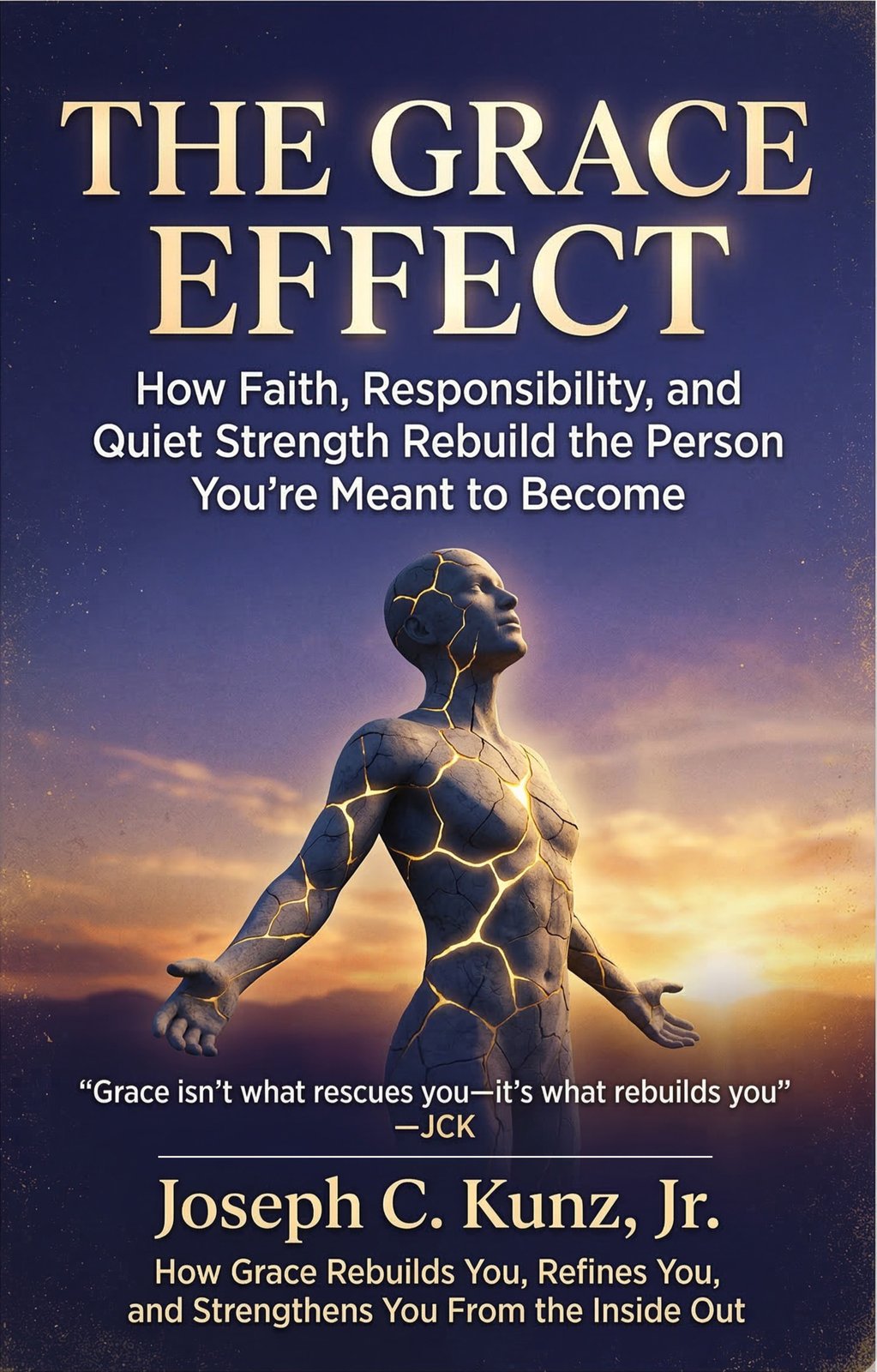
That’s why I wrote The Grace Effect.
Not to give you better arguments. To give you a stronger soul. A faith that holds up when life hits hard. A character that doesn’t bend when compromise is easy. A man who leads his family with courage instead of ego.
Because grace isn’t a philosophy.
Grace is power under control.
And if God is only a topic you can admire, you’ll never get the one thing faith is meant to produce:
a life that actually changes.
Read The Grace Effect here: God isn’t a theory. Grace isn’t a vibe. This is training. Coming soon.