Who's in Charge Here — You or the Path?
If you’ve ever felt successful on the outside but uncertain on the inside, this essay will help you take back control of the path you’re on. —Joseph C. Kunz, Jr.
If The Path Has You by The Throat, You're Doing It Wrong
Joseph C. Kunz, Jr.
Synopsis
This isn’t a midlife-crisis cliché or a motivational poster about “finding yourself.” In this essay, Joseph C. Kunz, Jr. challenges a sharper, more uncomfortable question: are you steering your life—or are you being dragged by the momentum you built? He argues that plenty of driven, successful people end up on a path they never consciously chose—busy, productive, applauded on the outside, but restless and uncertain on the inside. Not because they’re failing, but because they built the machine before they built the destination.
Kunz draws a clean line between the path you choose and the path that chooses you. One is guided by faith, family, and values. The other grows out of survival, people-pleasing, routine, and the quiet addiction to approval—until your calendar owns you and your “season” never ends. He names the signs that the path has you by the throat: trapped work, packed days with unclear priorities, constant chasing that never satisfies, drifting from the man you meant to become. Then he shows how to reclaim the wheel: get quiet, name the gap, own the choices, cut what drains you, build forward with imperfect momentum, and invite trusted voices to hold up the mirror. The takeaway is blunt and freeing: you’re not aimless—you’re just overdue to take back ownership of where your life is headed.
Stop telling yourself you’re aimless. You’re not. You’ve just never stopped long enough to see the path you’re already on. —JCK
I. Introduction: Let’s Get Real: You’re Moving, But Are You Steering?
Let’s not confuse busyness with direction. You can fill your calendar, max out your to-do list, and still have no idea where you're really going. That’s the brutal truth. And it doesn’t matter if you’re making money, raising a family, or running a business—you can still be living someone else’s definition of success.
That inner restlessness? That quiet voice that asks, “Is this it?”—that’s not failure talking. That’s you trying to get your own attention.
Most men won’t admit this out loud. Especially men who are seen as successful. We’re supposed to have it together. To have figured it out. But the truth is, a lot of us built the machine before we ever thought about the destination. And once it starts moving, it’s hard to slow down long enough to ask: Do I even want where this is heading?
And that’s when the real question hits you: Does the path have me by the throat—or do I have the path by the throat?
Let’s be honest—this moment? This unease? It gets labeled a "midlife crisis," but it’s not always about the clichés of sports cars and bad decisions. Sometimes it’s just maturity arriving with a whisper instead of a crash. It’s the moment when you finally have the experience, the track record, and the perspective to realize you’ve been running full speed without ever asking where the finish line is.
II. Two Kinds of Paths: The One You Choose vs. The One That Chooses You
We like to pretend life is a straight line. Follow the steps. Check the boxes. Do what you’re "supposed" to do and you'll end up happy, fulfilled, and successful. But real life isn’t linear. It’s not even neat. It’s a tangled web of decisions, habits, and circumstances. Some chosen. Some inherited. Some just dumped in your lap.
And somewhere in that mess, a path gets worn down. The question is—whose path is it?
• The path you choose is intentional. You might not know every step ahead, but you know why you’re walking it. You have clarity of purpose. Your faith, your family, your values—they guide you, even when the way gets rough.
• The path that chooses you is deceptive. It starts with survival, or people-pleasing, or chasing someone else’s idea of success. And before long, it owns you. You’re not steering. You’re strapped to the hood, hoping the crash doesn’t hurt too bad.
Too many good men end up on autopilot. They build lives that look impressive on paper, but feel like prison in the soul.
III. Signs You’re Not in Control (The Path Owns You)
Let’s do a gut check. Because you can’t reclaim a life you won’t admit you’ve lost control of.
• You feel trapped in your job, but don’t know how to walk away without imploding everything.
• Your schedule is packed, but you have no idea which things actually matter.
• You’re always chasing the next win, but they never feel like enough.
• You’ve stopped dreaming. Or worse, you mock your old dreams as naïve.
• You say things like, “I’ll slow down when...” or “It’s just a season...”—but the season never ends.
And maybe worst of all: You feel the distance growing between who you are and who you were supposed to become. But you’re too tired to do anything about it.
That’s not a bad week. That’s a warning sign.
IV. How It Happens: The Slippery Slope to Losing Control
Nobody wakes up and says, “I want to live a life I feel disconnected from.” But it happens. Slowly. Subtly.
First, you chase security. Then reputation. Then routine. You get praised for being dependable, successful, and a provider. So, you double down. You build the business. You buy the house. You make the sacrifices. And you keep going.
Until one day, you look around and realize:
• You built the life.
• But you never built the vision.
When there’s no vision, even productivity becomes slavery.
This is how the path takes control: Not with chains, but with comfort. Not with enemies, but with applause. And unless you stop long enough to ask, “Is this really what I want?”—you’ll keep marching toward a future you never meant to build.
And here’s something we don’t talk about enough: sometimes you need the people closest to you to hold up the mirror. Your spouse. Your adult children. A longtime friend. A business partner. People who know you and who have nothing to gain by coddling your ego. These are the voices that can help you see when you’re veering off course—or remind you of the man you were always meant to be.
V. How to Know If You’re on the Right Path
Let’s get one thing straight: the right path isn’t always glamorous. It’s not always profitable. It might not even be popular.
But you’ll know it by the way it feels at the soul level:
• Your yes and no come from a place of clarity, not fear.
• Your work feels like contribution, not compensation.
• Your time with family doesn’t feel like something you “make time for”—it’s why you work.
• Your faith isn’t a side dish—it’s the whole recipe.
• Your calendar reflects your values, not just your obligations.
When you’re on the right path, you’re not wondering if you matter. You know you do. Because you’re showing up fully, and not just performing for approval.
VI. How to Reclaim the Wheel
If this is hitting a nerve, good. That means something inside you is still alive. Still paying attention. Still ready to fight for more.
Here’s how to take your life back:
1. Get Quiet.
Shut out the noise. Turn off the phone. Take a walk. Take a weekend. Get honest. The answers don’t show up until you create the silence to hear them.
2. Name the Gap.
What’s missing between where you are and where you want to be? Don’t downplay it. Own it.
3. Own the Choices.
You might not have chosen everything, but you’re responsible now. That’s not blame—that’s power.
4. Make the Cut.
That thing that’s draining you? That commitment that’s outlived its purpose? That relationship that’s keeping you stuck? Let it go.
5. Build Forward.
Don’t wait for the perfect plan. Just start moving in the right direction. Momentum favors the man who acts.
6. Shine the Light Back.
Be the guide you never had. Turn your mess into someone else’s map.
7. Talk to Your Circle.
Open up to people who have earned your trust. Ask them what they see. You might be surprised how much wisdom is waiting in the people who love you. Sometimes the clarity we seek is already sitting across the dinner table.
VII. Conclusion: Walk Like You Own It
There comes a point when you realize you don’t need to reinvent yourself. You just need to recognize yourself.
You weren’t aimless. You weren’t broken. You weren’t failing. You were growing. Learning. Becoming.
And now, it’s time to grab the path by the collar and walk it like you built it.
Because the truth is:
The right path doesn’t just lead to success. It leads to you.
If you don’t own your direction, someone else will rent it out for you—and charge you in regret. —JCK
Related Reading: For Those Ready to Take Back the Wheel
If this essay lit a fire, these will keep you focused on steering your own life with clarity and purpose.
Learn how struggles, choices, and wins connect into a bigger story when you take charge of your own direction.
2. The First Rule of Wealth: Stop Making Excuses
Excuses are the fastest way to stay stuck—ownership is the only way forward.
Reader Comment: This essay was a wake-up call—it cut right through my excuses and made me own my results.
The Book Behind This Essay: Grace Doesn’t Drift — It Decides
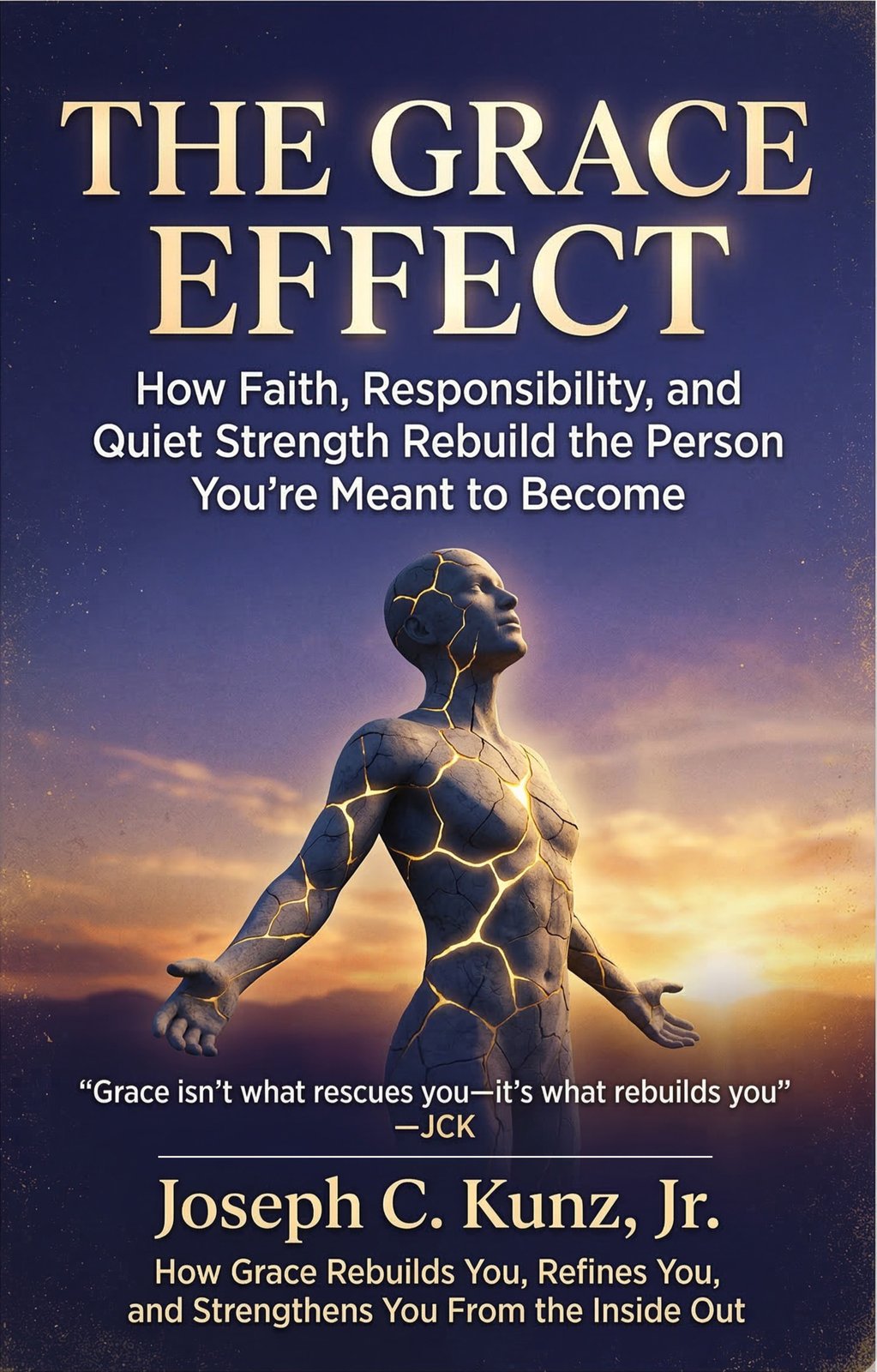
I wrote The Grace Effect because I’ve seen what happens when people let life push them around.
I’ve done it myself—drifting, reacting, waiting for clarity to magically appear.
But grace taught me something different: the path isn’t in charge.
You are. And the strength to choose with conviction doesn’t come from willpower alone—it comes from grace.
Every page of this book was born out of my own battles to stop drifting and start living on purpose.
It’s not fluff, and it’s not theory—it’s a blueprint for anyone who’s tired of letting the path decide for them.
Get your copy of The Grace Effect and start leading your life with grace, grit, and clarity—before the path takes you somewhere you never meant to go.
Almost ready—watch for the release.