When Good Intentions Aren’t Enough

Good intentions may feel right, but without truth they can lead a person steadily in the wrong direction. —Joseph C. Kunz, Jr.
Why Sincerity Cannot Replace Reality
By Joseph C. Kunz, Jr.
Synopsis
This isn’t an essay about attacking decent people, mocking compassion, or pretending that everyone who supports a bad idea must be corrupt, foolish, or malicious. In this essay, Joseph C. Kunz, Jr. argues that one of the most dangerous errors in a disordered culture is the belief that sincerity can replace truth—that meaning well is enough to make an idea, policy, movement, or moral cause good.
Kunz makes the case that many forms of disorder do not spread through evil intentions, but through good intentions attached to false assumptions. People can be kind, sincere, charitable, religious, and socially responsible while still trusting frameworks that misread human nature, ignore consequences, weaken responsibility, and detach compassion from reality. The problem is not that they care. The problem is that caring without truth can become a powerful engine of confusion.
The conclusion is simple: sincerity matters, but it is not sufficient. Good intentions may explain a person’s motive, but they do not prove the person is right. A serious life requires more than wanting to do good. It requires the humility to ask whether the good we intend is actually aligned with what is true.
Sincerity can guide the heart, but only truth can govern the path. —JCK
I. Introduction: The Comfort of Meaning Well
Most people want to believe they are good.
They want to help. They want to care. They want to stand on the right side of things. They want to believe their opinions are compassionate, their causes are moral, their loyalties are decent, and their instincts are aimed toward justice.
That desire is not evil.
It is human.
But it is not enough.
One of the great mistakes of modern life is the belief that good intentions can carry more weight than reality. That if a person means well, the idea must be good. That if a cause uses compassionate language, the cause must be righteous. That if a movement speaks in moral tones, it must be morally sound.
But reality is not persuaded by intention.
A bridge can be built by sincere men and still collapse if the structure is wrong. A family can be damaged by decisions made in the name of love. A child can be harmed by adults who truly believe they are protecting him. A culture can be weakened by people who sincerely think they are saving it.
Meaning well is not nothing.
But it is not the same as being right.
II. Why Sincerity Feels So Convincing
Sincerity is powerful because it feels morally clean.
It allows a person to say, “My heart is in the right place.” And sometimes it is.
But the heart being in the right place does not guarantee that the mind is facing the right direction.
That distinction matters.
A sincere person may be easier to trust emotionally. He may sound kinder, softer, more generous, more humane. He may appear morally superior to the person asking harder questions about consequences, limits, structure, and reality.
That is part of the danger.
Sincerity often looks better in public than truth does.
Truth can sound harsh.
Truth can interrupt emotion.
Truth can complicate compassion.
Truth can force a person to say no.
Sincerity, by contrast, can feel warm without being tested. It can be praised without being examined. It can gather applause before anyone asks whether the thing being supported will actually hold.
That is how sincerity becomes dangerous.
Not because sincerity is bad.
Because sincerity can become a substitute for judgment.
III. The Difference Between Motive and Direction
A motive tells you why a person moves.
It does not tell you where he is going.
This is the distinction a serious culture must never lose.
A person may be motivated by pity and still support something destructive. A person may be motivated by fairness and still misunderstand justice. A person may be motivated by compassion and still weaken the very people he wants to help.
Good motives do not cancel bad assumptions.
They may even hide them.
That is why good people can become deeply committed to bad ideas. Not because they wake up wanting harm. Not because they hate truth consciously. Not because they see themselves as enemies of order.
Often, they believe the opposite.
They believe they are helping. They believe they are protecting the vulnerable. They believe they are resisting cruelty. They believe they are standing with the decent, the humane, the loving, the enlightened.
And sometimes, at the level of motive, they are.
But reality judges direction, not merely desire.
A man walking east with sincere conviction will not arrive west because his heart was warm.
Direction matters.
IV. Compassion Without Truth Becomes Confusion
Compassion is one of the great moral goods.
But compassion must be governed by truth.
When compassion detaches from truth, it stops helping people live in reality and starts helping them escape it. It begins to confuse affirmation with love, approval with mercy, softness with wisdom, and discomfort with harm.
That kind of compassion feels kind in the moment.
But it often leaves people weaker over time.
Real compassion does not mock suffering. It does not sneer at brokenness. It does not treat confused people as enemies. It does not crush those who are already hurting.
But real compassion also refuses to lie.
It does not tell a person that every feeling is trustworthy. It does not pretend that every desire is identity. It does not remove every boundary in the name of kindness. It does not call consequences cruelty simply because consequences are painful.
Compassion without truth eventually becomes sentimentality.
Sentimentality without structure eventually becomes disorder.
And disorder, no matter how gently introduced, eventually sends someone the bill.
V. The Moral Identity Trap
One reason good intentions become so difficult to challenge is that people begin to attach their identity to them.
They do not merely believe a cause.
They become the kind of person who supports that cause.
That is a serious shift.
Once a belief becomes part of moral identity, disagreement no longer feels like disagreement. It feels like attack. A question feels like accusation. A challenge feels like rejection. A request for evidence feels like cruelty.
This is how ideas become protected from examination.
The person is no longer asking, “Is this true?”
He is asking, “What would it say about me if this were false?”
That is a much harder question to face.
Because now the person’s goodness feels tied to the idea’s survival.
If the idea fails, he feels accused. If the policy harms people, he feels implicated. If the movement proves dishonest, he feels personally exposed. So instead of examining the framework, he defends the intention.
This becomes even harder when the belief is not merely political, but moral and religious. A person may come to believe that supporting a certain cause is not just compassionate, but required in order to be a good person, a responsible citizen, or even a faithful Christian.
At that point, disagreement becomes almost impossible to hear fairly.
It no longer sounds like a different judgment about reality.
It sounds like a failure of love.
It sounds like a defect in compassion.
It sounds like a misunderstanding of faith itself.
That is how many intelligent and decent people become difficult to reach.
Not because they cannot think.
Because too much of their moral self-image has been invested in the conclusion.
VI. When Faith Gets Captured by Sentiment
This becomes even more serious when religious language gets absorbed into the same pattern.
Many people do not adopt disordered ideas because they reject faith. Sometimes they adopt them because they believe faith requires it.
They hear words like compassion, justice, mercy, inclusion, love, and care, and they assume any movement using those words must be morally aligned with Christianity.
But Christian love is not the same as cultural softness.
Christian mercy is not the same as moral surrender.
Christian compassion is not the same as affirming confusion.
Christian justice is not the same as baptizing every grievance.
Faith does not require a man to turn off judgment in order to prove he has a heart. It requires him to bring heart, mind, conscience, and conduct under truth.
That is the difference.
A person can go to church, pray sincerely, love his family, care about the poor, and still be wrong about the framework he is trusting. That does not make him evil. It makes him human. It means his sincerity must still be tested by truth.
This is one of the hardest things to accept, especially among people who love each other.
Two people can both believe they are trying to follow Jesus and still arrive at very different conclusions about what faithfulness requires in public life. One may see a political cause as compassion in action. Another may see that same cause as compassion detached from truth. One may believe he is defending the vulnerable. Another may believe the method being used will weaken the very people it claims to protect.
That tension cannot be resolved by sincerity alone.
It requires judgment.
It requires humility.
It requires the courage to ask whether the language of love is being used to serve truth—or to avoid it.
When faith is severed from truth, it becomes sentiment with religious vocabulary. It still sounds kind. It still sounds moral. It still sounds compassionate.
But it loses its spine.
And faith without spine cannot form people.
It can only comfort them while they drift.
VII. Good People Can Help Build Bad Systems
This is one of the hardest truths to accept:
Good people can help build bad systems.
Not because they are secretly evil.
Because systems do not require every participant to understand the full outcome. They only require enough people to keep supplying energy, consent, language, labor, votes, money, silence, and moral cover.
Some people supply ambition.
Some supply fear.
Some supply ideology.
Some supply fashion.
Some supply guilt.
Some supply sincerity.
The sincere person may be one of the most useful participants because he gives disorder a human face.
He makes the system look kind.
He makes bad ideas sound decent.
He makes harmful policies feel humane.
He says, “We are only trying to help.”
And sometimes he means it.
But meaning it does not settle the question.
The question is not only, “Do you care?”
The question is, “Does this actually serve what is true, good, and human?”
VIII. Reality Does Not Grade on Intention
Reality is not cruel.
But it is exact.
It does not adjust consequences because a person meant well. It does not preserve a family because the adults had good motives. It does not protect a child because the policy sounded compassionate. It does not strengthen a culture because the slogans were emotionally satisfying.
Reality responds to alignment.
If a person builds against reality, reality eventually answers.
This is not punishment in the cheap sense. It is structure.
A man can sincerely spend more than he earns and still go broke. A parent can sincerely avoid discipline and still raise a child without self-command. A leader can sincerely avoid conflict and still allow decay. A culture can sincerely reject limits and still be destroyed by limitlessness.
Intention does not repeal consequence.
That is why responsibility must govern compassion.
Not to make compassion colder.
To make it stronger.
IX. The Courage to Question Your Own Goodness
One of the hardest forms of humility is the willingness to question your own goodness.
Not your worth.
Not your dignity.
Not whether your life matters.
But the assumption that because you meant well, you must have been right.
That is difficult.
It requires a person to say:
Maybe I cared and still misunderstood.
Maybe I was kind and still enabled harm.
Maybe I wanted justice and still supported disorder.
Maybe I used moral language while avoiding moral reality.
That is not weakness.
That is maturity.
A serious person does not worship his own intentions. He tests them. He examines them. He disciplines them. He brings them under reality.
That is how responsibility grows.
That is how faith deepens.
That is how character becomes more than a feeling.
X. Caring Accurately
The answer is not to care less.
The answer is to care accurately.
That phrase matters.
Accurate care does not abandon compassion. It strengthens it. It asks better questions. It looks further down the road. It refuses to confuse immediate emotional relief with long-term human good.
Accurate care asks:
What is true?
What is being assumed?
What is being ignored?
Who benefits?
Who pays later?
What happens to the child?
What happens to the family?
What happens to responsibility?
What happens when this becomes normal?
These questions are not cruel.
They are protective.
They keep compassion from becoming sentimental damage. They keep moral concern from being hijacked by fashionable confusion. They keep sincerity connected to reality.
A culture that cannot ask these questions is not compassionate.
It is fragile.
And fragile compassion eventually becomes a tool for people who know exactly how to use guilt, pity, and fear.
XI. Conclusion: Good Intentions Must Bow to Truth
Good intentions matter.
They reveal something about the heart.
But they are the beginning of moral responsibility, not the end of it.
Without truth, compassion can become confusion. Care can become misdirection. Sincerity can become cover. Moral language can become a shield against honest examination.
The goal is not to become suspicious of every decent motive.
The goal is to stop treating motive as proof.
A serious life requires more.
It requires truth.
It requires humility.
It requires the courage to admit that meaning well does not guarantee building well.
Because good intentions may open the door.
But only truth can tell you where the path leads.
Good intentions may explain why a man started walking, but only truth can tell him whether he is walking toward life or away from it. —JCK
Related Reading: When Sincerity Replaces Truth
If this essay challenged you, these two pieces go deeper into the same underlying problem—the drift from reality, and the cultural habits that allow it to continue.
1. When Reality Gets Called Naive
A foundational look at how cultures avoid truth by mocking clarity and redefining reality instead of confronting it.
Reader Comment: This essay helped me see that the problem isn’t just disagreement—it’s that truth itself is being downgraded before the conversation even begins.
A clear diagnosis of how social pressure makes honesty feel costly, causing ordinary people to stay silent while confusion spreads unchecked.
Reader Comment: This one put into words what I’ve experienced for years—knowing something is wrong, but feeling like saying it out loud comes with a price.
Quote: When sincerity replaces truth, silence is never far behind. —JCK
The Book Behind This Essay: Stop Confusing Good Intentions with Good Outcomes
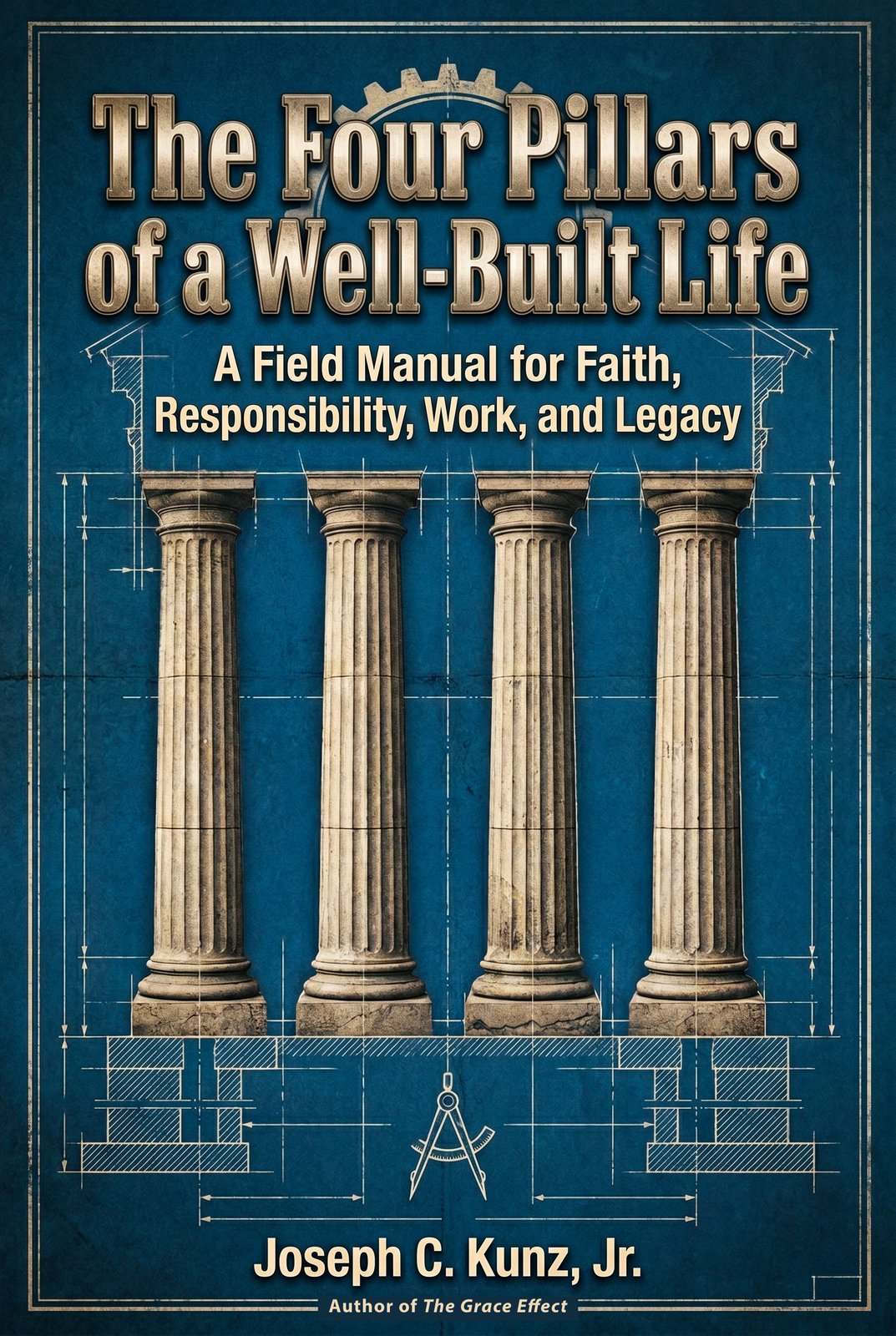
The Four Pillars of a Well-Built Life
A culture does not collapse because people suddenly become evil.
It collapses because good people stop asking whether what they believe actually holds.
They care. They feel. They want to help.
But they stop testing their assumptions against reality.
And over time, sincerity replaces structure.
That is where confusion begins.
The Four Pillars of a Well-Built Life is not about sounding compassionate. It is about building a life that can withstand pressure—because it is grounded in what is true.
Faith. Responsibility. Work and Wealth. Legacy.
These are not emotional preferences.
They are structural realities.
They are what keep compassion from becoming confusion, and good intentions from becoming damage.
This book is for people who:
· want to care—but care accurately
· want to believe—but believe what holds
· want to help—but help in ways that actually strengthen people
· want to live a life that does not collapse under the weight of its own assumptions
Because good intentions may feel right.
But only truth builds something that lasts.
And if you don’t anchor your life in reality, your sincerity will not save you from the consequences.
The Four Pillars of a Well-Built Life Being Built to Hold