The Hardest Lesson I Learned Wasn’t Hemingway’s

Sometimes the most valuable lessons aren’t the ones we expect—because life, unlike Hemingway’s pages, teaches in ink we can’t erase. —Joseph C. Kunz, Jr.
Resilience Doesn’t Require a War, a Bar, or a Broken Family
By Joseph C. Kunz, Jr.
Synopsis
This essay challenges the popular myth that resilience is forged through escape, excess, or dramatic suffering. Drawing a quiet contrast with the romanticized image of Hemingway-style toughness, Joseph C. Kunz, Jr. reflects on a different kind of strength—one built through faith, family, and the discipline to stay when walking away would be easier.
The Hardest Lesson I Learned Wasn’t Hemingway’s is a personal reckoning with what endurance really looks like in ordinary life: showing up without applause, carrying responsibility without recognition, and trusting that presence is more powerful than bravado. It argues that true resilience isn’t found in running toward chaos, but in standing steady through it—with faith as ballast and family as the anchor.
Life can come hard—but faith and family give us the strength to stand through what might otherwise break us. —JCK
I. Introduction
Ernest Hemingway once wrote: The world breaks everyone, and afterward many are strong at the broken places. That quote gets passed around like wisdom carved in stone. And in some ways, it is.
But here’s what I’ve learned: Life can come hard—but faith and family give us the strength to stand through what might otherwise break us.
Hemingway’s words resonate with many people—and I respect the clarity and courage in some of his writing. But I’ve always struggled with the way his life is often idealized. He became a symbol of rugged independence and tortured genius. His travels, his war stories, his larger-than-life persona—they’ve been mythologized for generations.
What’s often left out of that myth is the cost of living that way. The kind of strength that’s built around escape—around bars, wars, and constant motion—often leaves a trail of damage behind. When I say “broken family,” I’m not talking about divorce or difficulty. I’m talking about choosing absence over presence, running from responsibility, abandoning the people who needed you most. That’s not strength. That’s unfinished living.
The path I’ve chosen looks very different.
My strength didn’t come from escape or adventure or bravado. It came from staying put. From building a life alongside someone I love. From holding onto faith when everything around me felt uncertain. From showing up—not once in dramatic fashion—but every day, over and over again.
Some admire the Hemingway version of strength. I understand that. But it’s not the kind of strength that built my life. And it’s not the kind I want to pass down.
II. What Real Strength Looks Like (When No One’s Watching)
Real strength isn’t loud. It doesn’t wear medals or make speeches. It doesn’t look like a movie scene or read like a novel. Most of the time, it’s just quiet faithfulness. It’s doing the next right thing—again and again—even when it’s hard, even when no one sees it.
For me, strength looked like:
• Waking up before dawn to keep the business alive—while my wife made coffee and reminded me that we were in this together.
• Holding her hand in hospital waiting rooms, praying for wisdom we didn’t have and strength we couldn’t manufacture.
• Facing health scares, financial stress, and long odds—and never once considering leaving, blaming, or giving up.
• Trusting in God’s plan, not because I understood it, but because I’ve lived long enough to know that grace doesn’t always come loudly. Sometimes, it shows up in the form of a quiet, unwavering spouse.
• Carrying burdens I couldn’t speak about, because protecting those I love has always mattered more than being understood.
The world teaches men to be stoic, solitary, invincible. But that’s a lie. The truth is, we’re at our strongest not when we’re standing alone, but when we’re standing with—with someone who’s in the fight beside us, and with the faith that our lives mean more than just what we produce or endure.
Without my wife’s belief in me, and without our shared faith that there’s a purpose in this path, I don’t know that I would’ve made it through.
That’s not Hemingway’s kind of strength. It’s mine. And it’s enough.
Some men build their lives to be admired. Others build theirs to be trusted. Only one of those lasts. —JCK
III. The Lesson I Had to Learn the Hard Way
When I was younger, I thought the hardest battles in life would be dramatic—loud, visible, maybe even a little cinematic. But real life doesn’t work that way.
The hardest lesson I had to learn was quieter—and much harder to explain. It was this:
You must keep going—even when your spirit is worn thin, even when no one knows what you’re carrying, even when you feel like disappearing.
There were seasons when I didn’t feel strong. When the pressure of running a business, leading a family, dealing with health issues, and making sure everything held together behind the scenes felt like too much.
But I kept going—not alone.
My wife was there, steady as ever, refusing to let me carry it all by myself. She never needed the spotlight, but she was the strongest person in the room—speaking faith when I was low, giving practical wisdom when I couldn’t think straight, making me laugh when the weight got heavy.
And our faith? That was the backbone. When my energy gave out, when my confidence broke, when all I had was uncertainty—faith gave me the strength to take one more step. Not because I saw the whole path. Just because I believed I wasn’t walking it alone.
That’s the hard truth about adult life no one tells you: There’s no off switch. No perfect timing. No applause. Just the quiet discipline of showing up—again and again—with grace, grit, and love.
IV. A Different Kind of Strength (and a Challenge to You)
I didn’t need to go to war or write novels to find out what strength really is. I found it in the ordinary moments. The messy, unglamorous, life-defining moments.
In holding hands through the hard years. In building something stable from scratch. In trusting God when the road was dark and the map unclear.
This life Michele and I built? It wasn’t accidental. It wasn’t easy. And it sure wasn’t luck. It was forged in commitment. Fueled by faith. Rooted in love. And held together by a decision we made a long time ago: we don’t quit on each other—no matter what.
That kind of strength isn’t flashy. But it lasts.
So, here’s my challenge to you:
What’s the hardest thing life has asked of you—and who helped you carry it? Who stood beside you when the lights went out? What belief kept you moving when the reasons ran out?
Don’t let the world sell you the lie that strength is about running off to prove something. Sometimes the strongest man is the one who stays. Who leads without shouting. Who loves without retreating. Who believes—quietly, deeply—that grace is real, and that faithfulness is the fight worth winning.
That’s the kind of man I’ve worked to become. And if you’re on that path too, you’re not alone.
V. Conclusion: Strength That Stays
When I look back at the toughest moments in my life, I don’t see a hero—I see a man who kept going because he was loved. I see a marriage that didn’t just survive, but deepened through adversity. I see a faith that didn’t erase hardship, but made it meaningful.
And that, to me, is the heart of it all: Strength isn’t about what you can conquer—it’s about what you can carry, and who you carry it with.
My life has been shaped not by how far I’ve run, but by how faithfully I’ve stayed. Not by avoiding pain, but by walking through it—hand in hand, heart in heart, guided by something greater than myself.
If you’ve built a life on love, trust, and faith, you already know this truth. And if you’re still building? Keep going. The real rewards are never loud. But they’re worth everything.
My success has never been mine alone. It’s been built day by day—through the grace of God and the quiet, unwavering strength of the woman beside me. —JCK
Related Reading: For Those Who Learn Best Through Hard Truths
If this essay struck a chord, these will deepen the resonance.
1. Writing from the Inside Out
Why the most powerful writing—and living—comes not from theory but from hard-earned personal truths.
Reader Comment: This essay reminded me that the only stories worth telling are the ones we’ve lived.
2. The Best Advice My Father Never Said Out Loud
How silence, absence, and hard truths can shape a man’s character more than words ever could.
The Book Behind This Essay: The Strength Nobody Sees — But Everyone Feels
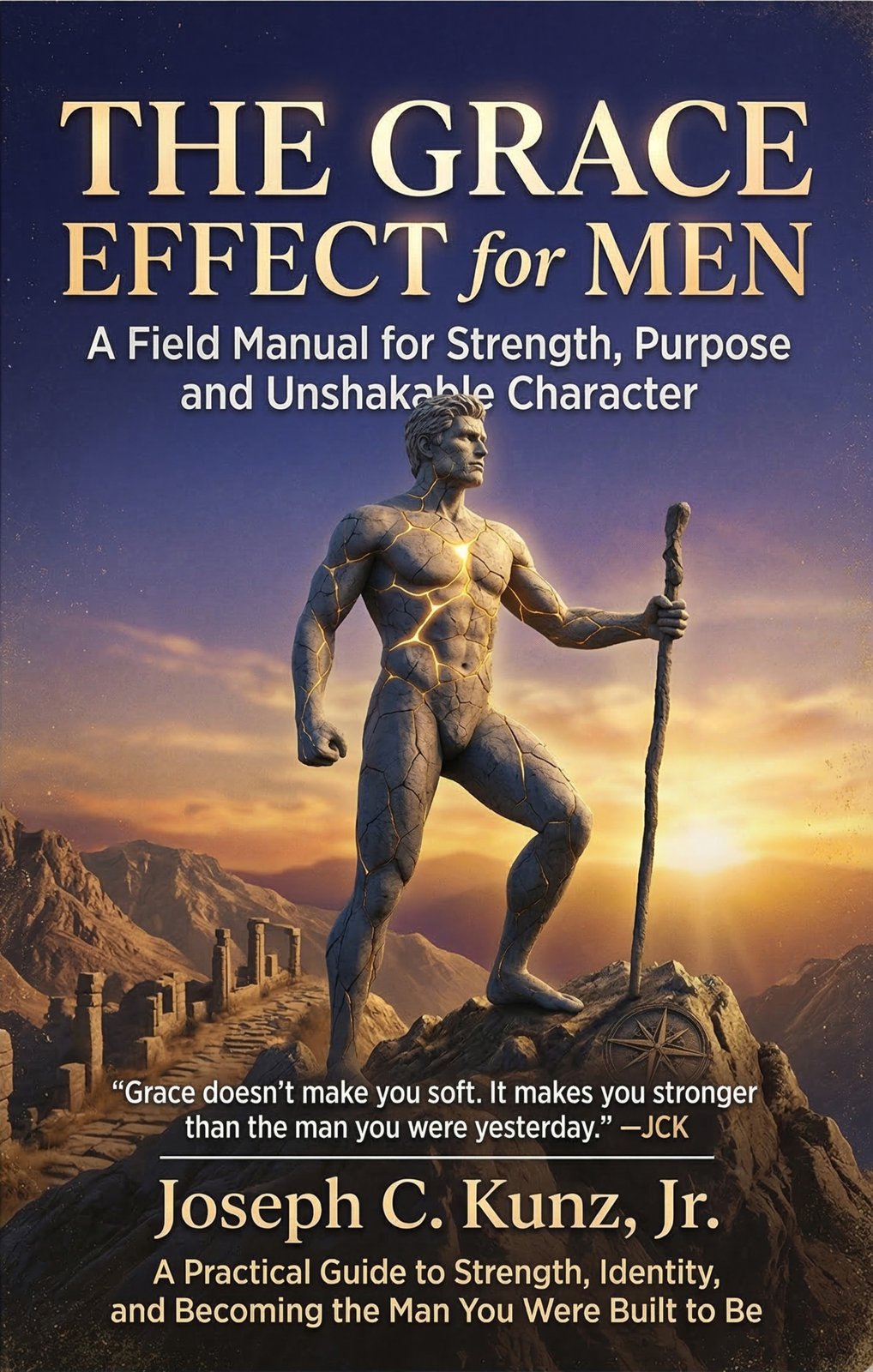
If this essay hit you in that place you don’t talk about—the place where you carry weight for everyone else and never complain—then you’re exactly who I wrote this book for.
The Grace Effect for Men is about the kind of strength the modern world pretends doesn’t matter anymore: the man who shows up, day after day… the man who keeps his word even when no one’s watching… the man who fights through pain, doubt, and silence—and still chooses grace over bitterness.
This isn’t a book about being perfect. It’s a book about being present. About staying when walking away would be easier. About becoming the kind of man your family trusts, your friends admire, and your younger self would be proud of.
If you’re tired of cheap motivation and hollow masculinity… If you want a faith that holds under pressure… If you’re ready to build a life of quiet, unshakable strength—
This book is your next step.
The Grace Effect for Men — Coming soon.
Be ready. It’s going to hit differently.