Nothing Load-Bearing Is Built in Public

What the world admires in public is usually the late fruit of years of unseen discipline, private formation, and quiet fidelity built where no one was watching. —Joseph C. Kunz, Jr.
Why the Visible Life Always Rests on Unseen Formation
By Joseph C. Kunz, Jr.
Synopsis
This isn’t another motivational piece about hustle, patience, or “trusting the process” until success finally shows up. In this essay, Joseph C. Kunz, Jr. argues that anything durable in public—faith, character, competence, leadership, marriage, wealth, and legacy—is first built in private, where there is no applause, no audience, and no external reward strong enough to carry a weak interior life.
Kunz makes the case that modern people are increasingly tempted to want visible results without invisible formation. They want recognition without apprenticeship, influence without discipline, public strength without private surrender, and outcomes without the long years of unpaid practice that make those outcomes real. He argues that the public version of a life is always partial, and that what people call talent, maturity, confidence, wisdom, or success is often the visible surface of habits, sacrifice, repentance, study, restraint, and fidelity built quietly over time.
The conclusion is simple: what holds under pressure in public was almost always built without applause in private—and anything not built there will eventually crack where everyone can see it.
Reality cannot be cheated. What is missing in private will eventually fail in public. —JCK
I. Introduction: The Part Nobody Sees
One of the great confusions of modern life is that people keep judging outcomes as though they appeared all at once.
They see the finished book, not the years of thinking.
They see the strong marriage, not the thousand daily acts of restraint, patience, humor, forgiveness, and fidelity that made it possible.
They see the competent businessman, not the decades of mistakes, observation, self-correction, pressure, and unpaid learning that taught him how not to panic.
They see the investor who now moves calmly, not the years it took to build judgment strong enough to resist greed, fear, fashion, and noise.
They see the man who speaks clearly about God, faith, and responsibility, not the long private wrestling that taught him what words can and cannot carry.
What they see is the visible layer.
What they usually do not see is the load-bearing structure underneath it.
That is the part that matters most.
The strongest people, the deepest work, the most trustworthy lives, and the most enduring forms of success are almost never built in public. Public life may reveal them. Public life may test them. Public life may reward them. But it does not build them. The actual building happens elsewhere—in obscurity, repetition, correction, self-government, private submission to reality, and often in seasons where no visible payoff exists yet.
That truth is not just about professional achievement. It touches every part of life worth naming.
Faith is built there.
Character is built there.
Judgment is built there.
Skill is built there.
Marriage is built there.
Fatherhood is built there.
Stewardship is built there.
Legacy is built there.
Anything can be advertised in public. Very little can be built there.
That is one of the reasons so much modern life feels impressive but thin. We are surrounded by visible performance and starving for invisible depth. We live in a culture obsessed with the display of things and increasingly impatient with the formation of things. People want the image of strength more than the discipline that creates it. They want the signal of wisdom more than the submission that teaches it. They want the outer proof before the inner structure exists.
But reality has a hard edge. It does not bend for branding. Sooner or later, every public life leans on its private construction. And when the pressure comes—and it always comes—the truth is revealed.
Not invented. Revealed.
II. The Lie of Immediate Visibility
One of the most corrosive lies in modern life is the belief that visibility is proof.
A person becomes known, and others quietly assume that he has become substantial.
A person becomes eloquent, and others assume he has become wise.
A person becomes successful, and others assume the inner life kept pace with the outer one.
A person becomes influential, and others assume the soul is strong enough to carry the weight.
All of those assumptions are false.
Visibility proves exposure. It does not prove depth.
In fact, one of the most dangerous things that can happen to a person is to become publicly visible before he has been privately formed. Public attention can magnify a life, but it cannot stabilize it. It can reward talent while hiding weakness. It can amplify gifts while concealing cracks. It can make a man look taller than his structure can actually bear.
That is why so many public collapses feel sudden to outside observers but not to reality. The collapse is only sudden in appearance. The weakness had usually been there for years. The structure was thin long before the pressure exposed it.
This is true in the spiritual life. It is true in business. It is true in leadership. It is true in family life. It is true in culture. It is even true in civilizations.
What appears strong in public may actually be living on borrowed private capital.
A society can do this for a while. So can a family. So can a business. So can a man. But not forever.
Eventually, the bill comes due.
That is why the serious question is never merely, “What is visible?” The serious question is, “What was built where no one was watching?” That is the real story. That is where the weight was either carried or avoided. That is where habits were formed or neglected. That is where character either learned obedience or learned performance. That is where conviction either deepened into structure or remained a costume.
People often talk about success as though the hard part is getting noticed. Usually, that is not the hard part. The harder part is becoming the kind of person who can carry visible responsibility without being hollowed out by it.
That part is mostly private.
And it is almost always expensive.
III. Faith Is First Built in Secret
Nowhere is this more misunderstood than in the life of faith.
A great many people still talk as though faith were mostly public language, visible affiliation, inherited vocabulary, or moral atmosphere. They speak as though a person becomes spiritually substantial by sounding serious about God, surrounding himself with the right symbols, or expressing the right set of convictions in public.
But faith does not become real because it becomes legible.
It becomes real because it survives private reality.
A man’s actual faith is not measured first by how fluently he speaks about it when others are listening. It is measured by what he does with God when no one is there to help him perform belief. It is measured in private obedience, private surrender, private reverence, private repentance, private dependence, private restraint, and private willingness to submit his own pride to a reality higher than himself.
That is where faith becomes structure.
Without that hidden life, public religious language becomes dangerously easy. A man can speak in moral tones, use sacred vocabulary, take principled positions, and still remain largely unformed before God. He may possess vocabulary without surrender, confidence without contrition, and public seriousness without private transformation.
That is one of the reasons religious life can become so hollow so quickly in a culture obsessed with appearance. Once faith becomes something to signal rather than something to submit to, the structure begins to weaken. The words may remain. The costume may remain. The tribe may remain. The language may even become louder. But the actual depth starts disappearing.
And once that happens, public Christianity becomes brittle. It starts leaning on mood, identity, or performance because it no longer has enough interior structure to carry real pressure.
A faith that has not been tested in private usually cannot remain strong in public for long.
That does not mean a serious man must become sentimental, soft, or performatively “spiritual.” It means he must understand that no amount of public conviction can replace private formation. Faith is not strengthened by being displayed. It is strengthened by being practiced, submitted, deepened, and endured where no audience is present to flatter it.
That is why the hidden life matters so much. A man who has learned to meet God in private will often stand with greater steadiness in public. Not because he is showing off belief, but because belief has already become load-bearing inside him.
That is the difference between religious noise and spiritual structure.
IV. Responsibility Begins Where Applause Ends
The same principle governs character.
Responsibility is not proven by what a man does when he is being evaluated. It is proven by what he does when the incentives are weak, the attention is absent, and the work still needs to be done.
That is where self-government begins.
A disciplined life is not built by occasional heroic effort. It is built by repeated private decisions that look unimpressive in the moment. Getting up. Following through. Telling the truth. Resisting appetite. Keeping your word. Finishing the task. Refusing excuses. Returning to the work. Owning the mistake. Correcting course. Doing the necessary thing before it becomes urgent.
None of that is glamorous.
That is precisely why it matters.
What we call maturity is often just this: a person has trained himself to keep doing what is right without needing constant emotional reinforcement, public recognition, or external pressure to prop him up. He has built enough interior order that he no longer needs every good action to be witnessed in order to sustain it.
That is rare.
It is also one of the great dividing lines in life.
Immature people are often far more dependent on atmosphere than they realize. They do well when encouraged, seen, praised, supervised, or energized. Remove those things, and the structure weakens. Serious people learn how to act from conviction rather than mood. They become less dependent on the room and more governed by principle. They no longer need visibility to produce effort.
That kind of responsibility is one of the most underrated forms of strength in the modern world.
Why? Because we now live in a culture that often confuses expression with substance. People are rewarded for broadcasting intent, curating image, and publicly signaling identity. But a life is not built by announcing what matters. It is built by obeying what matters repeatedly enough that it becomes part of your structure.
A man does not become trustworthy because he says the right things about discipline. He becomes trustworthy because discipline has already rearranged his life.
That is why private practice matters so much. Not because obscurity is romantic, and not because hidden work is automatically noble, but because reality is formed through repetition. Whatever you repeatedly do in private becomes part of what you are able to carry in public.
And whatever you neglect in private does not disappear. It waits.
It waits for pressure.
It waits for fatigue.
It waits for success.
It waits for power.
It waits for exposure.
Then it introduces itself.
V. Competence, Business, and Wealth Are Built Long Before They Become Visible
The same law governs work, business, and money.
People often talk as though financial success begins when the money arrives. It does not. It begins much earlier—when a person is still largely unseen and still being tested in the disciplines that money will later expose rather than create.
Competence is not built when everyone finally recognizes it. It is built in the long stretch before recognition, when the work still feels underpaid, the effort still feels disproportionate, and the rewards do not yet justify the labor in any public way. That is where real business strength is formed. That is where judgment is sharpened. That is where a man learns how to make decisions with incomplete information, how to carry risk without losing his head, how to observe carefully, how to correct mistakes without collapsing into self-pity, and how to keep showing up without the narcotic of instant results.
That season matters because it reveals motive.
A great many people say they want success. Far fewer are willing to live through the years when success looks indistinguishable from obscurity, repetition, frustration, and unpaid practice. They want visible outcome without invisible apprenticeship. They want the finished edge without the grinding. They want the return without the discipline that makes intelligent risk possible. They want wealth without stewardship, business success without formation, and confidence without long exposure to consequence.
That is fantasy.
Any man who has built anything real knows that confidence worth having is usually purchased in private long before it becomes visible in public. It is purchased by learning what not to do. It is purchased by error, restraint, observation, repetition, and the slow development of judgment. It is purchased by surviving your own bad instincts long enough to stop obeying them.
This is especially true in investing.
What the outside world often calls intelligence is sometimes just emotional discipline exercised for years where nobody could see it. Calm does not appear out of nowhere. Patience does not appear out of nowhere. The ability to resist greed when others are euphoric, or fear when others are panicking, is not usually a personality trait. It is usually a structure. It has been built over time through study, scars, restraint, memory, and repeated submission to reality.
That is why money reveals so much.
Money does not automatically make a man wise, patient, generous, disciplined, or prudent. It usually reveals whether those things were already there. If the structure exists, money expands stewardship. If the structure does not exist, money expands appetite, illusion, ego, and carelessness.
The same is true of business itself. Growth can hide weaknesses for a while. So can momentum. So can praise. So can market conditions. But eventually every enterprise leans on what was built when the stakes were smaller, the conditions were harder, and the habits were still being formed. The visible business is only the public expression of a long private education in responsibility, discernment, and self-command.
This is why serious work is never merely about producing income. It is also about producing a person capable of carrying income without being ruled by it.
That is a much bigger achievement.
Anyone can admire the polished result. The serious question is what kind of man had to be built in order for that result to become possible in the first place.
That man was not built in public.
VI. Family Strength Is Built in Ordinary Hidden Fidelity
The same principle applies in family life, and perhaps nowhere more clearly.
People admire strong families the way they admire strong buildings: from the outside. They see warmth, order, affection, steadiness, laughter, loyalty, and continuity. They see children who are grounded. They see marriages that endured. They see a home that produced strength instead of confusion.
What they do not see are the hidden years that made those visible things possible.
They do not see the private restraint that prevented small selfishness from becoming family culture. They do not see the repeated decisions to show up when tired, to be patient when irritated, to stay tender without becoming weak, to remain firm without becoming harsh, to absorb frustration without passing it down the line, to apologize when wrong, to keep promises when nobody outside the home would ever know they had been tested.
That is where family life is either built or quietly damaged.
A strong marriage is not built mainly on dramatic moments. It is built in the ordinary atmosphere two people create over time. It is built in tone, attention, sacrifice, loyalty, humor, forgiveness, self-restraint, and daily habits of respect that rarely look important in the moment. But that is precisely the point. Most of what makes a marriage strong is too small and too constant to impress outside observers. It is private architecture.
The same is true of fatherhood and motherhood.
Children do not learn mainly from the polished speeches adults give them. They learn from repeated exposure to who their parents actually are. They absorb mood, order, priorities, reverence, seriousness, affection, truthfulness, consistency, and self-command. They learn what matters by what is repeated. They learn what is real by what survives inconvenience. They learn whether faith is decorative or load-bearing by watching what governs the house when life gets hard.
That means family success is never merely sentimental. It is moral and structural. It depends less on occasional intensity than on ordinary fidelity carried over years.
That is one of the reasons modern culture so badly misunderstands the family. It keeps reducing family life to feeling, expression, preference, and lifestyle arrangement, while neglecting the hidden disciplines that create actual security and inheritance. But a family is not strengthened by declarations alone. It is strengthened by what is done repeatedly, quietly, faithfully, when nobody outside the walls is there to applaud it.
This matters because legacy begins there.
Before a man leaves behind ideas, books, assets, or a public name, he leaves behind atmosphere. He leaves behind habits. He leaves behind the moral weather he created in the people nearest to him. He leaves behind what his presence trained others to expect from life, love, work, truth, discipline, and God.
That kind of inheritance is not improvised at the end of life. It is built in the thousand unnoticed choices that form the daily culture of a home.
Which means family strength, too, is built mostly where the world never sees it.
VII. Legacy Is the Harvest of What Was Repeated in Private
By the time people speak of legacy, they are usually looking backward.
They see the books, the children, the business, the example, the reputation, the property, the principles, the memories, the lives strengthened by someone’s presence. They see the visible harvest and call it a legacy.
Fair enough. But that is still only the end of the story.
Legacy is not finally built in the moment when others praise what a man leaves behind. It is built in the pattern he repeated for decades before anybody had language for the result. It is built in what he practiced when nobody was scoring him. It is built in what he honored, what he refused, what he endured, what he corrected, and what he kept teaching through repetition long after he was tired of hearing himself say it.
That is why legacy is so closely tied to private structure. A man does not pass on whatever he once claimed to believe. He passes on what was made habitual enough to become culture around him.
If truth was habitual, truth is part of the inheritance.
If discipline was habitual, discipline is part of the inheritance.
If reverence was habitual, reverence is part of the inheritance.
If responsibility was habitual, responsibility is part of the inheritance.
If appetite, chaos, vanity, or selfishness were habitual, those become part of the inheritance too.
That is the uncomfortable part many people would rather ignore. Legacy is not built by intention alone. It is built by pattern. And patterns are formed privately long before they become visible publicly.
This is why the language of legacy can become so sentimental and so dishonest. People like to imagine that what outlives them will be determined by what they hoped, what they meant, or what they said they valued. But what outlives a man is usually more concrete than that. It is what he normalized. It is what he embodied often enough that others began building around it.
In that sense, legacy is less like a speech and more like a transmitted structure.
That is one reason the Four Pillars belong together. Faith shapes what a man reveres. Responsibility shapes what he practices. Work and wealth shape what he builds and stewards. Legacy reveals what all of that actually produced over time. The fourth pillar is not separate from the others. It is where the others become visible across generations.
So when people admire what endured in a life, they are almost never admiring a single dramatic act. They are admiring the long result of repeated private fidelity. They are seeing a life that did not merely perform values in public, but built them deeply enough in private that other people could stand under their shelter.
That is what real legacy looks like.
Not image. Not branding. Not even fame.
Shelter. Structure. Transmission.
And all of it was built long before the public could see what it was looking at.
VIII. Conclusion: What the World Sees Last Was Built First
The modern world is filled with people trying to reverse the order of things.
They want visible strength before invisible discipline.
They want public credibility before private obedience.
They want influence before formation.
They want outcome before apprenticeship.
They want inheritance without stewardship.
They want the fruit without the root.
But reality does not cooperate with that arrangement.
Anything can be displayed in public for a while. Very few things can be sustained there unless they were first built in private. That is true of faith. It is true of character. It is true of work. It is true of money. It is true of marriage. It is true of family. It is true of legacy. The visible life is never self-supporting. It is always resting on something deeper—something built earlier, repeated longer, and tested more quietly than the public ever sees.
That is why private life matters so much. Not because obscurity is sacred in itself, and not because hidden work is automatically noble, but because private formation is where structure is either built or betrayed. It is where self-government becomes real. It is where conviction becomes habit. It is where competence is earned. It is where reverence becomes load-bearing. It is where a man decides whether he wants to become substantial or merely visible.
The conclusion is simple: what the world sees last was usually built first, and whatever has not been built in private will eventually fail in public.
That is not pessimism. It is not a threat. It is reality.
And for serious people, it is also hope.
Because it means the hidden years are not wasted. The unpaid practice is not wasted. The slow formation is not wasted. The quiet obedience is not wasted. The unnoticed work is not wasted. Those are not the empty years before life begins. Those are the years in which the real structure is being built.
And when the weight finally comes—and it will—those years will explain everything.
A man may market around weakness for a while, but he cannot build around it forever. —JCK
Related Reading: For the Ambitious Individual Ready to Go Deeper
If this essay sharpened your eye for the difference between prestige and truth, these will take you further into the fight.
1. Don’t Outsource Your Thinking — Even to “Experts”
A hard case for refusing borrowed judgment and learning to test claims, authority, and consensus against reality for yourself.
Reader Comment: This essay reminded me that borrowed certainty is still dependency—and that real adulthood requires the courage to think without leaning on approved voices.
Quote: When a man stops outsourcing judgment, he becomes much harder to fool. —JCK
A deeper look at why self-government begins with moral clarity, and why private distortion eventually becomes public disorder.
Reader Comment: This essay made me see how quickly a person—or a culture—can go off course once it loses the courage to call things what they are.
The Book Behind This Essay: Stop Performing Strength and Start Building It
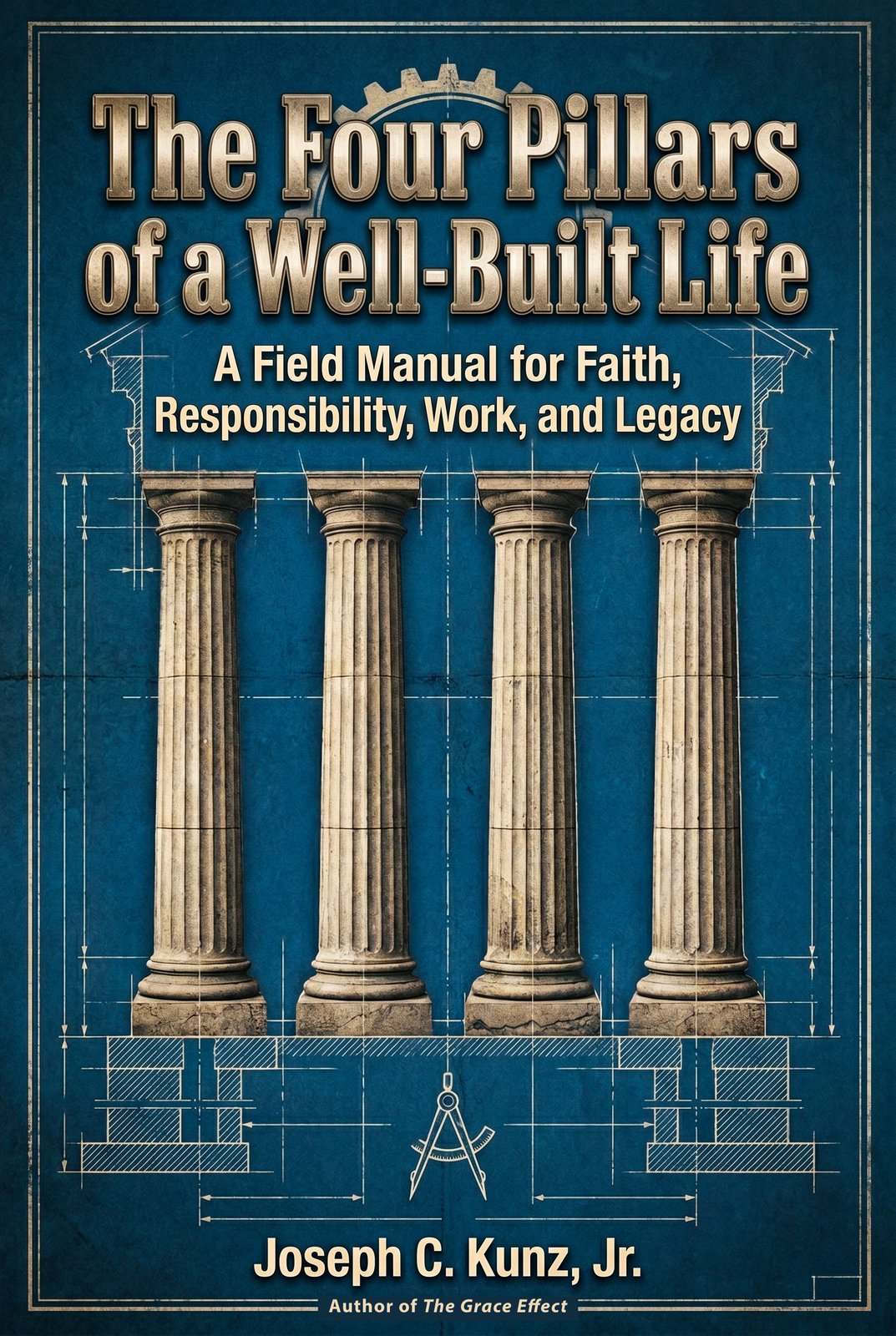
The Four Pillars of a Well-Built Life
A lot of people are trying to live off visible momentum with invisible weakness. They want the look of depth, the sound of conviction, the vocabulary of wisdom, the optics of faith, the appearance of success, and the reputation of a life that holds. But appearance is cheap, and reality is not stupid. Sooner or later, pressure walks into the room, and everything borrowed, inflated, cosmetic, or half-built starts shaking. That is not cruelty. That is reality refusing to be mocked.
That is why I’m writing The Four Pillars of a Well-Built Life. This is not a book about polishing your image, managing your brand, or sounding impressive to people who do not carry your burdens. It is a book about building a life that can actually take weight—through faith strong enough to steady you, responsibility strong enough to govern you, work and wealth strong enough to support what matters, and legacy strong enough to outlive your moods, your ambition, and your excuses.
If you are tired of public strength built on private drift, this book is for you.
If you are tired of watching modern life reward performance while real structure quietly dies, this book is for you.
If you are ready to stop looking built and start becoming the kind of person your family can lean on, keep your eye on this one.
On the Horizon: The Four Pillars of a Well-Built Life