Witness Beats Winning
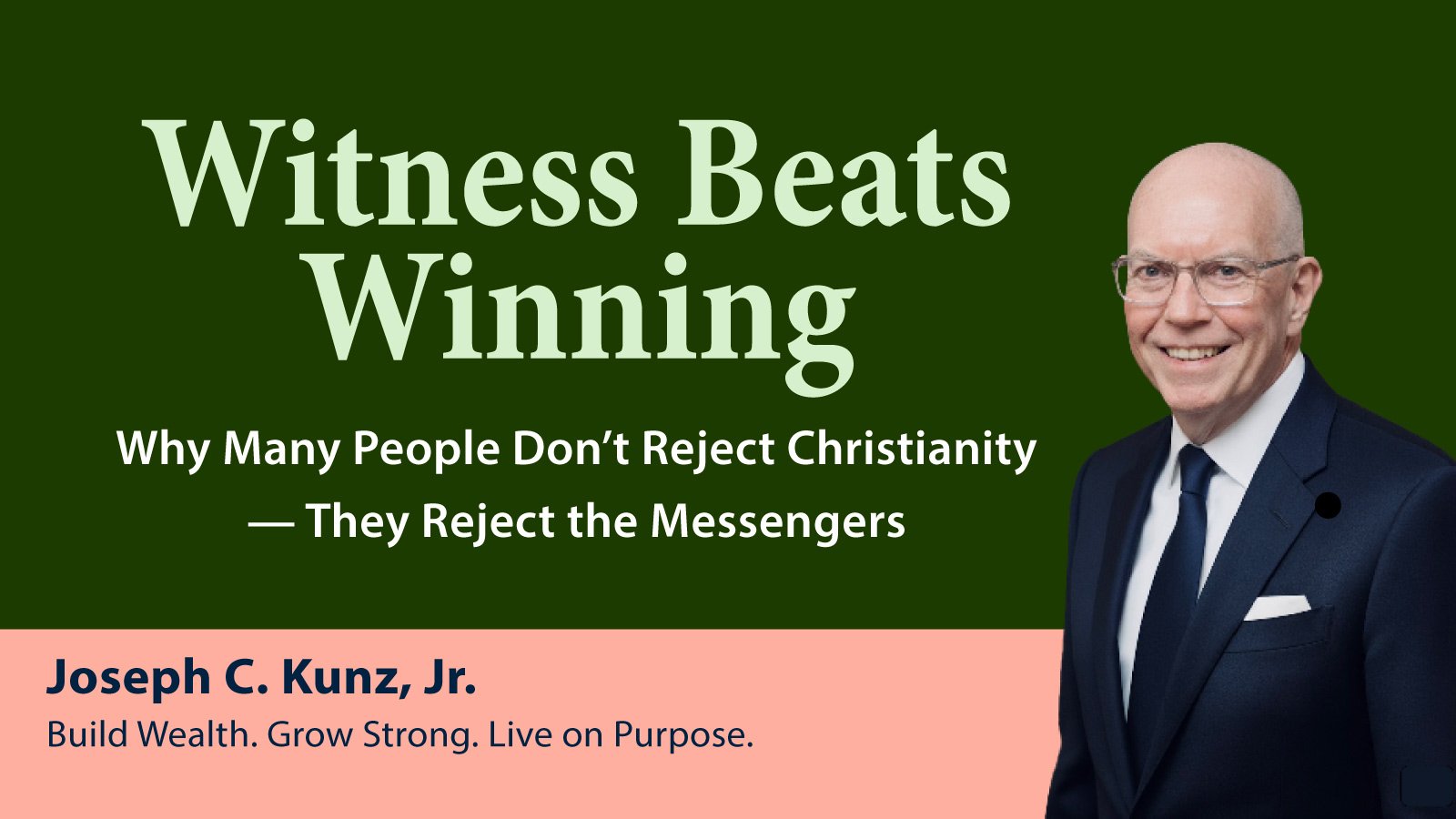
Many people don’t dismiss the gospel after a careful debate; they dismiss it after watching the messengers — which is why witness beats winning every time. —Joseph C. Kunz, Jr.
Why Many People Don’t Reject Christianity — They Reject the Messengers
By Joseph C. Kunz, Jr.
Synopsis
This isn’t an essay about “being nicer,” and it’s not a set of polite tips for talking about faith without offending people. In this essay, Joseph C. Kunz, Jr. argues that in a low-trust age, many people don’t dismiss Christianity because they’ve refuted it like a math problem — they dismiss it because they don’t trust the messengers. Modern life rewards performance over integrity, hot takes over self-government, and identity badges over disciplined character. When faith shows up as another brand play, another outrage routine, or another attempt to win, the message doesn’t get weighed — it gets dropped into the drawer labeled: ‘another pitch.’
Kunz makes the case that witness beats winning because credibility is built — not claimed. Christian witness isn’t loud religion or online combat; it’s a life lived under a standard when no one is watching. He explains why debates often harden hearts instead of opening them, how “winning” becomes a cheap substitute for obedience, and how moral drift happens through small exemptions and private rationalizations that eventually crack a person’s integrity. Witness shows up as restraint, repentance (course correction), clean dealing, competence, and consistency — at home, at work, and in the quiet places where character is either forged or faked.
The conclusion is simple: if the messenger isn’t trustworthy, the message won’t be heard — no matter how clever the argument is. But when a life holds under pressure, faith stops sounding like talk and starts looking like reality. Because your family doesn’t need louder Christians. It needs credible ones.
If my life doesn’t make the message believable, my words are just noise. —JCK
I. Introduction: Credibility Before Conversation
Too much modern "faith talk" is built for winning — not for witness. It’s optimized for clips, comments, and tribal applause: say the sharp line, land the punch, dunk on the other side, call it courage, and move on. Volume can get attention, but consistency builds trust. In a low-trust age, the real issue usually isn’t whether Christianity can be defended — it’s whether the messengers can be believed. That’s why this essay isn’t about better arguments or louder conviction. It’s about credibility — the quiet, load-bearing kind — and why a life that holds under pressure does more for the gospel than a thousand victories in the comment section.
II. The Real Objection People Don’t Say Out Loud
A. The stated objection is often intellectual.
Most people can give you a reason that sounds like a conclusion: “Science,” “hypocrisy,” “history,” “rules,” “God wouldn’t,” “I can’t.” Sometimes those reasons are sincere. Sometimes they’re borrowed. Sometimes they’re convenient.
But underneath a lot of modern resistance is something less philosophical and more human:
1. “I don’t trust you.”
- I don’t trust your motives.
- I don’t trust your tone.
- I don’t trust that you live what you claim.
And once that distrust is there, the argument isn’t evaluated — it’s rejected.
B. A quick steelman: yes, some objections are truly intellectual.
Some people have read deeply. Some have wrestled honestly. Some carry real wounds and real questions. This essay isn’t claiming every objection is just distrust.
It’s making a narrower — and more practical — claim: distrust often decides whether an argument is even heard. Credibility is the admission ticket. Without it, the door stays shut.
C. We live in an age of suspicion, not an age of careful refutation.
Across public life, it often feels like everybody’s selling.
So when Christianity shows up as another performance — another tribe badge, another dopamine outrage machine, another “I’m right and you’re stupid” routine — it gets filed where people file everything now: a pitch.
And once it’s in that drawer, it often isn’t treated like truth — it’s treated like a pitch.
D. The most devastating question isn’t theological. It’s practical.
“Has this made you more honest?”
“Has this made you more disciplined?”
“Has this made you less bitter?”
“Has this made you more trustworthy — at home, at work, under pressure — when no one is clapping?”
That’s the question that crushes performative faith. And it’s also the question that makes a quiet witness almost impossible to dismiss.
Because you can mistrust a man’s arguments.
It’s harder to mistrust his character when it holds up under load.
III. Why “Winning” Feels Like Proof (But Isn’t)
A. The modern world confuses confidence with truth.
If you speak loudly enough, long enough, with enough certainty, people assume you must have substance behind it. That assumption worked in the past.
It doesn’t anymore.
Now loudness often reads like posturing. Certainty reads like branding. And the harder someone tries to look unshakable, the more people suspect they’re covering something up.
B. Winning is seductive because it feels like strength.
Winning a debate gives you a rush. It gives you a clip. It gives you a story to tell your side. It gives you the feeling that you defended something sacred.
But there’s a hidden trade:
1. Winning can turn truth into a weapon.
2. Winning can turn people into opponents.
3. Winning can turn faith into an identity badge instead of a lived standard.
Winning can make you feel righteous without making you clean.
C. “Winning” is often a substitute for obedience.
This is where the whole thing gets uncomfortable — because it’s a temptation for serious people.
You can argue about prayer while neglecting it.
You can fight for truth while lying in small ways.
You can defend morality while indulging private exceptions you’d condemn in someone else.
Debate is cheaper than discipline.
Public certainty is easier than private repentance.
And “being right” is far easier than being clean.
I understand the temptation. Winning feels productive. Winning feels like courage. Winning feels like you did something. But winning can become a way to stay proud while feeling righteous.
Witness costs more.
Witness requires repentance, restraint, and consistency — when no one is watching and no one is clapping.
That’s why witness beats winning. Not because truth doesn’t matter, but because truth without credibility feels like manipulation.
D. Moral drift doesn’t happen through rebellion. It happens through exemptions.
Very few people wake up and decide to become corrupt.
They negotiate.
They make a “small exception.”
They tell a “small lie.”
They take a “small shortcut.”
They justify it as necessary.
And those exemptions stack up like hairline cracks in a foundation. Eventually, the structure fails — not because the person didn’t have the right beliefs, but because they kept allowing private compromises that contradicted them.
That’s how you get loud faith with brittle character.
IV. What a Christian Witness Actually Is
A. A witness is not a performer.
A witness doesn’t need an audience. A witness isn’t trying to “look faithful.” A witness is trying to be faithful.
A witness isn’t “on.”
A witness is consistent.
B. A witness demonstrates.
Not perfection. Not flawless behavior. Not some polished religious personality.
A witness demonstrates:
1. Humility
2. Repentance (course correction)
3. Gratitude
4. Restraint
5. Courage
6. Consistency
A Christian witness is a person whose life reduces the need for hype.
C. A witness is someone whose life makes certain excuses harder to keep.
People may argue doctrine forever. But it’s difficult — often impossible — to dismiss a person who is visibly being shaped.
Not a man who never fails.
A man who owns it when he fails.
A man who makes it right where he can.
A man who doesn’t need to be seen as flawless to be faithful.
D. The goal is not to “win people.” The goal is to be true.
Yes, we want people to come home to God. Of course. But posture matters.
A witness doesn’t say, “Let me dominate you.”
A witness says, “Let me show you what this produces.”
V. Witness Through the Four Pillars
A. Faith — A Standard Under Pressure
1. Faith is not a vibe. It’s a standard.
Faith isn’t proven when you feel spiritual. Faith is proven when you feel nothing — when conditions are hard — and you keep the standard anyway.
2. Witness looks like steadiness under pressure.
Most people don’t need to see you “win.” They need to see you not collapse.
They need to see you handle stress without becoming cruel.
They need to see you handle unfairness without becoming dishonest.
They need to see you handle hardship without becoming bitter.
3. Witness looks like repentance without theatrics.
Not self-hatred. Not groveling. Course correction.
A witness says, “I was wrong.”
And then proves it by changing.
B. Family — Love With Standards
1. Your family is your first audience — whether you like it or not.
Your kids don’t learn faith from your claims. They learn it from your reactions.
What you do when you’re tired.
What you do when you’re irritated. What you do when you’re caught.
What you do when you don’t get your way.
2. Witness in the home is love with standards.
Not permissiveness. Not tyranny. Not a “nice guy” act.
A witness creates a home where:
a. People can tell the truth without being punished for honesty.
b. Apologies are normal, not humiliating.
c. Boundaries exist because love is serious.
3. The speed of your apology is part of your witness.
A quick apology isn’t weakness. It’s leadership. It tells your family, “Truth matters more than my pride.”
And that’s a testimony your kids will remember when your lectures are long forgotten.
C. Work — Competence and Clean Dealing
1. Competence is a moral category.
A Christian witness who is sloppy, dishonest, unreliable, manipulative, or lazy at work is preaching an anti-gospel with his hands.
Work is where credibility is earned the hard way:
a. Show up.
b. Tell the truth.
c. Do the job well.
d. Keep your word.
e. Don’t cut corners.
f. Don’t use people.
2. Clean dealing is louder than values talk.
If you claim faith but you play games with money, exaggerate, hide details, “sell” people, or use the fine print like a trap, your witness evaporates.
"A lot of people have seen "God talk" attached to dirty dealing — and it doesn’t land the way it once did.
3. Reliability is a form of love in work clothes.
A lot of people don’t need quotes — they need someone trustworthy. They need you to be someone they can trust when it counts.
D. Legacy — What Your Name Means
1. Legacy is what your name means when you’re not in the room.
Your witness doesn’t end with your words. It accumulates through decades.
Most people will forget your opinions — but they won’t forget how you made them feel under pressure.
They won’t forget how safe they felt around you.
They won’t forget if you were honest when it cost you.
They won’t forget if you stayed steady when life got hard.
2. The long game is where witness becomes undeniable.
Almost anyone can have a good week. Almost anyone can have a polished season. Witness shows up when the pressure stays — and you don’t become a different person.
3. The question is not, “Did I win?”
The question is, “Did I leave something clean behind me?”
VI. The Builder’s Witness Checklist
This is what credibility looks like in the wild.
A. Tell the truth when lying would be easier.
B. Keep your standard when your feelings negotiate.
C. Apologize quickly — without defending yourself.
D. Repair what you can. Release what you can’t undo.
E. Refuse bitterness. (It poisons everything it touches.)
F. Do your work well. Excellence is a testimony.
G. Don’t cut corners. Don’t use people. Don’t manipulate outcomes.
H. Serve quietly. Let results speak.
I. Choose long-game faithfulness over short-game applause.
This isn’t moral perfection. This is moral direction — kept consistently.
VII. Conclusion: The Best Argument Is a Life That Holds
If your life is brittle, your arguments won’t save you. If your life is compromised, your certainty won’t convince anyone. If your life is performative, your words will sound like another pitch.
But when your character has been tempered by hardship, softened by gratitude, and elevated by an unashamed devotion to truth — people may still disagree with you, but they will struggle to dismiss you.
That’s the point.
Your family doesn’t need louder Christians.
It needs credible ones.
Witness beats winning…
A man can win every argument and still fail the stress test. —JCK
Related Reading: For the Ambitious Individual Ready to Go Deeper
If you’re done talking about faith and ready to live under a standard, these are your next two.
1. Faith Isn’t a Debate Club Faith isn’t proven by sounding smart — it’s forged in real tests where obedience costs you something and excuses stop working.
Reader Comment: This one put me in my place — I realized I was treating “being right” like a substitute for being disciplined.
2. Stop Pointing at Them. Start Looking in the Mirror. Christianity’s power doesn’t begin in cultural commentary — it begins with repentance, self-government, and the daily refusal to make private exemptions.
Reader Comment: Sharp and necessary — it shifted my focus from diagnosing “them” to cleaning up what I tolerate in myself.
The Book Behind This Essay: Stop Trying to Win — Start Being Someone They Can’t Ignore
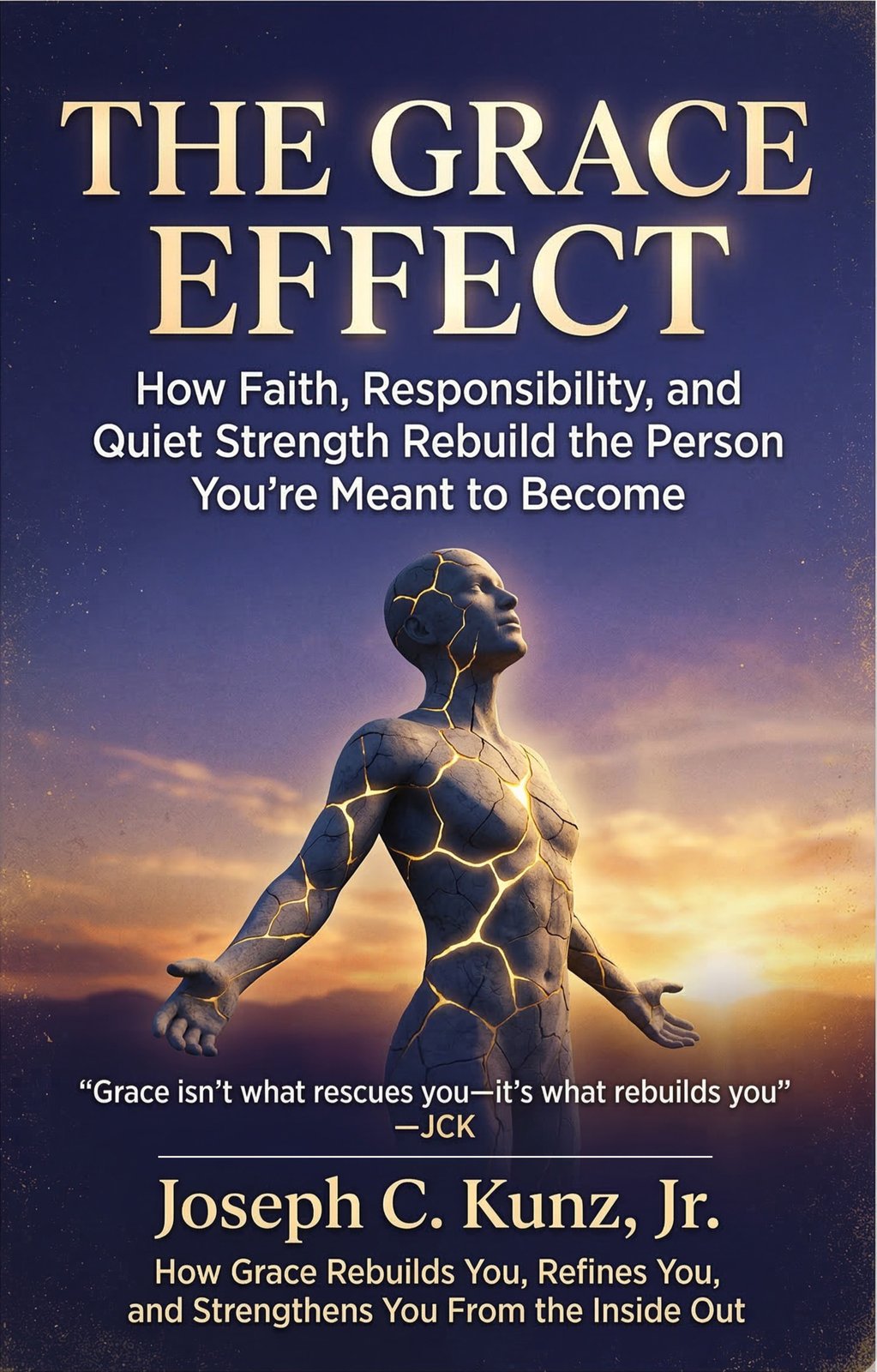
Let me be blunt: if your faith only shows up when you’re comfortable, articulate, and surrounded by your people… it’s not a witness. It’s a performance.
And the world can smell performance like cheap cologne.
Your kids don’t need another lecture. Your marriage doesn’t need another “hot take.” Your coworkers don’t need another Christian who’s loud in public and slippery in private.
They need you—steady, clean, and unshakable. The kind of man whose life doesn’t just argue for truth… it confirms it.
That’s what The Grace Effect is about.
Not inspirational fluff. Not religious cosplay. Not “be nice and manifest blessings.” This is a field manual for the moment you’re in right now—when pressure is real, temptation is normal, and excuses are always available.
Because here’s the truth nobody wants to admit: Most people don’t reject Christianity because they’ve defeated it. They reject it because they’ve been burned by the messengers.
So if this essay hit you in the chest, don’t scroll. Don’t “save it for later.” Build the kind of inner life that makes the message believable again.
Get the book: The Grace Effect — Read it like a builder, not a spectator.
Coming soon.