Why Your Faith Should Make You Unshakable, Not Unlikable
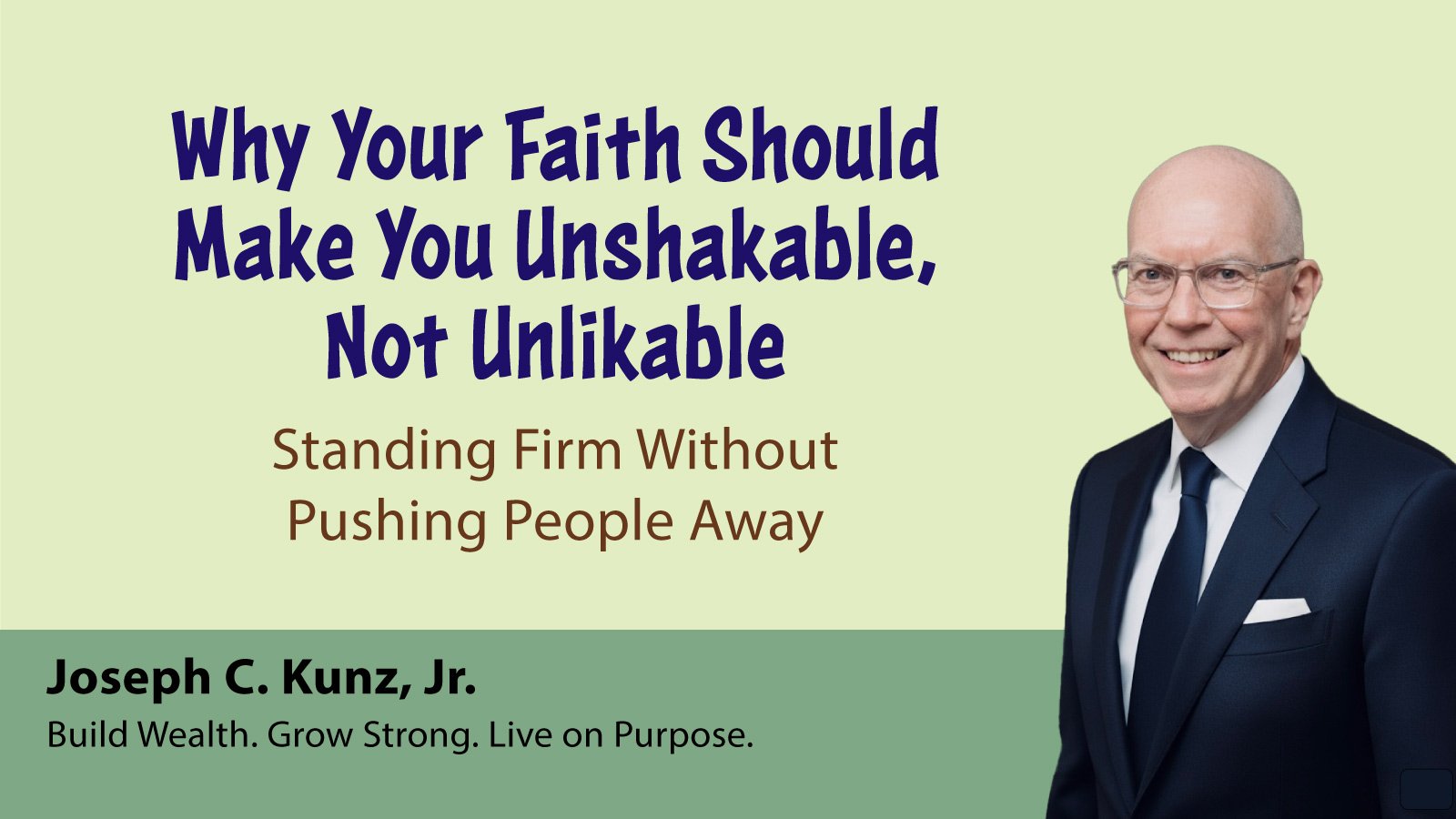
Real faith should give you resilience and calm confidence that draws people closer—not a hardened edge that drives them away. —Joseph C. Kunz, Jr.
Standing Firm Without Pushing People Away
By Joseph C. Kunz, Jr.
Synopsis
This isn’t a call to soften your convictions or water down what you believe. In this essay, Joseph C. Kunz, Jr. argues that real faith should make you unshakable—steady under pressure, calm in chaos, and clear in conviction—without making you unlikable to the people you’re called to live alongside. He draws a sharp distinction between faith as an anchor and faith as armor: an anchor keeps you grounded while you stay engaged with the real world; armor turns you hard, distant, and unreachable.
Kunz warns that faith can drift into two traps—being used as a weapon to win arguments and shame others, or as a shield to avoid vulnerability and keep people at arm’s length. In both cases, people don’t reject your beliefs as much as they recoil from your posture. He then defines what strength actually looks like when faith is healthy: calm under pressure, confidence without arrogance, and compassion with boundaries. The goal is simple and demanding: become a lighthouse, not a locked door—firm enough to stand in storms, and warm enough that others can safely draw near.
Faith should steady your steps, not harden your heart. The stronger it is, the easier it should be for others to walk beside you. —JCK
I. Introduction: Faith as an Anchor, Not Armor
When people talk about being “strong in their faith,” they often imagine someone who can’t be moved—unyielding, unbending, unshakeable. And that’s partly true. But there’s a danger in confusing being anchored with being armored.
An anchor holds you steady while still letting you live in the real world. Armor, on the other hand, cuts you off. You can’t move as freely, you can’t feel as deeply, and you keep people at a distance.
Faith is meant to be an anchor, not a suit of armor. It keeps you grounded in who you are, no matter how hard the winds blow, but it doesn’t isolate you. It steadies you so you can engage with others, not retreat from them.
Too often, though, people use faith as armor. They hide behind it, deflect every question with it, and use it as a reason to stay hard and unreachable. And in the process, they turn what should be unshakable confidence into unlikable coldness.
II. The Danger of Using Faith as a Weapon
There’s another danger, too. Faith can become a weapon. Instead of being a source of peace, it’s turned into a tool for winning arguments, shaming others, or proving how “right” you are.
That’s when faith stops shining as light and becomes a harsh glare. No one is drawn to a floodlight blasting in their eyes. But everyone appreciates a steady glow in the darkness.
Here’s the uncomfortable truth: sometimes people aren’t put off by your beliefs, but by your attitude. They’re not running from your faith itself—they’re running from how you wield it.
If you find that people pull away from you, it’s worth asking: am I being unshakable, or am I being unlikable? Am I showing quiet strength, or am I trying to dominate every conversation?
Real faith doesn’t need to win every debate. Real faith is secure enough to stand firm without making others feel small.
III. What Real Strength Looks Like
So what does it look like when faith makes you unshakable in the right way?
A. Calm under pressure. When life gets chaotic, you don’t lose your footing. Your faith reminds you that storms don’t last forever, and you don’t need to panic just because everyone else is. People notice when you stay composed, and they’re drawn to that steadiness.
B. Confidence without arrogance. Faith gives you an identity that isn’t shaken by every criticism or compliment. You don’t need to prove yourself in every conversation. You know who you are, and that quiet confidence speaks louder than any boast.
C. Compassion with boundaries. Real strength isn’t soft and squishy—but it’s not cold either. Faith allows you to care deeply for others while still holding firm to your values. You can show love without agreeing with everything, and you can disagree without being disagreeable.
This combination—calm, confident, compassionate—is what makes people trust you. It makes them see you as someone they want to lean on, not someone they want to avoid.
IV. The Goal: Unshakable and Approachable
Here’s the paradox: the more unshakable your faith truly is, the more approachable you become. Why? Because people know they can come to you without fear that you’ll bend with the wind, flip-flop with opinions, or crumble when things get tough.
But they also know you won’t slam the door in their face. You won’t use your faith as a club. Instead, you’ll be steady, warm, and honest.
Think of a lighthouse. Its foundation is unshakable. Storms rage, waves crash, and winds howl—but the light keeps shining. Ships aren’t drawn to it because it’s loud or aggressive. They’re drawn because it’s steady, consistent, and guiding.
That’s what your faith should make you: a lighthouse, not a locked door.
V. A Personal Challenge
Here’s the challenge: take a hard look at how your faith is reflected in your daily life.
• Do people feel encouraged and steadied by being around you?
• Or do they feel judged, dismissed, or shut out?
• Are you approachable, or are you unknowable?
• Are you living as a lighthouse—or as a fortress?
None of us gets this perfectly right. But the goal isn’t perfection—it’s awareness. The people closest to you often know the truth. If you catch yourself drifting toward being unlikable in the name of being faithful, pause and realign.
True faith isn’t insecure. It doesn’t need to fight everyone. It doesn’t need to slam the door. It just needs to keep shining—steady, strong, and impossible to extinguish.
VI. Conclusion: Faith That Stands and Shines
If your faith makes you unshakable, people will lean on you. If it makes you unlikable, they’ll walk away. The difference is whether you live it as a fortress or as a foundation.
Unshakable faith isn’t about proving you’re right—it’s about proving you’re steady, approachable, and worth leaning on. —JCK
Related Reading: For Those Who Want Faith to Shape Strength, Not Pride
If this essay struck a chord, these will deepen your understanding of how faith builds unshakable resilience and quiet power.
1. God Never Promised Me Comfort, But He Did Promise Meaning
Faith isn’t about avoiding hardship—it’s about finding meaning that outlasts it.
2. Grace Isn’t Weak — It’s Self-Control in the Heat of Battle
True grace is restraint and strength held steady when the world expects you to lash out.
Reader Comment: This one hit me hard—it showed me that grace isn’t soft at all, it’s the toughest form of strength.
The Book Behind This Essay: Grace Isn’t About Being Liked — It’s About Standing Steady
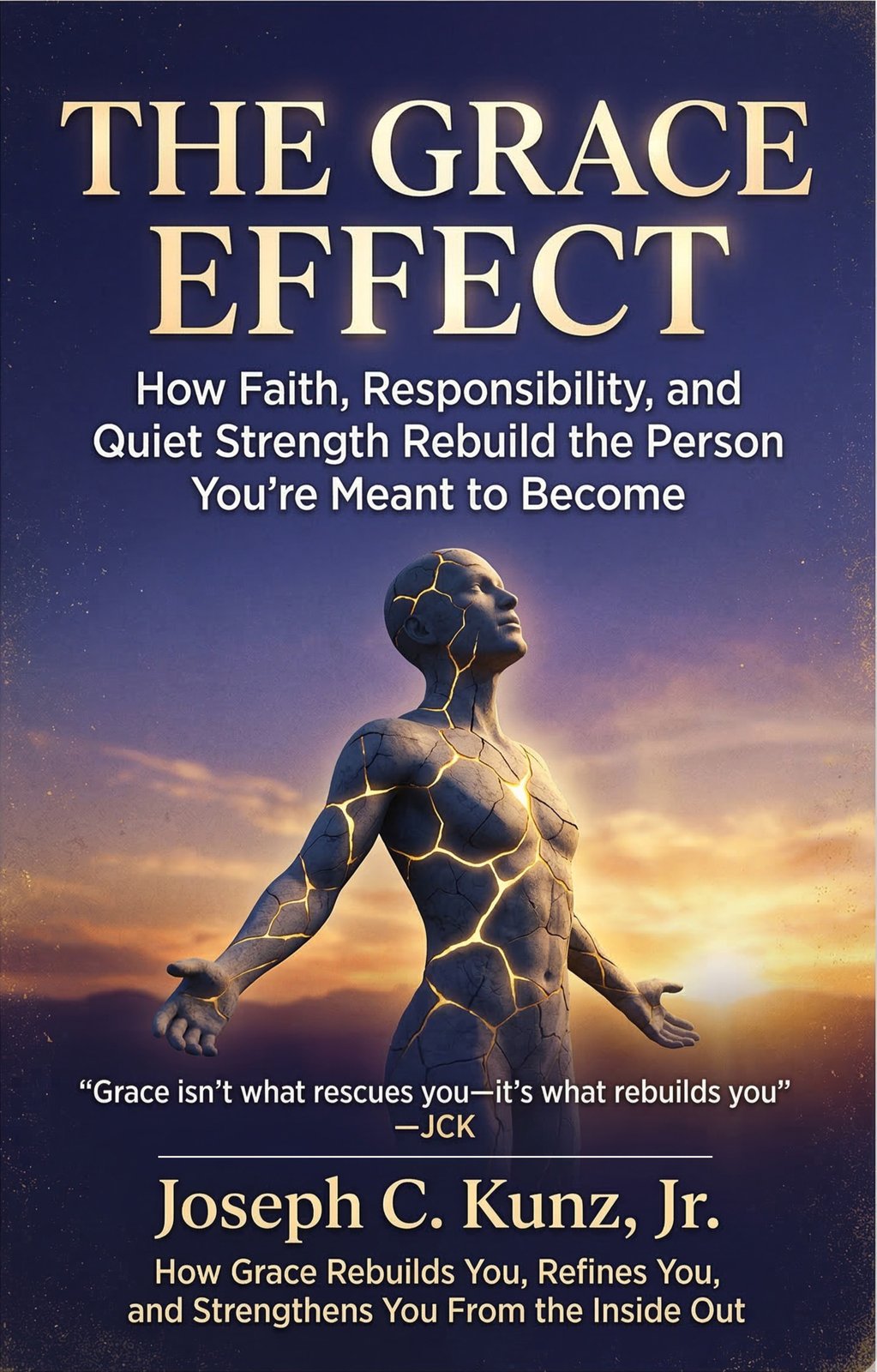
I didn’t write The Grace Effect because I thought the world needed another faith book.
I wrote it because I’ve lived what happens when grace is the only thing that keeps you from breaking—or from becoming bitter.
This book is the sum of hard-won lessons: that true strength doesn’t shout, it steadies. That resilience isn’t arrogance, it’s grace under pressure.
Every word comes from my own life, my own battles, and my own need to live out faith in a way that builds—not divides.
Get your copy of The Grace Effect and discover how grace makes you unshakable, without turning you unlikable.
It’s not theory—it’s a way of living with conviction and strength that people can actually trust.
We’re about to make it official.