The Better Bet: Why I Chose Balance Over Burnout

Most people chase quick wins and burn out early—but the smarter path is building a life where success doesn’t come at the expense of everything else. —Joseph C. Kunz, Jr.
The Better Bet: Why I Chose Balance Over Burnout — and Built a Life That Lasts
You Don’t Need a Viral Startup to Win at Life — You Need a Plan That’s Built to Last
By Joseph C. Kunz, Jr.
Synopsis
This isn’t a lazy defense of comfort, and it’s not a rant against ambition. In this essay, Joseph C. Kunz, Jr. pushes back on the modern hustle gospel—the idea that the only way to “win” is to obliterate balance in your twenties, grind yourself into the floor, and hope the payoff arrives before the burnout does. Kunz understands why that message sells: it promises early freedom, status, and escape from the ordinary. But he argues it leaves out the real cost—the hidden interest rate you pay in health, judgment, relationships, faith, and long-term stability.
Drawing from four decades of building a business with his wife while raising a family, Kunz makes the case that balance isn’t the enemy of achievement—it’s what makes achievement sustainable. He dismantles the either-or mindset (work or life, success or sanity) and replaces it with a builder’s framework: embrace seasons of intensity without turning your whole life into a permanent emergency, build systems instead of chasing adrenaline, and refuse to trade what matters most for what merely looks impressive. The essay ends with a blunt conclusion: quick wins are rare and often require luck. But lasting success is available to anyone willing to build a life that can hold up—not just for a season, but for decades.
Success that costs you everything isn’t success—it’s just failure in disguise. —JCK
I. Introduction: The Message That’s Grabbing Headlines
A recent opinion piece argued that the key to financial freedom by age 30 is to “obliterate” work-life balance—suggesting that obsessive focus during your twenties is the only way to win in today’s fast-moving economy.
I understand why that message hits. It’s clean. It’s aggressive. It makes you feel brave. It sells a simple trade: sacrifice now, cash out later.
And to be fair—there’s a sliver of truth inside it. There are seasons where you grind harder, sleep less, and carry more weight. Anyone who’s built something real knows that.
But after working for myself since 1984, building a business with my wife, raising a family, and staying in the game for decades—not just a hot streak—I’ve come to a different conclusion:
Balance isn’t the enemy of success—it’s the reason it lasts.
And I don’t mean “balance” as a soft slogan. I mean it as a structure: limits, priorities, and a long-game plan that prevents your ambition from eating your life.
II. What the Headlines Never Tell You
There’s always someone telling you the old ways don’t work. That if you’re not grinding 24/7 in your twenties, you’re falling behind. That sacrificing everything for a few years is the price of getting rich early.
But what they don’t mention—at least not in bold print—is the hidden bill that comes due.
The bill looks like this:
• health that quietly declines while you call it “discipline”
• sleep debt that destroys judgment while you call it “hustle”
• relationships starved of attention while you call it “focus”
• anxiety rising while you call it “pressure”
• a life that becomes thin and frantic while you call it “success”
That’s not strategy. That’s survival mode dressed up as heroism.
They also don’t tell you how rare the outlier path really is. Most people will never build a lightning-strike startup, sell it at the perfect time, and walk away wealthy before 30. Those stories exist—but they’re not a blueprint. They’re a highlight reel.
And highlight reels hide the support systems behind the camera: the mentors, the networks, the family money, the timing, the market tailwinds, the right partner, the right trend, the right moment.
Meanwhile, here’s what almost anyone can do:
• build something steady
• prioritize what matters
• play the long game with intention, not desperation
• stack skills, systems, and trust over time
• build a life that doesn’t collapse the moment the adrenaline fades
That’s not flashy. It won’t go viral. But it works.
III. Balance Isn’t Comfort — It’s Order
Most arguments about “work-life balance” fail because nobody defines the term. So critics attack a caricature: a person who wants success without sacrifice, money without effort, and progress without pressure.
That’s not what I’m talking about.
Balance isn’t equal hours. It’s not “50/50.” It’s not a spreadsheet.
Balance is order. It’s first things first. It’s aligning your ambition with the load-bearing parts of a life that holds: faith, family, health, duty, and work that matters.
Real balance looks like this:
• You work hard—but you don’t turn your whole life into a permanent emergency.
• You chase growth—but you don’t sacrifice your marriage on the altar of “potential.”
• You build wealth—but you don’t mortgage your peace to impress strangers.
• You embrace intensity—but you treat it like a season, not a religion.
A builder understands limits. Not as weakness—but as design. Because anything without limits eventually breaks.
IV. The Myth of Either-Or
I’ve never seen life as a trade-off between work and living. I never had the luxury of thinking in those terms.
When my wife and I started our business from home, we didn’t have the option to “obliterate” balance. Life and work were intertwined from the start—raising children, paying bills, teaching classes, training professionals. We weren’t chasing a jackpot. We were building something we could stand on.
And what we built lasted—because we never let it cost us everything else we cared about.
It was never “either-or.” It was always “yes—and.”
Yes, you build. And you keep your integrity intact.
Yes, you grind when needed. And you remain human while you do it.
Yes, you push. And you stay connected to the people you’re supposedly doing it for.
Because the goal isn’t to win a season. The goal is to build a life.
V. The Hidden Interest Rate of Burnout
Here’s what the hustle gospel misses: burnout isn’t just “being tired.” Burnout is a slow corruption of your decision-making. It turns you into a person who can’t think clearly, can’t rest without guilt, and can’t be present without feeling behind.
Burnout makes you:
• impatient
• reactive
• self-justifying
• harder to live with
• strangely addicted to motion
• weirdly unable to enjoy the very life you’re building
And here’s the worst part: burnout doesn’t always feel like failure. Sometimes it feels like momentum.
You’re busy. You’re “productive.” You’re stacking wins. You’re getting praise. But you’re also becoming someone your family has to endure.
That’s the trap. The machine keeps running, so you assume you’re fine. Meanwhile, your health, peace, and relationships are quietly taking hits you’ll pay for later—with interest.
If your strategy requires you to ignore your body, neglect your closest relationships, and override your own limits year after year, that’s not a plan. That’s a bet against reality.
VI. The Real Work Is Building Something That Outlives the Hustle
Success that costs you your health, your peace, and your people isn’t success—it’s just a shinier version of failure.
What matters is whether you can still stand after 10, 20, 40 years. Whether your marriage survived the pressure. Whether your kids grew up knowing you—not just your ambition. Whether your business still stands without wrecking your body or your soul.
That’s the kind of wealth I’ve spent my life building. Not the kind you measure in quarterly valuations—but the kind that shows up in daily life.
Because a life isn’t a pitch deck. It’s not an exit plan. It’s not a brand.
It’s the people at your dinner table. It’s your own conscience. It’s the man you are when the door closes.
VII. A Builder’s Framework for Sustainable Success
If you want the better bet, here’s the framework—simple, unsexy, and brutally effective:
A. Treat intensity like a season, not a lifestyle
There will be months where you push hard. Fine. But a life that’s permanently in sprint mode will eventually snap. Decide in advance what a “push season” looks like—and what ends it.
B. Build systems so you don’t rely on adrenaline
Adrenaline feels like ambition, but it’s a terrible operating system. Systems win: routines, schedules, delegation, checklists, recurring habits. Systems keep building even when you’re tired.
C. Protect the non-negotiables
If everything is negotiable, everything will be sacrificed. Pick a few anchors and guard them: sleep, health basics, marriage time, family presence, quiet time, faith practices—whatever you know keeps you steady.
D. Define “enough” before the world defines it for you
If you never define enough, you’ll never feel finished. You’ll just keep moving the goalpost until your life becomes one long chase.
E. Don’t build a life that requires you to be absent to afford it
Some people build a lifestyle that can only be maintained by working more and more. That’s not wealth. That’s a trap with nicer furniture.
F. Remember what wealth is for
Wealth isn’t a scoreboard. It’s a tool: stability, options, generosity, legacy, freedom to choose the right things—not just the profitable things.
Quick self-audit:
1. Is my current pace making me more grounded—or more frantic?
2. Are the people closest to me getting my best—or my leftovers?
3. If nothing changed for five years, would I be proud of what this is producing?
Those questions don’t flatter you. They orient you.
VIII. Conclusion: The Better Bet
The internet will always worship the outlier—the kid who slept three hours a night, skipped the holidays, and hit the jackpot early. Let them chase that story. It sells.
I’m betting on what lasts. On the kind of success that doesn’t require you to destroy your health to prove you’re ambitious. On the kind of work that doesn’t treat your marriage like collateral damage. On the kind of wealth that doesn’t cost you your peace.
Here’s the clean test: If your version of “winning” makes you less present, less steady, and harder to live with—what exactly did you win?
Quick wins are rare and often require luck. But lasting success is available to anyone willing to build with limits, priorities, and intention. Not for a season. For decades.
Make your bet now—before burnout makes it for you.
Quick wins are rare. But lasting success is a decision anyone can make. —JCK
Related Reading: For Builders Who Want a Life That Endures
If this essay gave you clarity, these will take you deeper into the choices that keep success sustainable.
Balance isn’t about doing everything—it’s about putting first things first.
Work isn’t punishment—it’s the first capital you invest in yourself before the money arrives.
Reader Comment: This essay changed how I see work—it made me realize the grind is actually my foundation, not my enemy.
The Book Behind This Essay: Burnout Doesn’t Build Legacies — Grace Does
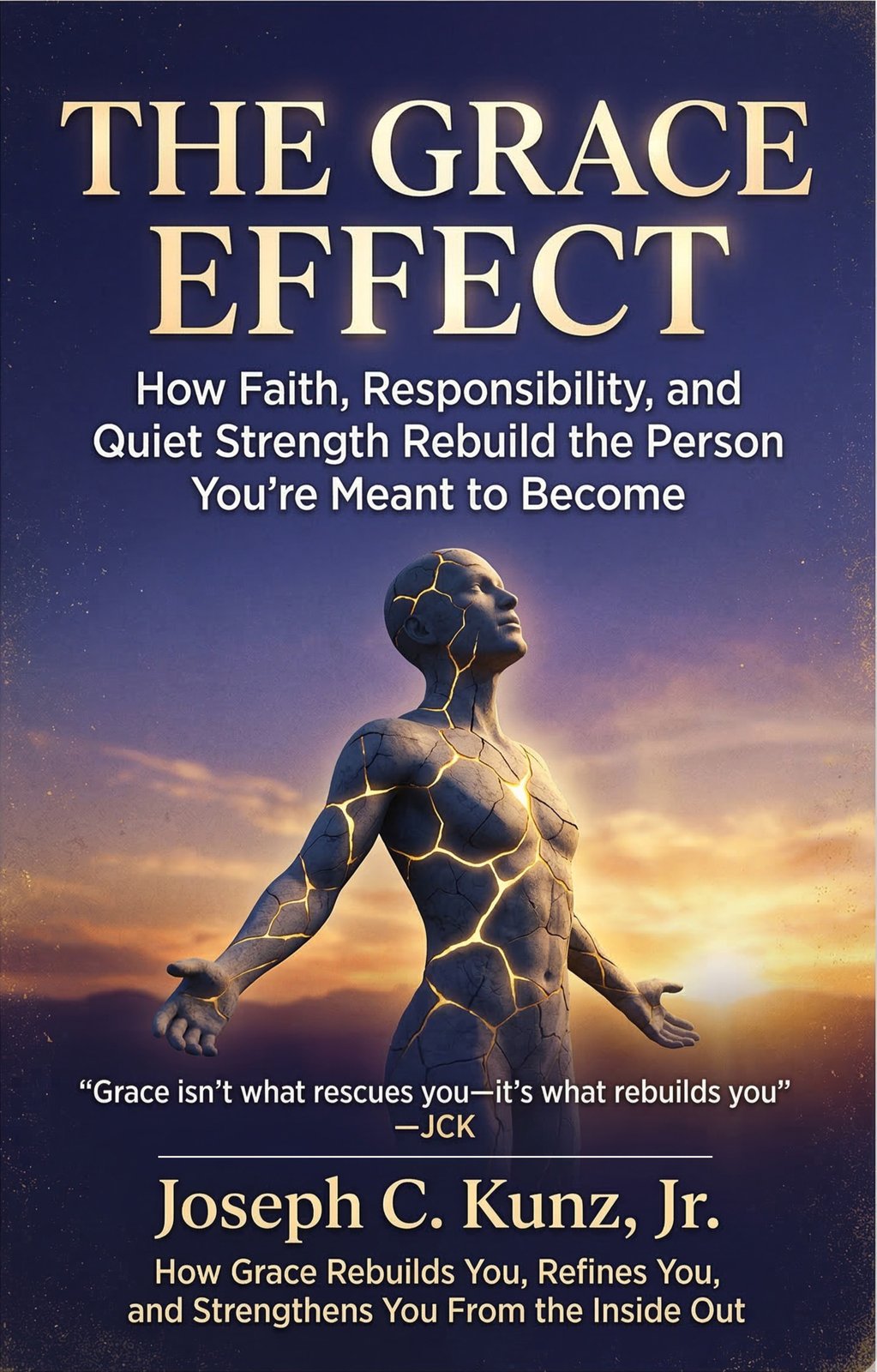
I wrote The Grace Effect because I know what it’s like to run yourself into the ground, thinking that more hours, more hustle, and more sacrifice will finally pay off. It doesn’t.
All it leaves you with is exhaustion—and a life that feels thinner, not fuller.
Grace is what saved me from that trap. It taught me that strength isn’t about burning out—it’s about showing up with clarity, calm, and conviction.
Every word in this book came from my own journey of nearly losing myself to the grind, then rediscovering that life was meant to be lived with balance, purpose, and grace.
If you’ve ever felt like you’re running on fumes, this book is my hand reaching back to you.
Get your copy of The Grace Effect and trade burnout for a life built on grace, strength, and purpose.
Almost ready—watch for the release.