The Apology Gap

Most trust doesn’t die from failure—it dies in the gap between being wrong and owning it. —Joseph C. Kunz, Jr.
Why Slow Repentance Turns Small Sins Into Big Damage
By Joseph C. Kunz, Jr.
Synopsis
This isn’t an essay about “being emotional,” and it’s not a soft call to say sorry more often. In this essay, Joseph C. Kunz, Jr. argues that the most dangerous space in a man’s life is the gap between wrongdoing and ownership—the hours, days, or months when pride keeps control, excuses stay loaded, and repentance gets postponed. Most relationships don’t fracture because someone failed; they fracture because the person who failed refused to come clean quickly. By “come clean quickly,” I mean: name what you did, own it without excuses, acknowledge the impact, and start repair within a reasonable window—hours or days, not weeks or months.
Kunz makes the case that slow repentance is moral interest on a small debt. A delayed apology doesn’t preserve dignity — it multiplies damage. He explains how defensiveness turns a simple mistake into a character issue, how “explaining yourself” often functions as self-protection instead of truth-telling, and why the longer you wait to own it, the more you train your heart to negotiate with conscience. He also shows why this matters for a Christian witness: people can survive your imperfection, but they won’t trust a man who protects his image more than he protects truth.
The conclusion is simple: a strong man isn’t the one who never fails. He’s the one who closes the apology gap fast—without excuses, without performance, and without making the other person pay for his pride. Because repentance isn’t groveling. It’s course correction. And fast course correction is how you keep your witness clean, your home safe, your work credible, and your legacy intact.
The gap is where pride hides—and where trust bleeds out. —JCK
I. Introduction: The Most Dangerous Delay
Some men think humility is optional, like turn signals. Nice when you remember. Not essential.
But in real life—marriage, business, friendships, fatherhood—the fastest way to rot trust is not the original mistake. It’s the delay that follows it. The silence. The defensiveness. The “I’m not wrong” tone. The strategic waiting until it blows over. The internal courtroom where you keep prosecuting the other person so you don’t have to face your own part.
That delay is the apology gap. And the longer it stays open, the more damage walks through it.
Because every day you refuse to own it, you’re sending a message to the people closest to you: my pride matters more than your pain, my image matters more than the truth, and I’d rather be “right” than be clean. You might not say it out loud — but your behavior says it in all caps.
This essay is about closing that gap—fast. Not with theatrics. Not with self-hatred. With standards. With responsibility. With course correction. Because a man’s witness isn’t measured by whether he fails—it’s measured by how quickly he returns to the truth when he does.
A man doesn’t lose trust because he fails—he loses it because he defends, delays, and rationalizes instead of owning and correcting quickly. This is not about being polite. It’s about whether your life is safe for other people to trust.
II. Why the Apology Gap Exists
A. Because pride hates the cost of truth
Truth is never just information. In relationships, truth is a payment. It costs you status. It costs you comfort. It costs you the little thrill of staying superior.
The apology gap is the space where a man tries to avoid paying.
Responsibility closes the gapbyt refusing to outsource the repair..posed. He wants to keep his reputation while dodging the moment of humility that repairs it.
B. Because we confuse apology with weakness
A lot of men were trained to believe:
• If I apologize, I lose.
• If I admit I was wrong, I look small.
• If I repent quickly, people will take advantage of me.
But this is backwards. A fast apology isn’t weakness—it’s leadership.
Weak men delay because they’re afraid. Strong men move toward truth because they don’t need the illusion of being flawless to be solid.
C. Because the “inner lawyer” is always on call
Most of us don’t have an “inner pastor.” We have an inner attorney.
The inner attorney does three jobs:
Minimize (“It wasn’t that bad.”)
Justify (“I had to.”)
Reverse blame (“If they weren’t so… I wouldn’t have…”)
And once your inner lawyer starts arguing, repentance stops feeling like course correction and starts feeling like surrender to the enemy.
D. Because delay feels like control
Owning it immediately feels like stepping into the fire. Delaying feels like managing the temperature.
But that “control” is fake. You’re not controlling the situation. You’re controlling the truth—which means you’re already losing integrity while pretending you’re protecting it.
III. How Delay Multiplies Damage
A. The original mistake is an event; the delay becomes a pattern
People can forgive a moment. What they struggle to forgive is a posture.
If you mess up and own it quickly, it registers as human.
If you mess up and defend it, it registers as character.
The apology gap turns a mistake into a verdict.
B. Silence forces the other person to write the story without you
When you don’t come clean, the other person still needs coherence. They still need to understand what happened.
So they fill in the blanks:
• “He doesn’t care.”
• “He’d do it again.”
• “He thinks I’m stupid.”
• “He’s protecting himself, not us.”
You might not intend that meaning—but you are allowing it to grow. Unchecked meaning becomes resentment. Resentment becomes distance. Distance becomes a new normal.
C. Delay hardens you, not just them
The longer you wait, the more your conscience gets muted.
You start by thinking, I’ll apologize later.
Then it becomes, It’s complicated.
Then it becomes, Maybe I wasn’t wrong.
Then it becomes, They’re overreacting.
That is not an argument. That is drift.
And drift loves time.
D. “Interest” is the right metaphor
A small debt paid immediately stays small.
A small debt delayed grows teeth.
Delay adds:
• extra hurt
• extra suspicion
• extra defensive tone
• extra relational cleanup
• extra loss of safety
By the time you finally apologize, you’re not only apologizing for what you did. You’re apologizing for the week you spent refusing to own it.
IV. What Repentance Actually Is
A. Repentance is not self-hatred
You don’t need to grovel. You don’t need to become dramatic. You don’t need to perform shame.
Repentance is not theatre. It’s clarity.
It’s saying: I violated the standard. I’m returning to it.
B. Repentance is not “explaining yourself”
Explanation is sometimes necessary. But timing matters.
When people are hurt, “explaining yourself” often lands as:
• defending
• minimizing
• re-trying the argument
• making them prove their pain in court
A clean apology starts with ownership, not context.
Context can come later. Trust comes first.
C. The five parts of a clean apology
Here’s what closes the apology gap—quickly, clearly, and without manipulation:
Name it. “I did ___.”
Own it. “That was wrong. No excuses.”
Acknowledge impact. “That hurt you / put you in a bad position / made you feel unsafe.”
Repair what you can. “Here’s what I’m doing to make it right.”
Change the pattern. “Here’s what I’m changing so it doesn’t repeat.”
That’s not weakness. That’s character in motion.
D. The difference between regret and repentance
Regret says: “I hate the consequences.”
Repentance says: “I hate what I became in that moment—and I’m correcting it.”
Regret wants relief.
Repentance wants restoration.
V. Why This Matters for a Christian Witness
You don’t need to be perfect to be credible. But you do need to be clean about your failures.
Because modern people don’t only evaluate doctrine—they evaluate safety.
They ask, often silently:
• Are you honest when it costs you?
• Are you humble when you’re exposed?
• Are you quick to repair—or quick to defend?
• Do you return to the standard—or negotiate terms?
A Christian witness isn’t the man who always wins the argument. It’s the man whose life shows that truth has authority over his ego.
VI. Closing the Apology Gap Through the Four Pillars
A. Faith: a standard above your self-image
Faith is not a brand. It’s allegiance.
Faith says: Truth is not your enemy. Truth is your home.
When faith is real, you stop treating confession as humiliation and start treating it as alignment. Not because you love being wrong—but because you love being clean.
B. Responsibility: ownership without drama
Responsibility sounds like this:
• “I did it.”
• “I was wrong.”
• “I’m correcting it.”
No speeches. No victimhood. No blame-transfer.
Responsibility closes the gap because it refuses to outsource the repair.
C. Work: credibility is built on fast correction
In business, the best leaders aren’t the ones who never misstep. They’re the ones who don’t let missteps rot.
A slow apology at work creates:
• distrust
• rumor
• passive resistance
• quiet contempt
A fast apology creates:
• clarity
• stability
• respect
• forward motion
Competence is important. But accountability is what makes competence trustworthy.
D. Legacy: your children inherit your repair style
Your kids won’t remember every rule you taught.
They’ll remember whether you were the kind of person who:
• apologized quickly
• owned the truth
• repaired the damage
• returned to the standard without making everyone beg you for basic humility
The apology gap isn’t just personal. It becomes cultural. A home where apologies are normal is a home where truth is safe — and that becomes a generational advantage.
VII. The Builder’s “Close the Gap” Protocol
This is what it looks like when you stop drifting and start rebuilding trust in real time:
A. Don’t wait for the “perfect moment”
The perfect moment is usually a disguise for avoidance.
If you were wrong, start the repair.
B. Use the three-sentence backbone
If you can’t speak without spiraling into explanations, start here:
“I was wrong.”
“I did ___, and it affected you ___.”
“Here’s what I’m doing to make it right.”
Then stop talking and start repairing.
C. Ban these phrases from your mouth
They keep the gap open:
• “I’m sorry if you felt…”
• “I’m sorry, but…”
• “You’re too sensitive.”
• “That’s not what I meant.” (when used to erase impact)
• “Well, you did…”
If you need to address their part, do it after you’ve owned yours—and do it like a man who wants peace, not a lawyer who wants a win.
D. Make repair visible
Trust is rebuilt through evidence.
Words start the repair. Actions finish it.
VIII. Conclusion: The Man Who Returns Fast
You don’t protect trust by pretending you never fail.
You protect trust by refusing to live in the gap.
Because the apology gap is where pride camps out.
It’s where drift becomes normal.
It’s where relationships go cold.
It’s where credibility bleeds out quietly.
A strong man isn’t the one who never falls short.
A strong man is the one who returns to the standard quickly—without excuses, without performance, and without making the people he loves pay for his pride.
Close the gap.
Tell the truth.
Repair the damage.
Change the pattern.
Because in the long run, integrity isn’t built by never being wrong…
It’s built by being the kind of man who doesn’t stay wrong for long.
A fast apology isn’t humiliation — it’s strength that refuses to let pride steer the ship. —JCK
Related Reading: For the Builder Who’s Ready to Close the Gap for Real
If this essay felt uncomfortably familiar, these two will help you turn conviction into course correction.
1. Stop Pointing at Them. Start Looking in the Mirror. A blunt call to repentance and self-government—because renewal never starts with “them,” it starts with the man in the mirror.
Reader Comment: This one didn’t let me hide behind outrage—it made me own my part.
Quote: This one didn’t let me hide behind outrage—it made me own my part. —JCK
2. Say What You Mean — Or Someone Else Will Say It for You Clarity isn’t a communication skill—it’s moral strength, because vague words are often just a polite way to dodge responsibility.
Reader Comment: I realized I wasn’t being “careful”—I was being unclear so I wouldn’t have to apologize.
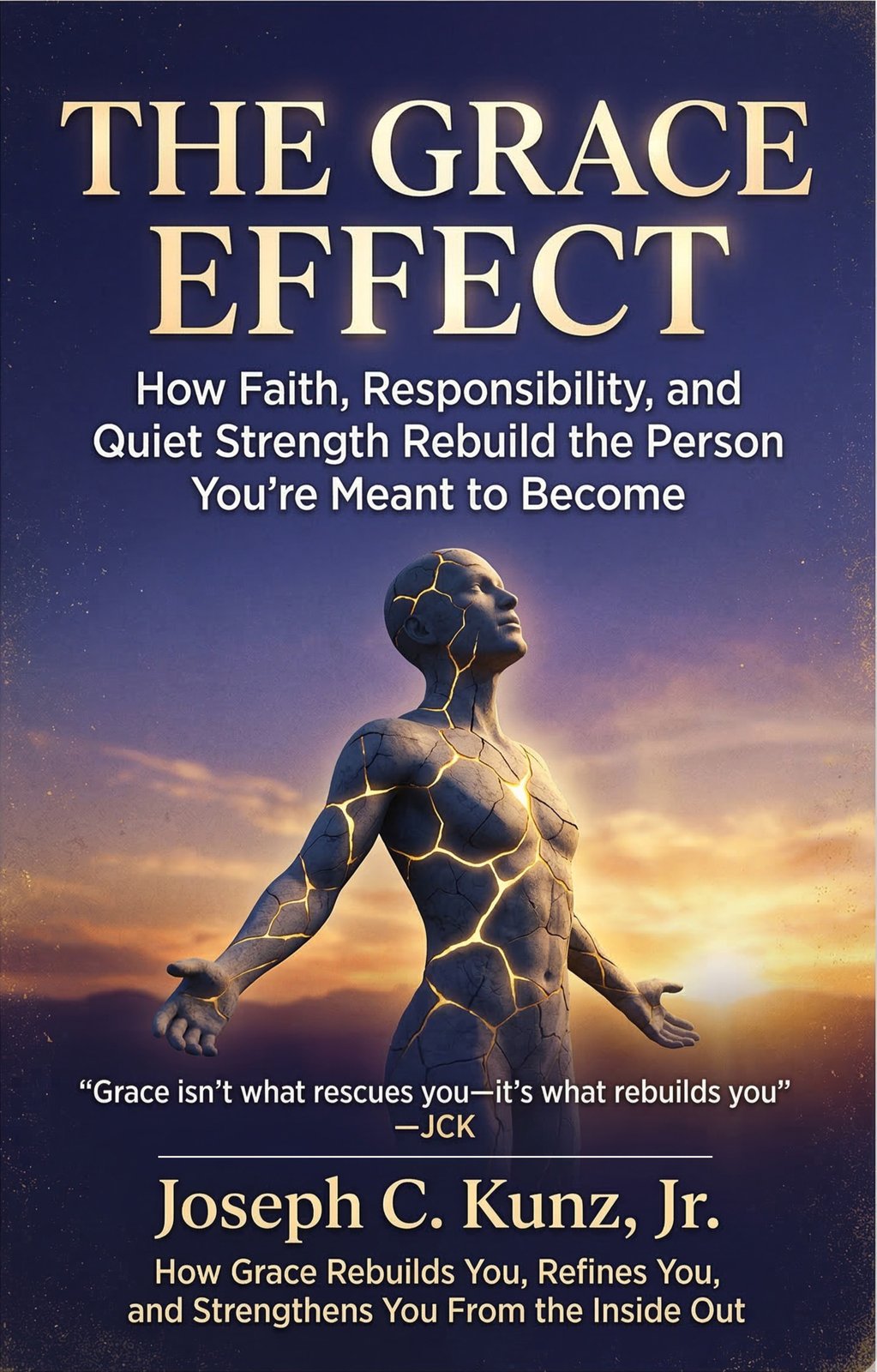
The Book Behind This Essay: Stop Worshiping Your Pride — Close the Gap
Let’s say the quiet part out loud: most men don’t “hate apologizing.” They hate losing control. They hate admitting they were wrong before they’ve rehearsed their defense, polished their story, and built a little courtroom in their head where they still get to win.
So they delay.
And that delay doesn’t feel like cruelty — it feels like “cooling off.” It feels like “being strategic.” It feels like “not giving in.”
But to the people who love you, it feels like this:
“My pain is negotiable. Your ego is not.”
That’s the apology gap.
And it doesn’t just damage relationships — it trains your character to protect your image instead of protecting the truth. You can be “right” and still be unsafe. You can be respected in public and slowly lose your home in private.
If this essay hit you in the chest, don’t turn it into a clever thought you admired for twelve seconds.
Do the one thing pride hates: move first.
Close the gap.
Not with groveling. Not with drama. Not with a TED Talk about your childhood. With truth. Ownership. Repair. Course correction.
That’s what The Grace Effect is for.
Grace isn’t soft. Grace is what gives a man the strength to say, “I was wrong,” without collapsing into shame or scrambling for excuses. Grace is what makes repentance practical. Grace is what turns confession into a rebuild plan instead of a humiliation ritual.
If you want your faith to be believable, your marriage to be safe, your kids to trust your words, and your name to mean something when you’re not in the room—this is your next step.
Read the book: The Grace Effect — Close the Gap. Rebuild the Trust.
Coming soon.