Stop Wishing for Easy, Start Training for Hard
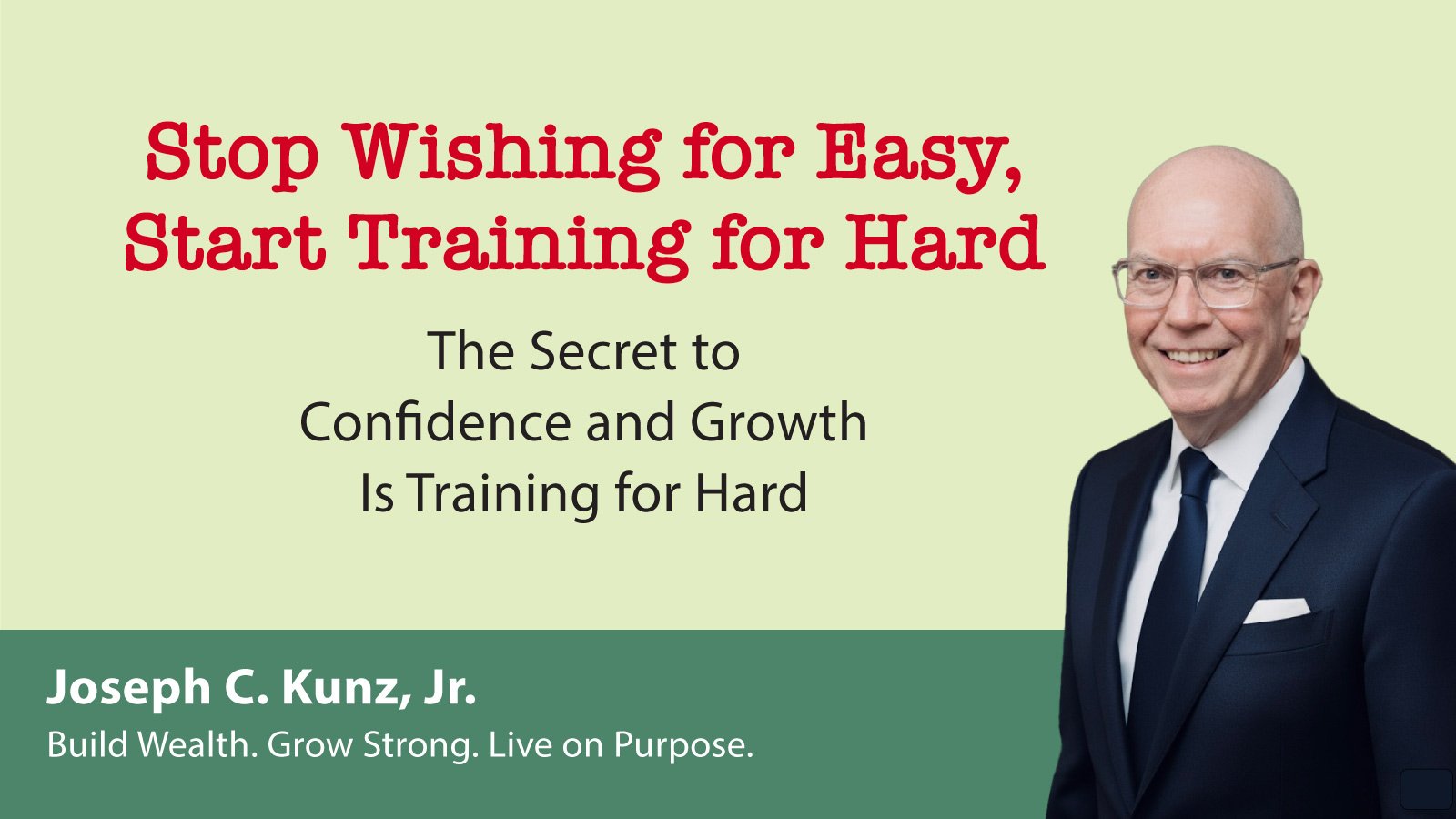
Real strength isn’t found in comfort but in facing challenges head-on, where confidence, grit, and lasting growth are forged. —Joseph C. Kunz, Jr.
The Secret to Confidence and Growth Is Training for Hard
By Joseph C. Kunz, Jr.
Synopsis
This is not an essay about glorifying struggle for its own sake, dismissing comfort entirely, or suggesting that life should be unnecessarily difficult. In this essay, Joseph C. Kunz, Jr. challenges a deeper and more dangerous cultural habit: the constant pursuit of “easy” as the solution to life’s problems. He argues that the desire for ease does not remove hardship—it reduces a person’s ability to handle it. What feels like relief in the moment quietly produces fragility over time.
Kunz makes the case that real growth, confidence, and resilience are not found in comfort, but in deliberate exposure to difficulty. He reframes life as a training ground, where pressure, setbacks, discipline, and discomfort function as the necessary conditions for strength. Drawing on simple but powerful analogies—like the weight room and the forging of steel—he shows that character is built through repetition under resistance, not avoidance of it. The essay also connects this mindset to leadership and responsibility, emphasizing that those who train for hard do not just strengthen themselves—they become dependable, steady, and capable of carrying weight for others when it matters most.
The conclusion is simple: wishing for easy makes you weaker, but training for hard makes you stronger. Life will always bring resistance, but those who prepare for it gain something far more valuable than comfort—they gain the confidence, discipline, and resilience to stand firm when others collapse.
Comfort never built resilience. Only resistance does. —JCK
I. Introduction: The Lie of Easy
We’ve been sold a fantasy: that success comes from finding the “easy way.” Just scroll through social media and you’ll see it everywhere—“passive income with no effort,” “six-pack abs in six minutes,” “just manifest it, and it will come.” Easy has become the idol of our age. But here’s the reality: wishing for easy doesn’t make life easier. It makes you weaker.
Life is never going to hand you an “easy mode.” It will hand you obstacles, setbacks, and unfair blows. And the people who survive—and thrive—aren’t the ones who begged for comfort. They’re the ones who trained for hard.
II. Why Easy Is a Trap
A. Fragility vs. Resilience
When you wish for easy, you’re really wishing to avoid growth. But avoiding hard things leaves you fragile. Like a muscle that’s never lifted a weight, you’ll collapse under pressure the first time life hits you with resistance.
B. The Myth of Smooth Success
Look at any person you admire—an athlete, an entrepreneur, a soldier, a parent raising strong kids. None of them got there through ease. Their grit was built by grinding through failures, facing rejection, and pushing through pain. The myth of smooth success is just that—a myth.
III. Hard Is Where the Growth Happens
A. The Weight Room Principle
In the gym, muscles grow only by being stressed. You tear the fibers a little, and the repair process makes them stronger. Life works the same way. Every tough project at work, every hard conversation in your marriage, every rejection you face—it’s all resistance training for your character.
B. The Fire That Refines
Think about steel. Raw iron isn’t strong enough on its own. It becomes steel only by being heated, hammered, and refined. Our resilience is forged the same way. The “hard” is the fire that purifies and strengthens us.
IV. How to Train for Hard
A. Stop Looking for Shortcuts
The quickest way to grow is to stop searching for hacks. Hacks rarely save you time; they rob you of the process that builds skill and endurance. Decide upfront: I will take the long road if it makes me stronger.
B. Embrace Discomfort on Purpose
Train yourself to lean into discomfort. Wake up earlier than you want. Take on a challenge you might fail. Have the conversation you’ve been avoiding. The more you practice hard, the less scary it becomes.
C. Setbacks as Reps, Not Failures
Every time you fail, treat it as a rep in the weight room. You didn’t “lose.” You just added another set to your resilience training. People who “train for hard” don’t fear failure—they use it.
V. The Rewards of Training for Hard
A. Confidence Under Pressure
When you’ve trained for hard, a crisis doesn’t break you. It sharpens you. You know the drill. You’ve carried weight before; you can carry it again.
B. Freedom from the Fantasy of Easy
Ironically, when you stop chasing easy, you get something better: freedom. Freedom from entitlement. Freedom from disappointment when things aren’t smooth. Freedom to tackle life as it is, not as you wish it to be.
C. Strength That Serves Others
Training for hard isn’t just about you. Your strength becomes a shelter for your family, your team, your community. People lean on you when things go wrong because you’ve proven you can carry weight. That’s real leadership.
VI. Conclusion: A Harder but Better Way to Live
Here’s the bottom line: wishing for easy makes you bitter when life doesn’t deliver. Training for hard makes you better when life throws its punches. Every morning, you have a choice: shrink back into ease or step forward into challenge. One makes you fragile. The other makes you unstoppable.
If you’re tired of feeling stuck, it’s not because life is too hard. It’s because you’ve been wishing for easy. Flip the script. Start training for hard.
Stop whining for comfort like it’s some kind of human right. Life owes you nothing. But it will hand you opportunities—opportunities wrapped in difficulty, disguised as inconvenience, packaged in sweat and setbacks. That’s the good stuff. That’s where grit is forged and legacies are built.
So here’s your wake-up call: quit begging for easy. Train for hard. Because when the storm comes—and it always does—you’ll be the one still standing, stronger than before.
Easy doesn’t prepare you for life. Hard does. —JCK
Related Reading: For Those Who Know Strength Is Earned, Not Handed Out
If this essay struck a chord, these two will drive the point even deeper.
Life’s blows don’t define you—they refine you. Every scar can either be a chain or a badge of strength.
Reader Comment: This reminded me that resilience isn’t about avoiding the storm—it’s about proving you can stand in it.
2. The First Rule of Wealth: Stop Making Excuses
Excuses are the fastest way to stay broke; ownership is the only way forward.
The Book Behind This Essay: Hard Is the New Currency

Money’s Dirty Little Secrets
Stop whining for shortcuts. Stop scrolling for “life hacks.” Stop thinking the universe owes you an easy path. It doesn’t.
The truth is brutal but freeing: nobody’s coming to rescue you, and life doesn’t care about your comfort.
What it does reward—every single time—is grit, discipline, and the guts to keep grinding when everyone else taps out.
You don’t get rich, respected, or resilient by chasing “easy.” Easy is where dreams die. Hard is where confidence, wealth, and freedom are built brick by brick.
If you’re serious about breaking out of the paycheck-to-paycheck hamster wheel, if you’re tired of soft excuses and empty promises, then it’s time to flip your mindset.
That’s what Money’s Dirty Little Secrets delivers: a no-BS manual on how to train for hard in every area that matters—money, work, mindset, and legacy.
It’s not polite. It’s not sugarcoated. But it will rip the blindfold off and show you how the wealthy and resilient really think.
Read Money’s Dirty Little Secrets—if you’re done chasing easy and ready to train for the kind of hard that makes you rich, strong, and unstoppable.