Money Should Be a Tool, Not a Costume
A serious reflection on money, restraint, and legacy, this essay argues that true stewardship is not about display but about keeping wealth under the rule of discipline, privacy, purpose, and character. —Joseph C. Kunz, Jr.
Why Quiet Stewardship Reveals Character Better Than the Performance of Wealth
By Joseph C. Kunz, Jr.
Synopsis
This isn’t an essay about flaunting success, celebrating luxury, or pretending that money does not matter. In this essay, Joseph C. Kunz, Jr. argues that modern culture trains people to treat money as performance—something to display, signal, and convert into identity—rather than a tool to be governed with discipline, privacy, and purpose. When money becomes costume, it stops serving a life and starts reshaping the person wearing it.
Kunz makes the case that stewardship is moral before it is mechanical. He explains why money reveals character, why quiet restraint reflects strength more than visible display, and why serious people keep resources under the rule of judgment instead of appetite, vanity, or applause. Drawing on his Four Pillars framework, he shows that wealth only remains healthy when it stays ordered beneath faith, responsibility, work, and legacy.
The conclusion is simple: money is useful, powerful, and worth respecting—but it must never become the point. The real test is not whether a person has resources, but whether he can keep them in their proper place and make them serve truths bigger than himself.
Money is useful, powerful, and revealing—but it must never become the point. —JCK
I. Introduction: The Performance Problem
One of the clearest signs of confusion in modern life is the way people think about money.
For many, money is no longer just a tool. It has become theater. It is used to project identity, signal success, attract attention, and invite admiration. It is worn, displayed, driven, photographed, and staged. It is turned into a public language of status.
That confusion has done real damage.
It has trained people to think wealth matters most when it can be seen. It has taught them to mistake visibility for value and appearance for substance. It has encouraged the belief that the natural purpose of financial success is outward display. If a person has done well, he is expected to show it. If he has built stability, he is expected to signal it. If he has resources, he is expected to convert them into visible proof that he has arrived.
But that way of thinking is shallow—and worse than shallow, it is disordered.
Money is a useful servant. It is a powerful tool. It can create options, stability, freedom, generosity, and future strength. But the moment it becomes a costume, it has already begun to distort the person wearing it.
That is why serious stewardship begins with a simple truth:
Money should be a tool, not a costume.
II. What Money Reveals
Money does not merely buy things. It reveals things.
It reveals priorities.
It reveals appetites.
It reveals insecurities.
It reveals whether a person wants to build, consume, impress, protect, enjoy, dominate, or escape.
That is one reason money deserves more moral seriousness than it usually gets. Most people discuss it in one of two shallow ways. They either treat it as an object of desire or as a set of technical problems to solve. They talk about earning it, spending it, saving it, investing it, or protecting it. All of that matters. But it is not enough.
The deeper issue is what money is doing to the person who holds it.
Has it strengthened his judgment or weakened it?
Has it made him more disciplined or more indulgent?
Has it made him calmer, freer, and more responsible—or more performative, restless, and eager to be noticed?
Has it become a resource under his command, or has it quietly become part of his identity?
Those are not financial questions. They are questions of character.
And that is why stewardship is moral before it is mechanical.
III. Quiet Stewardship
There is a kind of wealth that wants to be seen, and there is a kind that wants to be useful.
The first is hungry for recognition. It spends money in a way that asks to be noticed. It turns resources into image. It confuses consumption with meaning. It uses financial success as a form of personal advertisement.
The second is quieter. It does not need applause. It does not need spectacle. It does not need to turn a life into a showroom. It asks more serious questions. What should these resources do? What should they protect? What should they strengthen? What should they build? How can they serve the future instead of feeding vanity in the present?
That second form is the one worth respecting.
This does not mean every expensive purchase is foolish, vain, or disordered. A person may enjoy the fruit of years of work without betraying stewardship. The real question is whether the purchase remains under discipline—or becomes part of a performance.
Quiet stewardship does not mean pretending money does not matter. It means understanding exactly why it matters. It means respecting it enough not to misuse it for cheap signaling. It means refusing to turn financial strength into personal theater. It means valuing discipline over display, function over vanity, and long-term purpose over short-term applause.
It means keeping money in its place.
It may not look dramatic, but it requires real discipline. It is far easier to spend for impression than to steward for purpose. It is easier to buy visible symbols than to build invisible strength. It is easier to signal success than to govern success. It is easier to indulge appetite than to direct resources toward something durable.
And yet the difference between those two paths is enormous.
One path creates noise.
The other creates substance.
IV. The Moral Order of Wealth
Money becomes dangerous when it loses its place in the moral order of life.
That moral order matters because money is powerful. It gives options. It creates leverage. It shapes decisions. It can lower pressure, expand freedom, and create room for wiser choices. But it can also feed ego, amplify foolishness, reward impulse, and soften standards. It can bless a life, or quietly distort it.
That is why money should never be treated as ultimate.
It is not a god, a soul, or a source of meaning. And it is certainly not proof of wisdom, virtue, or human worth.
It is a tool—an important one, but still a tool.
And like every powerful tool, it must be governed by something higher than itself.
For a person who thinks in terms of the Four Pillars, that order becomes clearer.
Faith keeps money from becoming ultimate. It reminds us that material means are real but not supreme, useful but not sacred.
Responsibility keeps money under discipline. It demands honesty, restraint, self-command, and wise judgment.
Work & Wealth keeps money connected to effort, sacrifice, patience, risk, and the long process by which anything valuable is actually built.
Legacy asks the final question: what will these resources strengthen after the builder is gone? What kind of people will they help form? What values will they reinforce? What truths will they continue to serve?
That is the right ordering.
Without it, money drifts. And when money drifts, people drift with it.
V. Why Privacy Still Matters
There is also a dignity in privacy that modern culture no longer understands.
Not everything valuable needs to be displayed. Not every success needs to be announced. Not every resource needs to become part of a visible identity. One of the marks of maturity is knowing what should remain governed quietly.
Privacy is not fear. It is often a form of strength.
Privacy reflects a refusal to let life become performance. It also reflects the judgment to keep stewardship from turning into advertisement, and the maturity to live without needing constant validation from visible signs of success.
There is something deeply unserious about a culture that assumes visible luxury is the natural end point of financial success. That assumption reduces money to costume design. It teaches people to decorate themselves with evidence of means instead of learning how to govern means with sobriety.
Serious people should resist that pressure.
A grounded life, a disciplined life, and a purposeful life rarely need to shout.
What matters is not whether success can be seen from the street.
What matters is whether resources are being governed wisely, used honestly, and directed toward things worth strengthening.
VI. Stewardship and the Next Generation
Money always raises a legacy question, even when people do not want to admit it.
Resources do not remain morally neutral when they move from one generation to the next. They either strengthen character or test it. They either reinforce discipline or expose the lack of it. They either continue serving a healthy vision of life, or they become detached from the standards that made them possible.
That is why stewardship must think beyond possession.
The deeper question is never just, “How much is there?”
The deeper question is, “What is it for?”
What should it make possible?
What should it encourage?
What should it protect?
What should it never excuse?
What kind of habits, standards, and expectations should stand around it?
A healthy legacy is not just a transfer of assets. It is a transfer of meaning. It includes a philosophy of money, a standard of restraint, a respect for work, a respect for discipline, and an understanding that resources exist to serve life rightly ordered—not to subsidize vanity, drift, or entitlement.
That does not happen automatically.
It must be taught.
And it must be taught clearly, because money without moral interpretation is dangerous. It creates options without wisdom. It creates benefits without context. It creates comfort without gratitude. Over time, that kind of comfort can quietly weaken the very people it was supposed to bless.
That is why serious stewardship always asks what a life is teaching, not just what it is accumulating.
VII. The Real Test
The real test of money is not whether it grows.
The real test is whether the person holding it remains governed.
Can he keep appetite under discipline, resist the urge to turn resources into image, remain grounded when he has the means not to be, and still distinguish between enjoyment and indulgence, blessing and vanity, stability and excess? Most of all, can he use money without letting money use him?
That is a harder test than many imagine.
Because wealth does not only increase options. It increases temptations. It offers more ways to become careless, inflated, distracted, or self-deceived. It gives a person more room to expose his character—for good or for ill.
That is why restraint matters so much.
Restraint is not deprivation. It is moral intelligence.
It is the ability to say, “Just because I can does not mean I should.”
It is the refusal to let resources outrun judgment.
It is the quiet strength required to keep money functioning as a servant instead of allowing it to become a master.
That is not weakness.
That is government.
VIII. Conclusion: Keep It in Its Place
A healthy financial life is not defined by spectacle.
It is defined by order.
Money should serve responsibility, not vanity.
It should support freedom, not inflate ego.
It should strengthen what matters, not distract from it.
It should make wise action easier, not foolishness more expensive.
It should remain a tool in the hands of a disciplined person, not become the costume of a disordered one.
That is why the most honorable form of prosperity may be the kind that does not need to be displayed at all.
Not hidden out of shame.
Not minimized out of false humility.
But governed with enough seriousness that it no longer needs to become part of the show.
In the end, the strongest statement a person can make about money may not be visible luxury or public proof of success. It may simply be this:
I kept it in its place.
That is stewardship.
That is discipline.
And that is a form of wealth worth respecting.
Money does its best work when it stays in its place and serves something better than ego. —JCK
Related Reading: For the Ambitious Individual Ready to Go Deeper
If this essay made you rethink what money is for, these two will press the point even harder.
1. Wealth Is a Test. Here’s How to Pass It
Prosperity does not just expand your options—it exposes your character, which is why wealth must be governed by discipline, gratitude, and moral clarity if it is going to remain a blessing.
Reader Comment: This essay made me realize that money doesn’t just change your life—it reveals what was already in you.
Quote: Prosperity does not just expand your options—it exposes your character. —JCK
2. Rich vs. Wealthy: Why the Difference Matters More Than You Think
A sharp distinction between flashy income and lasting financial strength, showing why serious people build wealth for freedom, stability, and legacy rather than applause.
Reader Comment: I stopped thinking about looking successful and started thinking about becoming financially unshakeable.
The Book Behind This Essay: If Money Is Running Your Life, Something Else Already Isn’t
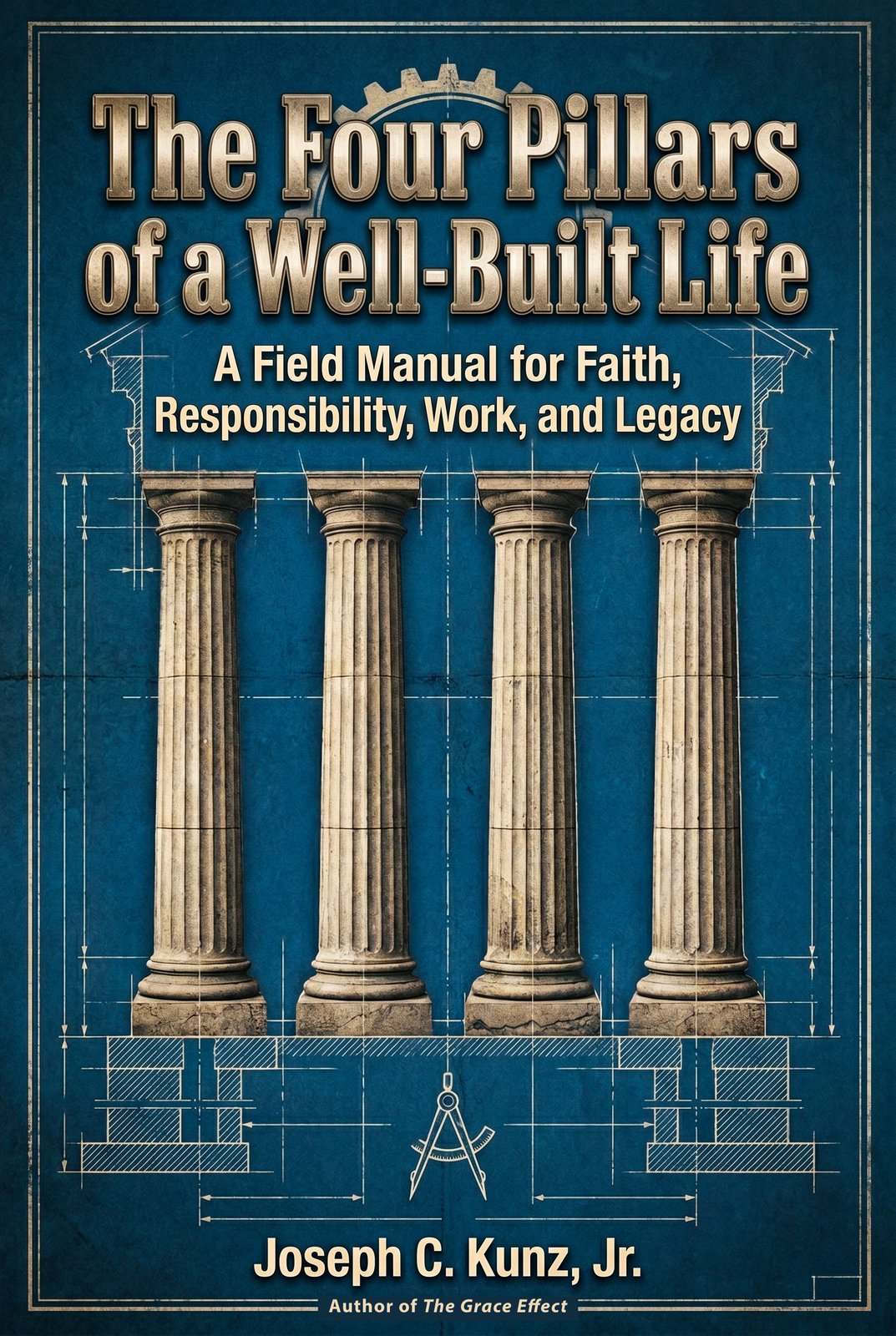
The Four Pillars of a Well-Built Life.
You can make money. You can save money. You can invest money. But if money becomes your identity, your costume, or your quiet little god, it will eventually expose the crack in the foundation.
That is the deeper warning behind this essay.
A well-built life does not reject money. It puts money in its place. Under truth. Under discipline. Under faith. Under responsibility. Under a vision of life bigger than appetite, ego, or applause. Because if you do not tell money where it belongs, money will eventually start telling you who you are.
That is how good people drift. That is how families get soft. That is how success turns into performance. And that is how a person can look prosperous on the outside while slowly becoming hollow at the center.
The Four Pillars of a Well-Built Life is about building something stronger than image, richer than comfort, and more durable than public proof of success. It is about the inner structure that holds when money, pressure, ambition, family, work, and culture all start pulling at your soul from different directions.
If this essay hit a nerve, good. Nerves are where truth usually lands first.
Read more in The Four Pillars of a Well-Built Life — the book for people who want their money to serve their life, not become the cheap costume of it.
This book is being built now. Stay tuned.