Manhood and Leadership: The Strength of Quiet Confidence

The men who lead best aren’t the loudest in the room—they’re the ones steady enough to be trusted when it matters most, grounded enough to carry the weight, and quiet enough to let their actions speak louder than their words. —Joseph C. Kunz, Jr.
Why the Strongest Men Don't Need to Shout to be Heard
By Joseph C. Kunz, Jr.
Synopsis
In a culture that equates leadership with volume, visibility, and bravado, this essay argues for a stronger, quieter standard. Joseph C. Kunz, Jr. makes the case that real manhood and real leadership are built on steadiness, self-mastery, and the willingness to carry responsibility without applause. The men who lead best are not the loudest in the room, but the ones trusted when pressure rises and consequences are real.
Drawing from history, lived experience, and hard-earned principles, this essay reframes quiet confidence as strength under control—not passivity, not silence, but disciplined presence. It is a call for men to lead through consistency, character, and example, and to become the kind of men others instinctively rely on when it matters most.
The strongest men don’t need a stage. They lead in the shadows, with quiet conviction and the weight of responsibility on their shoulders—every single day. —JCK
I. Introduction: Loud Isn’t Leadership
We live in a culture where noise is mistaken for strength. Where shouting is confused with certainty. Where men are told that to be respected, they must dominate—speak first, interrupt often, and never back down.
But real leadership? The kind that builds families, companies, nations, and legacies? It doesn’t require a microphone.
The strongest men I’ve known didn’t need to shout. Their leadership came from a steady presence—from knowing who they were and what they stood for. No spotlight required.
In this essay, we’re going to talk about the kind of leadership that lasts. The kind rooted in manhood, not performance. And why the world doesn’t just need more of it—it’s starving for it.
II. The Quiet Power of Real Men
A. Masculine Strength Is Often Silent
Strength isn’t proven by the punch. It’s proven by the man who could punch—but doesn’t need to.
Quiet strength is about restraint. It’s the man who walks away from a fight not because he’s weak—but because he has something more important to protect. It’s the kind of strength that keeps a family stable, a business honest, a community sane.
Loud men seek attention. Strong men carry purpose. And they don’t waste energy—or time—trying to prove it.
B. The Weight of Responsibility, Quietly Carried
Real men don’t need applause to do their job. They wake up early, go to work, pay the bills, care for their loved ones, and keep promises—without expecting a standing ovation.
The most masculine act in today’s culture might just be showing up quietly—again and again—when others would have quit. That’s leadership. That’s strength. And it’s about as quiet as it gets.
C. Historical and Personal Examples of Quiet Leaders
Look through history and you’ll see them:
• Marcus Aurelius, who wrote private meditations about leading with virtue, not violence.
• George Washington, who gave up power rather than cling to it.
• Mr. Rogers, whose quiet strength influenced millions of children—with a whisper, not a roar.
But you don’t need to go to history books. Think of the quiet mentor who showed you how to be a man. The father who kept the lights on without complaint. The coach who spoke little—but changed your life.
These men didn’t go viral. But they left something behind that mattered. And that’s what real leadership does.
III. Why the World Doesn’t Recognize Quiet Leadership
A. We’ve Been Sold a Loud, Shallow Archetype
Somewhere along the line, we started confusing manhood with noise. With swagger. With dominance. Movies, social media, politics—they all push the same image: the louder you are, the stronger you are.
But this isn’t leadership—it’s theater.
The problem is that young men today are being fed a steady diet of empty posturing. And the tragic result? They grow up thinking leadership is about being the center of attention, rather than being the center of stability.
But real men don’t need a spotlight. They build the foundation the spotlight stands on.
B. The Mistaken Link Between Silence and Weakness
In today’s world, being reserved is often mistaken for being unsure. Speaking slowly and thoughtfully is seen as lacking confidence. But that’s because we’ve forgotten what strength looks like when it’s calm.
Quiet leaders may be underestimated at first—but only until the storm hits. Because when things fall apart, people don’t look for the loudest voice—they look for the steadiest hand.
Stillness doesn’t mean uncertainty. It means control.
C. Modern Institutions Don’t Teach Quiet Leadership
Let’s be honest: no one is teaching this anymore.
Not in school. Not in college. Not in the boardroom. We reward performance, not principles. We celebrate visibility, not values. And the men who operate with quiet strength? They’re often invisible—until the day everything depends on them.
That’s why we need to teach this ourselves—man to man, father to son, mother to son, friend to friend. If we don’t pass on the model of quiet leadership, no one will.
But here’s the hard truth: even with all the guidance in the world, becoming a man is ultimately a personal responsibility.
You can have a great father, a wise mentor, a loving family—but none of them can do the becoming for you.
You’ve got to carry that weight yourself.
No one hands you manhood. You earn it—quietly, daily, through choices only you can make.
IV. The Principles of Quiet Leadership
A. Presence Over Performance
You don’t need to be flashy to be powerful. You just need to show up—every day—with consistency, clarity, and character.
The best leaders I’ve worked with didn’t dominate meetings or hand out motivational posters. They were present. Accountable. Unshakable. They didn’t need to say, “I’ve got your back”—you just knew they did. They chose their words carefully and respectfully.
Quiet leaders let their presence do the talking. And that presence becomes a force others rally around and admire.
B. Purpose Over Popularity
A man who leads quietly doesn’t need applause—he needs a compass.
His decisions come from deeply rooted values, not public opinion. He says “no” when it’s right, not when it’s safe. He leads with a vision that may not win the crowd, but it will win in the long run.
Quiet leadership is often unpopular in the moment. But it’s always remembered when the dust settles.
C. Mastery Over Manipulation
Loud leaders often rely on pressure, threats, and ego to control outcomes. Quiet leaders master themselves first—and trust that example to lead others.
They don’t manipulate. They don’t micromanage. They create space for others to grow because they’re secure in their own authority. They want those around them to grow and succeed.
This is the kind of leadership that builds loyalty. The kind people follow not because they’re forced to—but because they want to.
V. Becoming a Quiet Leader in Your Own Life
A. Start with Self-Leadership
Before you lead anyone else—your team, your family, your community—you must lead yourself.
That means:
• Knowing your values.
• Keeping your word.
• Mastering your emotions.
• Being consistent when no one’s watching.
You can’t lead with quiet confidence if your inner life is chaos. Leadership starts behind closed doors.
B. Lead at Home Before You Lead Anywhere Else
The world doesn’t need another guru. It needs men who lead in the most important place: their homes.
That means being fully present with your wife. Showing up for your kids. Being the kind of man your family feels safe with—not because you control them, but because you protect them.
If your leadership doesn’t start at the dinner table, it’s not worth much in the boardroom.
C. Serve Before You Speak
Real leaders don’t wait for the title. They just start serving.
Quiet leaders solve problems, protect people, and make things better—before they ask for anything in return. And because of that, they earn trust and influence. Not through volume, but through value.
Leadership is not a role you get. It’s a responsibility you accept.
VI. Conclusion: The Legacy of Quiet Men
The most powerful leaders I’ve ever known didn’t demand attention. They earned respect.
They didn’t post daily about “mindset” or “hustle.” They lived it. Quietly. Without fanfare. Without hashtags.
They led by example. They spoke when it mattered. They were strong when it counted.
And long after the noise-makers faded, their legacy remained.
We don’t need more men shouting into microphones. We need more men whispering strength into the lives around them.
So be that man. The one they turn to—not because you’re loud—but because you’re there.
You won’t always be the loudest. But if you’re the most reliable, the strongest, and the most grounded—you’ll be the one they trust when it counts. —JCK
Related Reading: For Men Who Lead with Strength, Not Noise
If this essay spoke to you, these will sharpen your vision of manhood and leadership even further.
1. Manhood Is Built in the Moments No One Sees
True manhood is formed in private choices, not public performance.
Reader Comment: This essay reminded me that the real test of character is what I do when no one’s watching.
2. The Man She Needs Is Forged in Struggle — Not Flash
Why strength through struggle matters more than showmanship in becoming the man others can depend on.
The Book Behind This Essay: The World Doesn’t Need Louder Men — It Needs Stronger Ones
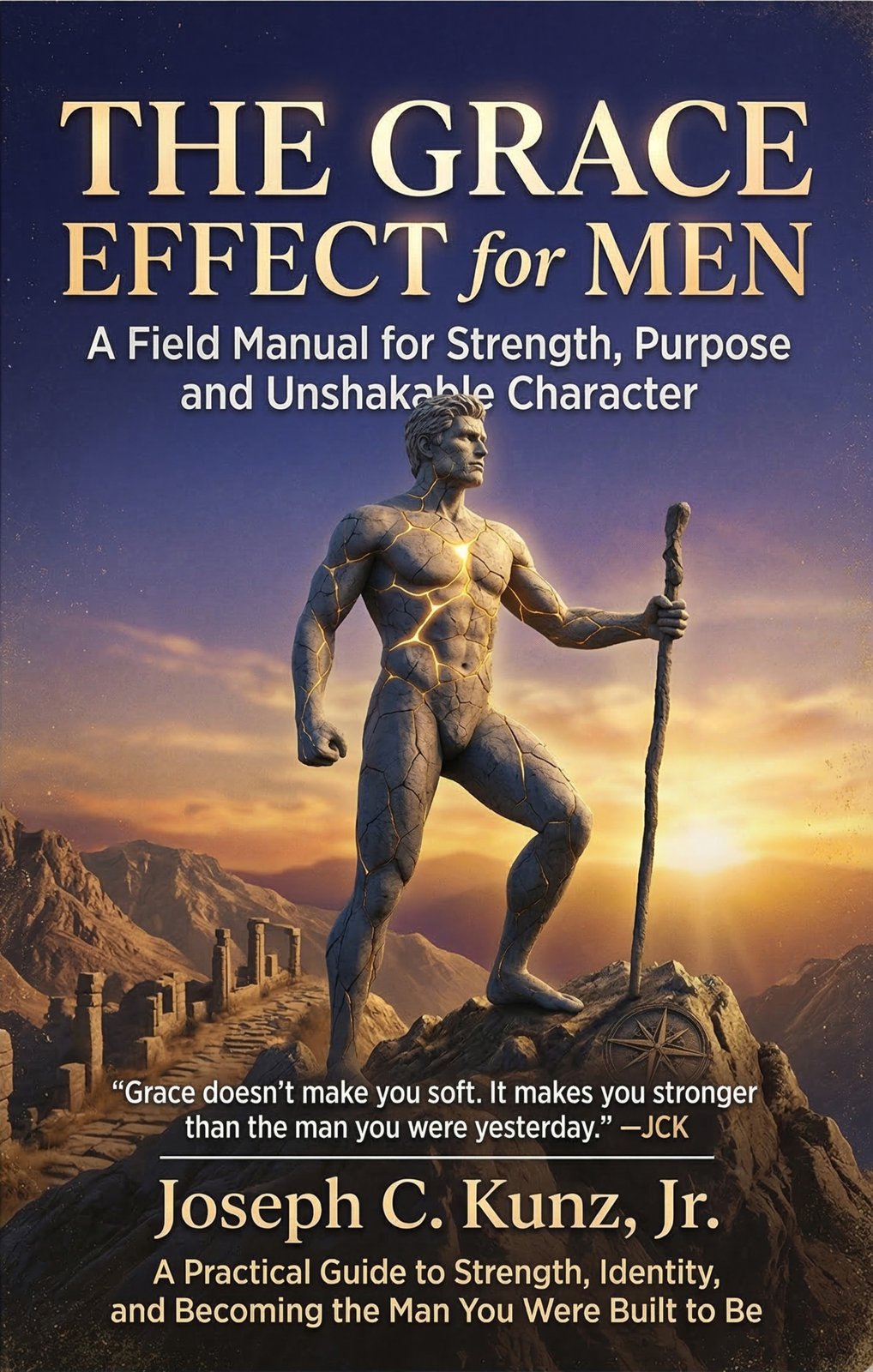
Real men don’t prove. They build. They don’t shout to be heard—they earn respect in silence through consistency, restraint, and grit. Quiet confidence isn’t weakness. It’s strength under control.
Every man reaches a crossroads: ego or example. One destroys trust. The other builds legacy. You already know which side you’re called to stand on.
Quiet confidence isn’t timid—it’s a man who could roar but doesn’t need to. —JCK
If this hit a nerve, that’s grace doing its work. It’s calling you to rise—not louder, but deeper.
Step Into The Grace Effect for Men — The Field Manual for Strength, Purpose, and Unshakable Character
Inside, you’ll learn how to:
1. Lead without arrogance, follow without fear
2. Build strength that outlasts applause
3. Carry grace like armor, not decoration
The world’s full of noise. Be the man who brings calm—and commands respect by how he lives, not how he talks.
Available soon.