Language as the First Battleground for Clarity

Clarity begins with the courage to defend your definitions—because weak words build weak lives. —Joseph C. Kunz, Jr.
Why the Words We Use Shape the Life We Build — and the Freedom We Keep
By Joseph C. Kunz, Jr.
Synopsis
When language loses its meaning, life quietly comes apart. In this essay, Joseph C. Kunz, Jr. argues that most people don’t struggle because life is complicated—they struggle because their definitions are weak, borrowed, and culturally distorted. When “success” becomes attention, “freedom” becomes ease, “wealth” becomes lifestyle, and “grace” becomes self-excuse, judgment collapses—and lives get built on fog instead of conviction.
Kunz makes the builder’s case that reclaiming the true meaning of your most important words isn’t semantics—it’s survival. He shows why clarity starts with definition, why precision produces power, and why defending your vocabulary is an act of independence that cancels excuses and forces real action.
Clarity isn’t a luxury of the wise—it’s the survival skill of anyone who wants to build a life that actually stands. —JCK
I. Introduction: When Meaning Decays, Thinking Decays
The decline of a culture always begins with the decline of its language. Not with riots, not with elections, not with economic collapse—those come later. The first crack appears in how a people speak. Words become fuzzy. Definitions soften. Meaning gets negotiated instead of honored.
And because human beings think in language, the decay of words becomes the decay of thought.
That’s not a philosophical musing; it’s a practical disaster.
When language blurs, judgment blurs.
When judgment blurs, decisions falter.
And when decisions falter, lives unravel.
People aren’t confused because the world is complicated—people are confused because their vocabulary is compromised.
We see it everywhere:
Success now means attention.
Freedom now means ease.
Leadership now means “being inspirational.”
Wealth now means “having stuff.”
Grace now means “letting yourself off the hook.”
And thinking—the backbone of every meaningful life—has been downgraded to “feeling clever.”
If your words soften, your life softens. If your definitions collapse, so does everything built on top of them.
This isn’t about grammar.
It’s about survival.
II. The Words We Misuse Are the Lives We Misbuild
Here’s the brutal truth:
Most people’s biggest life problems can be traced back to sloppy definitions.
You can’t build wealth if “wealth” means “luxury.”
You can’t lead if “leadership” means “being liked.”
You can’t grow if “responsibility” means “not getting blamed.”
You can’t live with purpose if “purpose” means “whatever feels right today.”
Your outcomes follow your definitions like a shadow.
This is why so many people work hard and still feel stuck.
They’re living inside conceptual frameworks they never chose…because they never examined the words.
They inherited them.
From media.
From social feeds.
From corporate slogans.
From well-meaning but confused friends and mentors.
They didn’t choose their vocabulary—the culture chose it for them.
And when you adopt someone else’s language, you adopt their limits.
I’ve had discussions with people who were drowning under the weight of words they had never defined:
A young man who wanted to “be successful” but couldn’t articulate what he meant.
A nurse who wanted “balance” but didn’t know if that meant boundaries, energy, rest, or courage.
A father who wanted to “lead his family” but couldn’t distinguish leadership from control.
A business owner who wanted “freedom” but really meant “escape.”
Every one of them was trapped, not by circumstances, but by vocabulary.
Before you can change your life, you must change your language. Before you change your language, you must reclaim your definitions.
This is where clarity begins.
This is where strength begins.
This is where independence begins.
III. Reclaiming Definitions: The First Act of Independence
Real thinking doesn’t start with brainstorming, creativity, or insight.
Real thinking starts with definition.
If you define a word poorly, you will live it poorly.
If you define it clearly, you will live it powerfully.
This is why I write the way I do.
Why Money’s Dirty Little Secrets cuts through financial clichés.
Why The Grace Effect rebuilds moral language that culture has distorted.
Why The Legacy Code explains manhood and leadership through a vocabulary of responsibility instead of ego.
Because you can’t think independently when you’re using society’s hand-me-down words.
You don’t need “outside-the-box thinking”—you need a better box.
One you understand.
One you built.
One with definitions that are strong enough to carry you through life.
Here’s the uncomfortable part:
Reclaiming your vocabulary forces you to confront the lies you’ve been living.
If “success” no longer means applause, you must change your behavior.
If “freedom” no longer means ease, you must change your expectations.
If “grace” no longer means permission, you must change your character.
If “wealth” no longer means lifestyle, you must change your habits.
If “leadership” no longer means charisma, you must change how you carry yourself.
No wonder most people avoid clarity. Clarity cancels excuses. Clarity ends illusions. Clarity demands action.
That’s why clarity is power—and why language is the doorway to it.
IV. Precision Is Power: How Strong Words Build a Strong Life
You don’t need a more “motivational” life.
You need a more precise one.
People who live with strength, conviction, purpose, and resilience all do the same thing:
They defend their definitions.
Their words are specific. Their concepts are sharp. Their boundaries are clear. And because of that, their decisions are decisive.
Here’s how strong people use language:
1. They define success in measurable terms
Success is character, competence, contribution—not applause.
2. They define freedom as responsibility
Freedom is the reward for discipline, not the escape from it.
3. They define wealth as stability and options
Not toys, not trips, not appearances—but independence.
4. They define grace as strength under pressure
Mercy that builds, not mercy that excuses.
5. They define thinking as something hard, slow, inconvenient—and worth it
Not a vibe.
Not a clever moment.
A disciplined, structured process.
When your words grow stronger, so do you.
When your vocabulary matures, so does your judgment.
When your definitions sharpen, your life follows.
This is why language is the first battleground:
because clarity is the first victory.
V. Conclusion: The Fight for Clarity Is the Fight for Your Life
You can’t build a great life on borrowed definitions.
You can’t build strength on slogans.
You can’t build legacy on language that’s been hollowed out by laziness and cultural decay.
If you want a life that’s rooted, steady, meaningful, and strong—a life guided by truth rather than noise—you must become a guardian of your own language.
Choose your words with care.
Define them with precision.
Use them with courage.
Defend them when the world tries to blur them.
Because once you reclaim your language, you reclaim your thinking.
And once you reclaim your thinking, you reclaim your life.
The world won’t fix your definitions.
You must.
This is where independence begins.
This is where strength begins.
This is where clarity begins.
And this is where the battle is won.
The moment you defend the meaning of your words, you begin to defend the meaning of your life. —JCK
Related Reading: For Readers Who Want to Own Their Thinking, Not Rent It
If this essay sharpened your clarity, these two will take it even further.
1. Don’t Outsource Your Thinking — Even to “Experts”
Synopsis: Most people hand their judgment over to experts without realizing they’re trading away independence, clarity, and long-term confidence.
Reader Comment: This one hit hard—I stopped assuming the experts were right and finally started evaluating things for myself.
2. What “Success” Really Means for a Christian Man
Synopsis: Success is not applause, lifestyle, or status—it's responsibility, integrity, and living with conviction before God and your family.
Quote: Redefine success, and you’ll redefine the man you’re becoming. —JCK
The Book Behind This Essay: Read This If You’re Ready to Stop Living by Other People’s Definitions
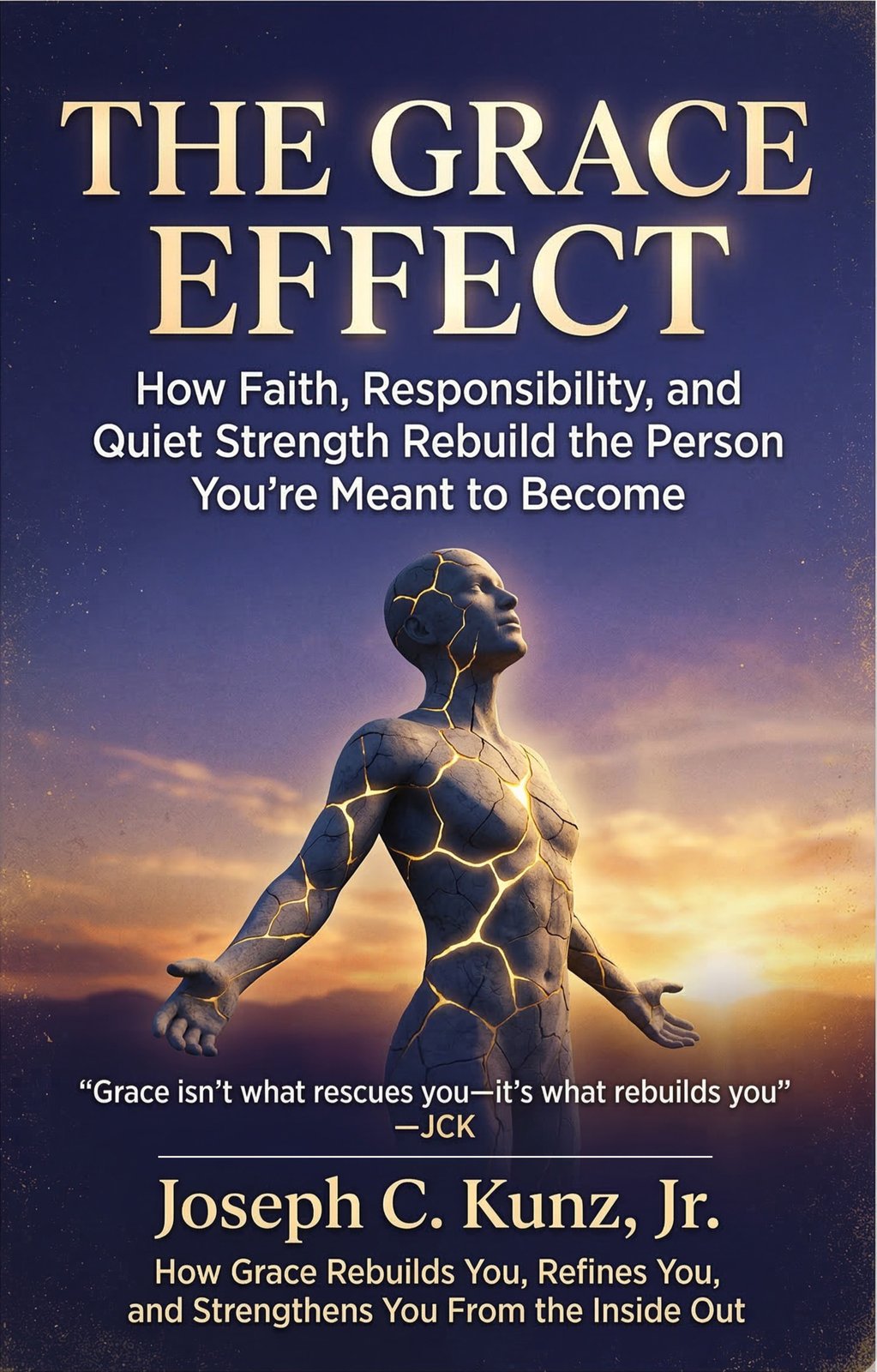
If something in this essay hit you hard—if you recognized the places where your language has weakened your thinking—then you’re already standing at the doorway to a better life.
But here’s the truth most people never admit:
You can’t rebuild clarity alone.
You need a framework.
You need principles that don’t shift with the culture.
You need a vocabulary strong enough to carry real responsibility.
That’s exactly what The Grace Effect exists to do.
It’s not a self-help book.
It’s not a pep talk.
It’s a recalibration of the words that shape how you live—courage, forgiveness, strength, discipline, mercy, purpose, responsibility—rebuilt from the ground up.
If your world feels noisy…
If your mind feels crowded…
If your life feels like it’s being shaped by forces outside your control…
Then it’s time to reclaim something deeper:
Your clarity.
Your convictions.
And your God-given ability to build a life that stands when others crumble.
Read The Grace Effect: How Faith, Responsibility, and Quiet Strength Rebuild the Person You're Meant to Become. Because strength begins with clarity—and clarity begins with the words you choose to live by.
Coming soon. Stay tuned.