Faith First: The Real Foundation of Conservative Principles

Conservatism without Christian values is hollow, and Christianity without daily practice is empty—only when the two are joined through simple, lived principles do they give the world the strength it needs. —Joseph C. Kunz, Jr.
Why Conservatism Collapses Without Christian Values — and How Simple Faith Holds It Together
By Joseph C. Kunz, Jr.
Synopsis
In this essay, Joseph C. Kunz, Jr. argues that conservatism collapses without Christian values—and Christianity collapses when it’s treated like a mood, a label, or a political weapon. Conservatism without faith becomes hollow: slogans, ideology, nostalgia, or raw power. Christianity without daily practice becomes either sentimental and soft or militant and brittle. Either way, the result is the same: confusion, instability, and a culture that can’t hold under pressure.
Kunz makes the case for something stronger and simpler: lived Christian values—faith, responsibility, family, and ordered freedom—practiced in ordinary homes by ordinary people. Not as a performance, not as a campaign, but as daily habits that build character, strengthen families, and preserve the moral foundation that makes real liberty possible. The world doesn’t need louder politics—it needs steadier people. And the real power of Christianity isn’t in cathedrals or headlines, but in families who live the values when no one is watching.
The real power of Christianity isn’t in cathedrals or politics—it’s in fathers, mothers, and families who choose to live its values every single day. —JCK
I. Introduction: A Disturbing Disconnect
Every so often, I come across a story that reminds me how far even influential voices can drift from the heart of Christianity. Recently, I read an interview with a well-known conservative editor who spent more than a decade writing for The American Conservative. Given his position, one would expect clarity about how Christianity and conservatism fit together. Instead, his story was filled with political nationalism, militant language, and personal confusion about faith.
I don’t raise this to criticize him personally. I raise it because it illustrates a deeper problem: when Christianity is reduced to ideology, feelings, or politics, it loses its power. And when conservatism forgets its foundation in Christian values, it becomes hollow.
II. Conservatism Without Christianity Is Hollow
Conservatism, rightly understood, is about conserving what is most valuable. But valuable to whom? Valuable by what measure? Without Christianity, conservatism risks becoming nothing more than sentimentality about the past or a reactionary defense of traditions without purpose.
By conservatism, I don’t mean clinging to yesterday for its own sake. I mean conserving the moral order that makes freedom workable: faith, family, responsibility, and voluntary institutions.
A. What Conservatism Protects
True conservatism seeks to protect:
1. Faith — the recognition of God as the source of moral order.
2. Family — the natural building block of society.
3. Freedom — not license to do whatever one wants, but liberty under responsibility.
4. Responsibility — the conviction that each individual, not the government, must steward his own life, work, and future.
B. The Problem of Politics Without Faith
When conservatism becomes unmoored from Christianity, it often slides into one of two ditches:
• Ideology: conservatism as slogans and platforms, divorced from lived moral substance.
• Nationalism: conservatism as tribal loyalty, more about political control than moral truth.
Clarity on Terms:
• By ideology, I mean slogans detached from habits of virtue.
• By militancy, I mean combative identity politics dressed up as piety.
• By patriotism, I mean a love of country ordered by higher moral law.
That’s why it’s disturbing to see conservative leaders confuse militancy with faith or treat national politics as the key to spiritual renewal. They’ve forgotten that conservatism is strongest when it rests on Christianity’s common-sense values.
III. Christianity Without Daily Practice Is Empty
On the flip side, Christianity itself can become distorted when stripped of simple, daily practice. I’ve seen people point to buildings, ceremonies, or political movements as the source of their faith. But Christianity isn’t found in cathedrals, conferences, or headlines.
By Christianity, I don’t mean a mood, a building, or a label. I mean obedience to Christ lived out in truth-telling, hard work, mercy, stewardship, and generational duty.
A. Feelings Are Fleeting
A conversion sparked by the beauty of a church building may stir the heart, but if it’s not rooted in values lived out day after day, it won’t last. Feelings are fleeting; values endure. Beauty can start a conversion; habits finish it. Awe opens the door; repentance, responsibility, and love keep us in the house.
B. Militancy Isn’t Maturity
To call oneself “militant” in faith is to confuse the Christian life with a political crusade. Militancy belongs to armies, not faith. In religion, it usually means anger posing as conviction—loud, combative, and brittle. Christianity is strong, yes—but strong like oak, not like a clenched fist. Strength in Christ looks like self-mastery, not rage.
C. The Power of Simplicity
Real Christianity is common sense: love your family, tell the truth, work hard, take responsibility, show grace, and pass on these values to your children. Simple doesn’t mean shallow. It means unshakable.
IV. Where Faith and Conservatism Meet
When Christianity and conservatism are rightly joined, they reinforce each other beautifully.
A. Faith Gives Conservatism Its Moral Compass
• Without Christianity, conservatism risks becoming mere nostalgia or power-seeking.
• With Christianity, conservatism has a moral compass: protect family, uphold liberty, cherish life, and encourage virtue.
B. Conservatism Protects Room for Faith to Flourish
• Without conservatism, Christianity risks being reduced to a private hobby or emotional experience.
• With conservatism, Christianity finds room to flourish publicly, within institutions, families, and communities that honor freedom under God.
By patriotism, I mean love of country rightly ordered by God’s higher law—devotion that builds, not blind loyalty that excuses.
Evidence in Brief: Communities with strong family formation and weekly worship show higher civic participation, charitable giving, and social trust—patterns confirmed across decades of American social research. Translation: lived faith scales into public good.
Together, faith and conservatism form a foundation strong enough to withstand cultural storms.
Note: Can non-religious conservatives share these ends? Absolutely. Natural law and common sense can lead many to the same duties. My point is simpler: Christianity supplies the clearest rationale—and the staying power—to live them when it’s hardest.
V. Passing Faith Through Families, Not Institutions
One of the greatest mistakes of our age is expecting institutions—whether churches, schools, or governments—to carry the weight of passing down faith. They have a role, yes. But the most powerful transmission of Christianity has always been from parent to child, lived out in the home.
Churches and schools matter—but they supplement, not substitute, the work of mothers and fathers.
That’s why I say the best way to change the world isn’t through militant slogans or political programs—it’s by living Christian values yourself and teaching them to your children.
Faith passed on this way creates ripple effects. Strong families produce strong communities. Strong communities sustain free societies. No government program can compete with that.
Five Ways Families can “Make It Real” This Week
1. Shared table, shared prayer.
2. Sunday hospitality (invite one person/family).
3. Stewardship hour (budget/plan as a family).
4. Serve together (one concrete act for someone in need).
5. Work creed for kids (one chore, start-to-finish, no excuses).
Small habits beat big speeches.
VI. Why the World Needs Simple Christianity Now
The world is complicated. Politics is chaotic. Ideologues shout. Nationalists posture. And through all of it, ordinary people are left hungry for something steady, trustworthy, and real.
What they need isn’t another militant spokesman or another political savior. They need to see people living with integrity, raising their families with faith, and showing that Christianity isn’t fragile or extreme—it’s the most powerful, practical way to live.
A. Simple Doesn’t Mean Weak
Some confuse “simple” with naïve. But the simplicity of Christianity is its strength. Values like faith, work, family, and responsibility don’t crumble when the economy shifts or when the news cycle turns. They outlast every empire. That’s why the freest people are usually the most disciplined.
B. The Quiet Strength of Example
The best witness is not an essay, a manifesto, or a cathedral—it’s a life lived with consistency. Your children, your neighbors, your coworkers—they will learn more from your example than from any argument.
VII. Conclusion: Faith First
It’s ironic that some of the loudest voices in conservative media can sound confused about Christianity. But maybe that’s the reminder we need: influence doesn’t equal clarity, and titles don’t equal truth.
What the world needs is not more militancy, not more politics, not more nationalism. It needs more people willing to live Christianity in its simplest, strongest form.
That’s why I keep coming back to this:
• Live your faith daily.
• Teach it to your children.
• Conserve the values that matter.
Do this, and you’ll leave behind something far stronger than politics: you’ll leave behind a legacy of faith and freedom that no one can take away.
Faith built on politics crumbles. Faith built on values endures. —JCK
Key Terms: What I Mean (and Don’t Mean)
1. Americanism: Not empty flag-waving or blind nationalism. True Americanism is loyalty to the nation’s founding ideals: ordered liberty under God, the dignity of the individual, and responsibility rooted in faith and family.
2. Christianity: Not a mood, a building, or a label. Obedience to Christ lived out in truth-telling, hard work, mercy, stewardship, and generational duty.
3. Collectivism: Not shared responsibility but forced conformity—where the individual is sacrificed to the group, and personal freedom is smothered by central control. It is the opposite of true freedom.
4. Conservatism: Not clinging to yesterday for its own sake. Conserving the moral order that makes freedom work: faith, family, responsibility, and voluntary institutions.
5. Freedom: Not a license to do whatever you want. Liberty under responsibility—ordered by truth, family, and virtue.
6. Ideology: Politics detached from virtue—slogans and platforms without the moral habits that make them real.
7. Marxism: The belief that society is driven by class struggle and must be remade by tearing down faith, family, and private property. It is the opposite of lived Christianity, which fosters family and responsibility.
8. Militancy: Belongs to armies, not faith. In religion, it’s anger posing as conviction—loud, combative, and brittle.
9. Patriotism: Love of country rightly ordered by God’s higher law—devotion that builds, not blind loyalty that excuses.
10. Progressivism: The ideology that history automatically bends “forward,” so traditions like faith, family, and moral order must be dismantled as obstacles to progress. It is the opposite of conserving responsibility and moral order.
11. Responsibility: Not something the government hands you. The personal duty to steward your life, work, family, and future.
12. Tribalism: Not community, but blind group loyalty—where belonging matters more than truth, and conviction is replaced by conformity. It is the opposite of faith lived with courage and independence.
Related Reading: For Readers Who Want to Ground Their Values in Action
If this essay made you rethink the roots of your faith and freedom, these will drive the point home.
1. The Best Inheritance Isn’t Money — It’s This
Why the richest legacy you can leave behind isn’t financial—it’s the values, principles, and faith that shape generations.
Reader Comment: This essay reminded me that my children are watching everything I do—it pushed me to live my values more consistently.
2. Don’t Outsource Your Thinking — Even to "Experts"
Learn why personal responsibility for your mind, your family, and your future is non-negotiable in an age of noise and conformity.
Quote: Clarity doesn’t come from louder voices—it comes from lived values. —JCK
The Book Behind This Essay: Stop Outsourcing What Only You Can Do
If you think politics is going to fix your family, you’re already losing. If you think cathedrals or conferences will raise your kids, you’re dreaming.
The world doesn’t change because someone in Washington waves a pen—it changes because fathers, mothers, and grandparents live their values like their lives depend on it.
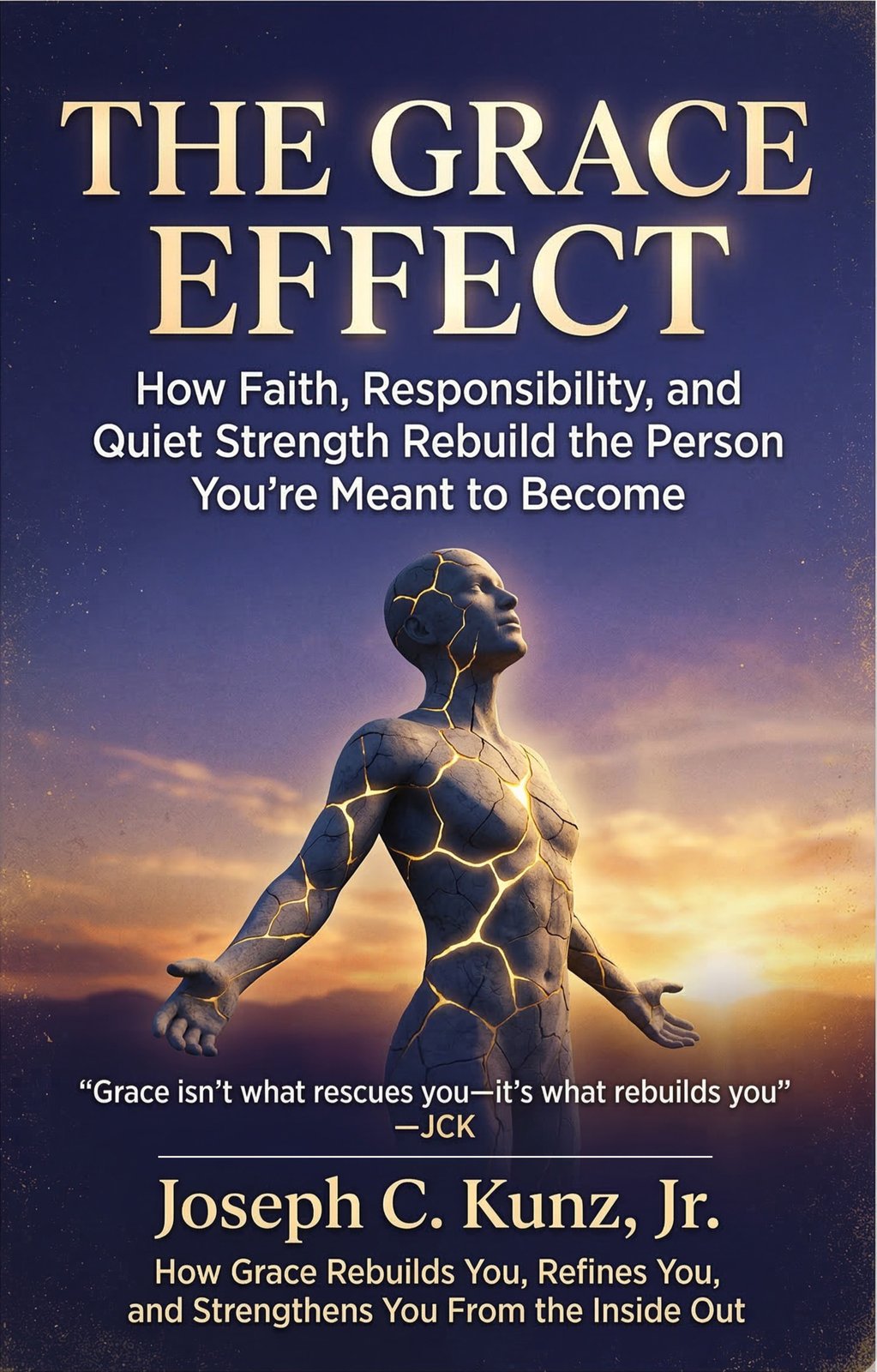
That’s what The Grace Effect is about. It’s not a theory. It’s a wake-up call.
It’s the map for building a life of faith, strength, and legacy in a culture that would rather see you distracted, divided, and defeated.
This book will challenge you. It will pull you out of comfort, excuses, and passivity.
But it will also hand you the tools to build something no politician can give and no critic can take away: a family rooted in grace, a future forged in faith, and a legacy worth remembering.
Read The Grace Effect today and stop living small when you were made to live strong.
More details soon.