A Man’s Face, A Man’s Witness
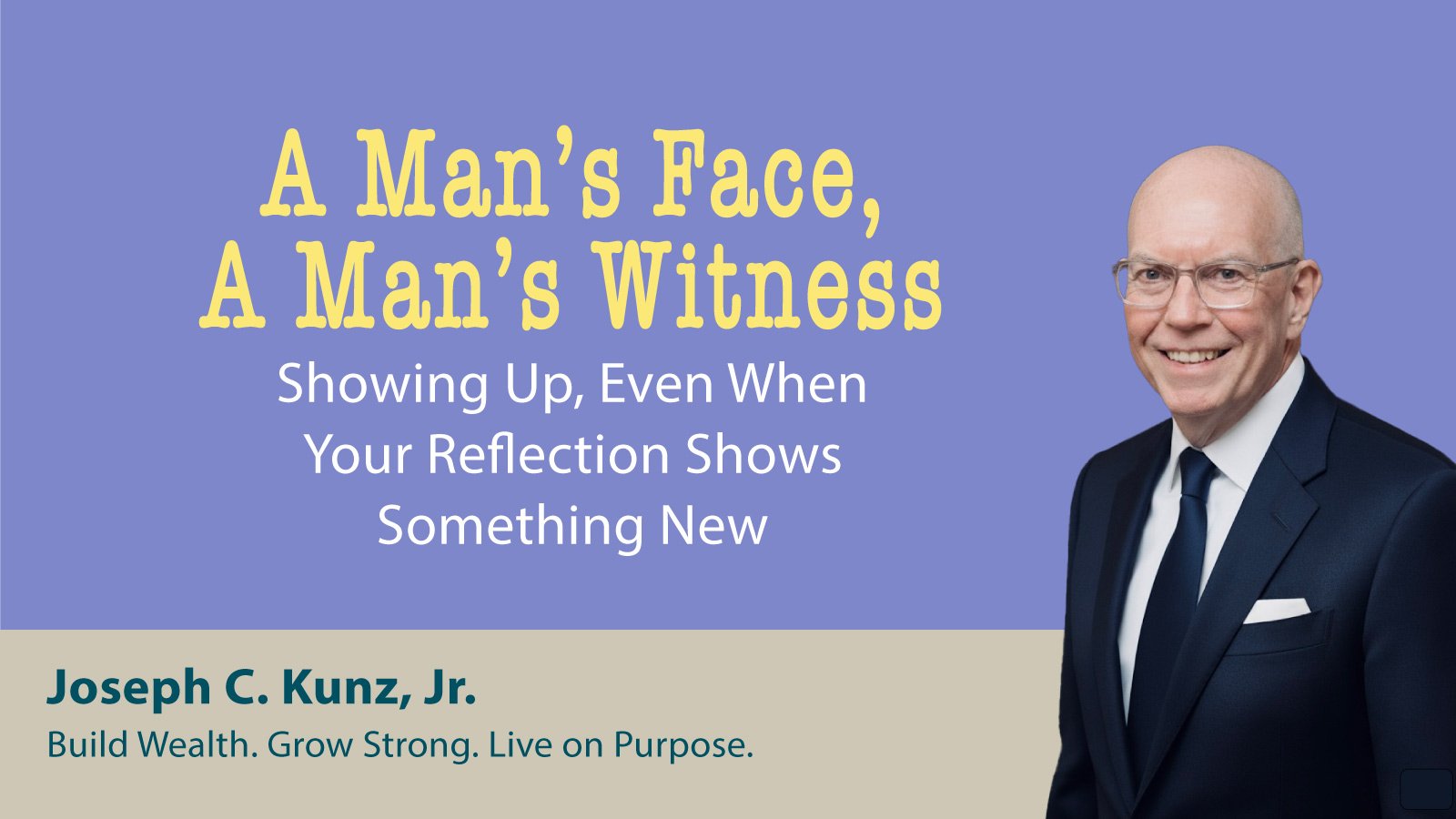
My face changed. I didn’t. What people see is weakness; what I carry is grace. —Joseph C. Kunz, Jr.
Showing Up, Even When Your Reflection Shows Something New
By Joseph C. Kunz, Jr.
Synopsis
This isn’t a complaint, a comparison, or a “look at me” recovery story. After surgery, Joseph C. Kunz, Jr.’s face changed; his center didn’t. In this essay, he explores what it means to keep showing up when your reflection starts telling a different story—when the mirror is kind, the camera is honest, and strangers decide what you are before you ever speak. Kunz argues that a man’s strength isn’t proven by symmetry or appearance, but by steadiness: presence over performance, gratitude over pride, and faith over fear.
Kunz walks readers through the real-world proving grounds where this lesson gets tested—train cars full of staring strangers, hospital classrooms where familiar faces notice the difference, and family photos where joy becomes a decision instead of a mood. Along the way, he names what injury and embarrassment try to sell a man: hiding, bitterness, and “performing pain.” He refuses all three. What some interpret as weakness becomes a witness—of a man who keeps his vows, keeps his work, accepts help without shame, meets eyes without flinching, and chooses grace as discipline. The deeper truth is simple: scars don’t define a man—his habits do.
My scars don’t speak for me—my steadiness does. —JCK
I. Introduction: The New Face, The Same Man
I didn’t ask for a crooked smile. But I got one.
After surgery, half my face went quiet and stayed that way. Not the dramatic kind of quiet, either. The subtle kind. The kind that doesn’t stop you from walking into a room—but does change what the room thinks it sees.
Hundreds of our students—nurses and physicians who knew me before—have seen me with a different face. The man is the same. The mirror just tells a new truth.
Here’s what surprised me: the injury wasn’t the hardest part. The hardest part was realizing how much of life runs on first impressions—and how quickly people decide what you are before you ever open your mouth.
A crooked smile becomes a story people tell themselves. Stroke. Sad. Fragile. Damaged. Poor guy.
Meanwhile, I’m standing there thinking: I’m fine. I’m here. Let’s get to work.
That’s when I learned something I didn’t learn from business or investing or even fatherhood:
You don’t control what people see. You only control what you carry. And what you carry becomes your witness.
II. Mirror vs. Photo: The Two Truths
The mirror is gentle to me. I see the pull, the tilt, and I think, it’s not so bad. Familiar angles soften the edges. The mirror is personal. It belongs to me.
Then a camera tells the harder truth. A photo shows what other people see—a face pulled off center, twisted in a way you associate with tragedy. Even two years in, the picture can still take my breath away for a beat.
But I don’t argue with the photo. I let it calibrate me.
Because the photo reminds me of something every adult needs to remember, whether your face is perfect or not:
the world meets the outside first. So your inside needs to be stronger than your outside.
That means more steadiness. More eye contact. More warmth. More presence. More humor on purpose.
Presence over symmetry. That’s the job now.
And honestly? That’s not just my job. That’s the job for every man who wants to be trusted.
III. The Railroad Car: The World in a Rolling Box
Every week, Michele and I take the train into New York. It’s a rolling experiment in human nature. The train car is like a lab: people trapped with strangers, pretending they aren’t.
Some people stare, then snap their eyes away like they’ve been caught shoplifting. Some pretend not to notice and fail at pretending. Kids point and ask the question their parents don’t want them to ask.
I don’t blame the kids. Kids are honest. Adults are trained liars.
We laugh—gently, not at them. And if someone asks, I answer simply:
I had surgery for a tumor. It wasn’t cancer.
That says it all in the fewest words. The air changes. People exhale. Mystery solved.
It’s amazing how quickly fear evaporates when you name reality.
Sometimes people help. A teenager jumps up to offer a seat. A stranger holds a door, grabs a bag, makes room.
I take the help.
Not because I “need” it.
Because refusing help isn’t strength. It’s pride wearing a costume.
Thank you. That helps.
Pride blocks blessings. Gratitude lets them land.
And then there are the long walks through Moynihan Train Hall or Grand Central—ten times the eyes of a train car. More double takes than you can count.
I keep my pace, meet a few looks with a nod, and let it be what it is.
Not performance. Not apology. Not hiding.
Presence.
IV. The Classroom: Authority Without a Perfect Face
Hospitals are full of people trained to see past brokenness. They still notice. We all do.
A resident’s eyes flick to my mouth before they settle on my eyes. A nurse I’ve known for years squeezes my shoulder a little longer than before. Students who remember “old me” pause half a beat, then get back to work.
And that half beat? That’s the moment where my character speaks louder than my face.
Because I’ve learned something the hard way:
people don’t trust perfection. They trust steadiness.
A perfect face can still carry a shaky soul. A crooked smile can carry calm.
So I meet them with calm. I speak with clarity. I show them the same professionalism I always have. And the staring stops.
Michele or I crack a small joke. The air clears.
Authority doesn’t require symmetry. It requires credibility. And credibility comes from consistency.
V. The Family Photo: Turning the Camera into Comedy
In group shots, I sometimes use a finger and push up at the corner of my mouth to “help” my smile.
Now everyone does it with me.
The whole picture grins crooked. We laugh. And the photo becomes a family story, not a medical record.
That’s the difference between a victim and a builder: a victim gets trapped inside the problem. a builder turns the problem into material.
Joy doesn’t need perfect lines to be true.
A few days ago, for the first time, my grandson asked:
Grandpa, why is your face crooked?
Because I had surgery. I’m okay, I said.
He nodded, satisfied, handed me a toy car, and we kept playing.
That was the whole lesson.
Kids don’t need your performance. They need your presence. They don’t need the perfect version of you. They need the faithful one.
VI. What Didn’t Change: The Spine is the Spine
My vows didn’t change.
My work didn’t change.
My duty as a husband, father, grandfather, businessman—none of that moved an inch.
The mirror shows a new map; the destination is the same.
I still carry bags. I still hold doors. I still show up on time. I still keep my word. I still do the hard things first.
That is the spine of a man.
A face can’t replace it.
And here’s a truth worth saying plainly:
A lot of men look strong until life touches them. Then you find out what they were actually made of.
Life touched me. I’m still here.
VII. What This Taught Me About People
This experience taught me how quickly people confuse appearance with meaning.
Some people stare because they’re cruel. Some stare because they’re afraid. Some stare because they’re curious. Some stare because they’ve never been forced to confront suffering in a public way.
But here’s what’s interesting:
the stare isn’t the problem. The problem is what the stare tempts you to do.
It tempts you to shrink. To hide. To resent. To perform sadness. To become “the injured man” instead of the man who got injured.
That’s the fork in the road.
And once you understand that, you realize the face is not your enemy.
The enemy is the narrative.
VIII. What I Refuse: Three Surrenders I Won’t Make
I refuse to hide. Back rows and low hats teach the wrong lesson—to my family, my students, and myself.
I refuse bitterness. Bitterness walks into a room before you do and speaks for you. It changes your voice. It turns you into a man who needs everyone else to pay for what happened to him.
I refuse to perform pain. I don’t need an audience for my struggle. I need to be faithful in it.
And I refuse the soft lie that says: You’re allowed to lower your standards because life was hard.
No.
Hard is not a permission slip. Hard is a proving ground.
IX. What I Choose: The Discipline of Showing Up
I choose humor on purpose. It opens locked rooms.
I choose clear answers. Adults appreciate it; children thrive on it.
I choose eye contact. Let my gaze carry what my face can’t.
I choose to bless the helpers. Let people do their good.
I choose not to rush past people’s discomfort with anger.
Because I’ve learned something else:
most people aren’t trying to insult you. They’re trying to place you.
So I place myself for them:
I’m okay. I’m here. Let’s get to work.
X. Faith, Plain and Simple: The Middle Place Called Grace
Here is my order of operations:
Do my part; hand over the rest.
I prepare like it’s up to me. I rest like it’s up to God.
That mix keeps me from pretending I’m the center of the world—and keeps me from acting like a victim in it.
Grace lives in that middle place.
Some days, the mirror is still a punch. Some mornings hurt more than others.
On those days, I go smaller:
one breath, one thanks, one small act done well.
I don’t need to conquer the whole day.
I need to keep my promises inside of it.
And that’s where faith stops being “a concept” and becomes a witness:
not in comfort, but in consistency.
XI. Conclusion: A Field Note for Men with Marks
If your body now carries a mark you didn’t choose, don’t shrink your life to fit it.
Stand where you’ve always stood. Let the room see you. Keep your schedule. Accept help. Laugh first. Shake hands. Look people in the eye.
If the photo startles you, let it.
Then step back into the frame anyway.
Your people don’t need perfection.
They need your presence.
My face changed. I didn’t. That’s my witness. —JCK
Related Reading: For the Ambitious Individual Ready to Go Deeper
If this resonated, these two will sharpen your spine and your mornings.
1. Stay in the Game: Why Showing Up Beats Perfection Every Time
Consistent presence—not flawless execution—is what builds trust, legacy, and real momentum when life gets uneven.
Reader Comment: This piece got me off the sidelines and back to daily reps—no excuses.
2. What Independent Thinkers Do Before 9 A.M.
Simple, repeatable morning habits that set your day on mission—clarity first, distractions last, discipline always.
The Book Behind This Essay: Stop Staring. Start Showing Up.
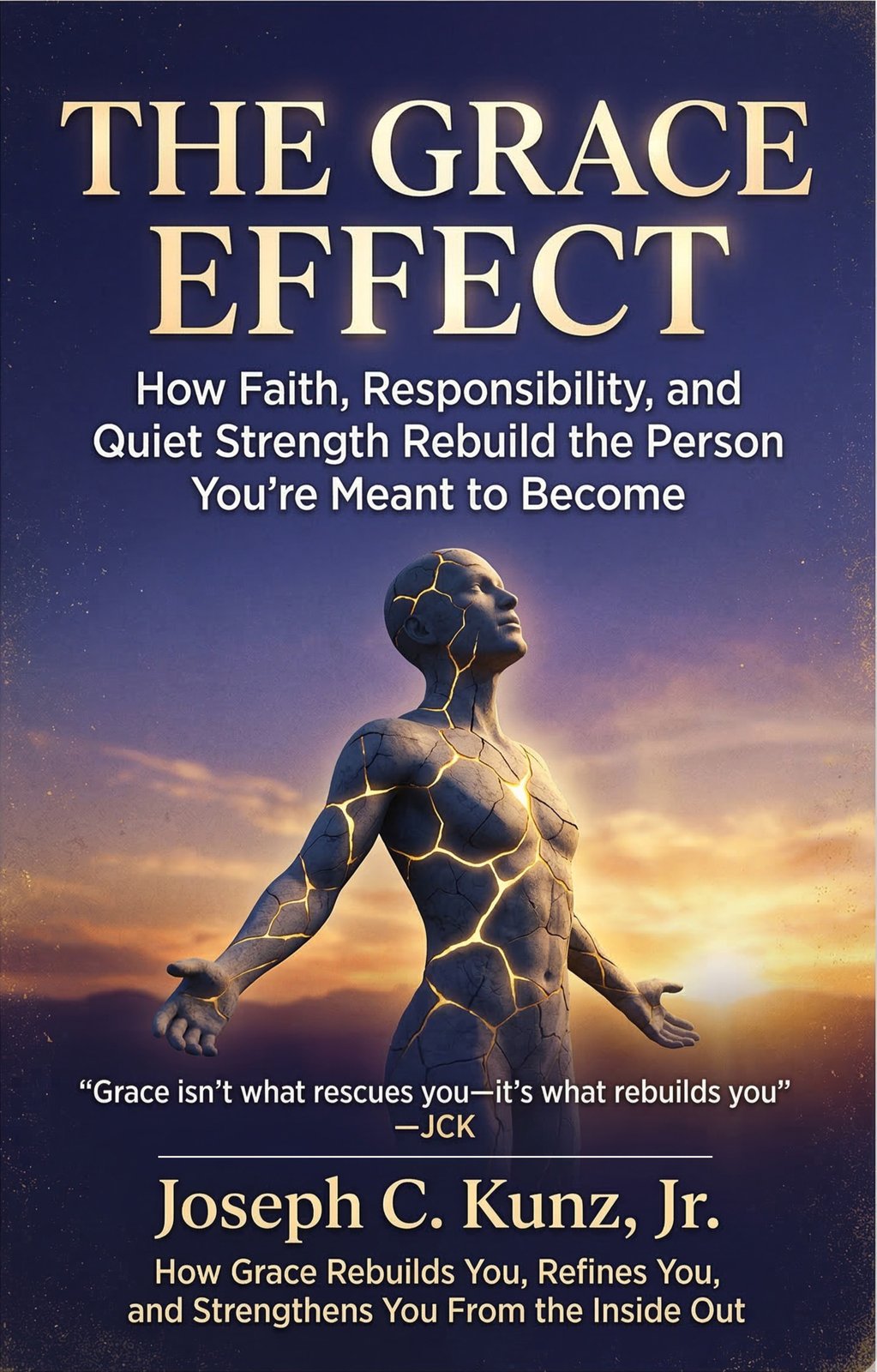
You read the story. Now do something with it.
A crooked smile isn’t tragedy—it’s a teacher. If this punched you in the heart, good. That thump is grace waking you up.
Here’s the move, not the mood:
Say yes to help once today. Pride blocks blessings; gratitude lets them land.
Prove it.
Make eye contact and hold it. Presence beats perfection. Every time.
Keep one promise you’ve been dodging. Call, apologize, lift, show up—pick one and finish it.
This is how men lead—not flawless, faithful. If that’s you (or the man you want to be), then take the next step.
Hit The Grace Effect next—trade perfection for presence and get to work.